
Trump disclosure shows more than $1 billion crypto income
$TRUMP token royalties and World Liberty Financial sales dominate 2025 filing, White House denies conflicts as regulation remains discretionary
Images
 US President Donald Trump has been involved business dealings.
bbc.com
US President Donald Trump has been involved business dealings.
bbc.com
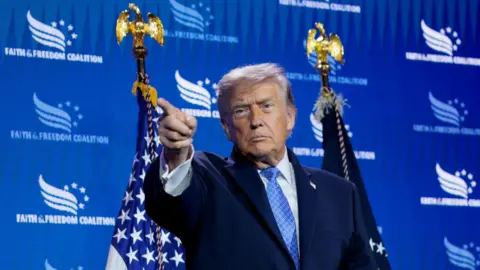 US President Donald Trump has been involved business dealings.
bbc.com
US President Donald Trump has been involved business dealings.
bbc.com
Donald Trump’s latest financial disclosure runs to 927 pages, but the headline figure is simpler: according to the BBC, the US president reported more than $1 billion in income last year tied to cryptocurrency ventures. The filing attributes $635 million in royalties to a company behind a $TRUMP token launched three days before he took office for a second term, and it reports more than $500 million in income from token sales by World Liberty Financial, a crypto firm backed by Trump and his family.
The disclosure sketches a presidency where public authority and private deal flow sit unusually close together. World Liberty Financial is described as paying 75% of proceeds to Trump and his family, a structure that turns policy mood music into an asset: if the administration signals friendliness to crypto, the market response can feed directly into the president’s reported income. The White House, according to the BBC, rejected any suggestion that Trump was profiting from the presidency, with deputy press secretary Anna Kelly saying Trump and his family “have never engaged and will never engage in conflicts of interest,” while also claiming he had made the US “the crypto capital of the world.”
Crypto’s appeal in Washington has often been sold as innovation and competitiveness, but the industry’s practical advantage is that it can move faster than the rulebook. Tokens can be issued, marketed, and traded globally while regulators argue about definitions, and disclosure regimes built for hotels and licensing deals struggle to capture how value is created—or transferred—through closely held entities and token sales. A president who can shape enforcement priorities, agency leadership, and legislative agendas does not need to write a law to change the operating environment; it can be enough to decide which fights matter.
The filing also underlines a more basic reality about modern politics: candidates increasingly arrive with brands, audiences, and monetisation channels that do not pause when they take office. Where earlier conflict-of-interest debates centred on government contracts or foreign payments routed through real estate, crypto adds a retail layer—supporters can buy a token that doubles as a political gesture, and the resulting price action can be framed as market enthusiasm rather than patronage. The effect is a feedback loop that is hard to police because it is voluntary at the point of purchase and diffuse in its participants.
Trump’s previous financial disclosure listed more than $600 million in total income, the BBC reports. This time, the crypto lines alone exceed that earlier total, in a document long enough to make the numbers easy to miss.