
Explosion in Monaco injures three
Cctv shows suspect dropping backpack at residential entrance before blast, microstate security meets border reality
Images
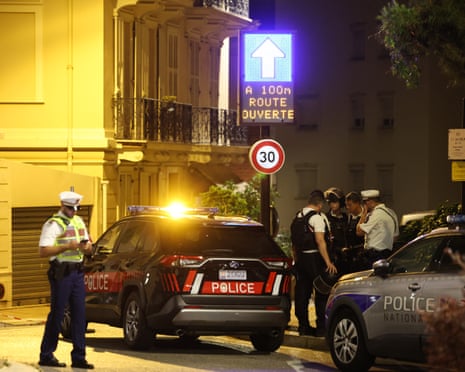 Monégasque and French police officers stand near the area of the explosion in Monaco, near the border with France, on Monday evening. Photograph: Valéry Hache/AFP/Getty Images
theguardian.com
Monégasque and French police officers stand near the area of the explosion in Monaco, near the border with France, on Monday evening. Photograph: Valéry Hache/AFP/Getty Images
theguardian.com
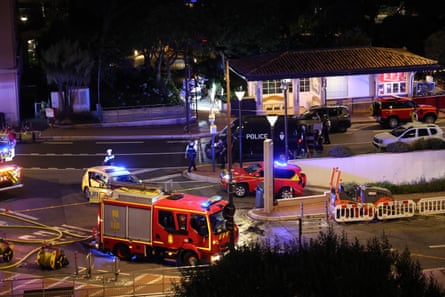 Monaco’s emergency services were deployed near the area of the explosion. Photograph: Valéry Hache/AFP/Getty Images
theguardian.com
Monaco’s emergency services were deployed near the area of the explosion. Photograph: Valéry Hache/AFP/Getty Images
theguardian.com
An explosion in Monaco on Monday evening injured three people, with two reported in critical condition, according to The Guardian. The blast hit a residential building near the French border at around 9pm local time, and police launched a manhunt after CCTV showed a man leaving a backpack at the entrance shortly beforehand.
Monaco’s minister of state, Christophe Mirmand, said the blast was “very likely an attack”, a rare formulation in a country where most public security incidents are managed quietly and quickly. Investigators described the device as a makeshift or parcel bomb, and The Guardian reported it apparently contained bolts and buckshot—components used to turn a small explosive charge into a wider field of shrapnel.
The suspect, seen on camera, fled on foot towards France, forcing Monaco’s tightly bounded policing model into a cross-border problem. In a microstate where response times can be measured in minutes and surveillance coverage is dense, the weak point is not detection but jurisdiction: once a suspect crosses into France, the case depends on coordination, shared databases and the willingness of another system to prioritise a crime that began next door.
The victims included a couple described as in their 50s or 60s who were in life-threatening condition, and a 13-year-old who suffered less serious injuries. Le Figaro reported the victims were Ukrainian, a detail that—if confirmed by investigators—would place the incident in the wider pattern of European cities absorbing the spillover of foreign conflicts through individuals, money, and personal disputes. Monaco is built to attract wealth and discretion; those same qualities also make it a place where motives can be hard to read from public information, and where official statements tend to be sparse.
Monaco’s public prosecutor general, Thibault Stéphane, is leading the investigation. Éric Ciotti, the mayor of Nice, called the incident a tragedy for Monaco, underscoring how quickly the event became a regional security concern rather than a local emergency.
The explosion happened at the entrance of a residential building, and the suspect was last seen heading toward the French border on foot.