
Andy Burnham lays out plan to remake Britain
Public control of water housing energy and transport pitched as cost-of-living fix, fiscal rules still set the ceiling
Images
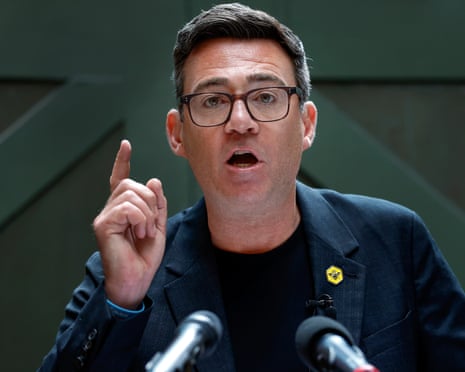 Andy Burnham at the People's Museum in Manchester on Monday. One of his main plans is to set up a No 10 North. Photograph: Jeff J Mitchell/Getty Images
theguardian.com
Andy Burnham at the People's Museum in Manchester on Monday. One of his main plans is to set up a No 10 North. Photograph: Jeff J Mitchell/Getty Images
theguardian.com
Andy Burnham sketches a state-led overhaul of Britain, Labour fiscal rules still constrain the offer, public control promises arrive before a price tag
Andy Burnham used a speech at Manchester’s People’s History Museum to set out what the Guardian describes as a plan to “transform Britain” and fix a political system he called “broken.” Burnham, widely tipped by the paper as a likely next UK prime minister, promised what he called the biggest rebalancing of power the country has ever seen, with a new “No 10 North” hub intended to steer resources away from Whitehall. His pitch centred on greater public control of essential services—water, housing, energy and transport—framed as a way to curb the cost of living.
The programme is built around moving decision-making and spending capacity out of London while expanding the state’s role in areas where private providers have become politically toxic. Water, in particular, has become a symbol of a regulated private model that leaves ministers owning the headlines while companies own the balance sheets. Housing is Burnham’s other anchor: he promised the biggest council-housebuilding programme since the postwar period, a direct challenge to a market where planning constraints, land values and subsidised demand have pushed prices beyond wages.
Yet the speech also tried to pre-empt the question that normally ends such announcements: who pays. Burnham said he would stick to Rachel Reeves’s fiscal rules and repeated the language of “sound public finances,” noting he has previously argued Britain is “in hock” to bond markets. That constraint matters because the plan bundles together capital-heavy commitments—housing, transport, energy systems—while also hinting at early cost-of-living support “as soon as I can,” a promise that tends to become expensive precisely when economic conditions are weakest.
Burnham also proposed a “high street renaissance” through business-rate reform and a rebalancing of education that puts academic and technical tracks on equal footing. Those are areas where Whitehall can change rules faster than it can change outcomes: councils can be handed responsibilities, but without stable local tax bases they remain administrators of centrally rationed funds. A “No 10 North” hub run by a former Manchester chief executive may shorten the chain of command, but it does not remove the Treasury’s veto.
Burnham did not name key cabinet posts, and urged supporters to ignore “wild speculation” about his chancellor choice, though the Guardian notes Ed Miliband is seen as a favourite. The sequencing—big structural promises now, personnel and numbers later—keeps the coalition broad, but it also postpones the moment when competing priorities have to be traded off.
Burnham’s speech offered voters a picture of a government that does more and controls more, while binding itself to the same fiscal guardrails that have limited previous governments. It was delivered in a museum built to commemorate Britain’s labour movement, before the next budget line has been written.