
British man arrested in Ecuador
Colombia prosecutors allege woman beaten to death and hidden in suitcase in Bogotá, tabloid phone calls help authorities track suspect
Images
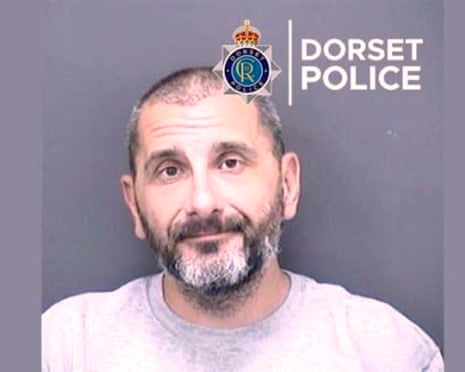 Matthew Ashley Foster-Smith, 46, from Bournemouth, was held at Quito international airport in Ecuador. Photograph: Dorset police
theguardian.com
Matthew Ashley Foster-Smith, 46, from Bournemouth, was held at Quito international airport in Ecuador. Photograph: Dorset police
theguardian.com
 The body of Natalia Villalba, 36, was found in a suitcase in an apartment in Bogotá. Photograph: Twitter/X
theguardian.com
The body of Natalia Villalba, 36, was found in a suitcase in an apartment in Bogotá. Photograph: Twitter/X
theguardian.com
 Matthew Ashley Foster-Smith was held at Quito International Airport in Ecuador (AFP/Getty)
AFP/Getty
Matthew Ashley Foster-Smith was held at Quito International Airport in Ecuador (AFP/Getty)
AFP/Getty
A British man was arrested at Quito’s international airport after Colombian prosecutors accused him of killing a woman in Bogotá and trying to flee the region. According to the Guardian, the suspect was detained in Ecuador after an Interpol red notice and cooperation involving Dorset police, following the discovery of a body inside a suitcase in an apartment in the Chicó neighbourhood of the Colombian capital.
Colombia’s attorney general’s office said on X that the man is suspected of beating Natalia Villalba to death, placing her in a suitcase, attempting to conceal the crime and then fleeing. The Independent reports that prosecutors in Colombia obtained an arrest warrant and that authorities believed he was trying to buy a plane ticket to Europe when he was stopped at the airport. Bogotá’s mayor, Carlos Fernando Galán, publicly credited Dorset police with assisting the operation and said the case would not go unpunished.
The case shows how quickly a local homicide can turn into a logistics problem spanning jurisdictions, airports and data trails. A suspect who crosses borders forces prosecutors to rely on tools like Interpol notices and foreign police assistance—mechanisms that work best when the paperwork, political will and communications links are already in place. It also highlights how informal channels can become part of the investigative chain: both the Guardian and the Independent cite reporting that the suspect made calls to the Sun tabloid shortly before his arrest, and a source told the paper he was located via those phone calls.
That detail is awkward for institutions that prefer to present investigations as sealed systems, but it is also revealing. Modern manhunts often hinge less on dramatic detective work than on small, voluntary traces—calls, tickets, device location—processed faster than a person can move between cities. When the trail is digital and cross-border coordination is functional, the decisive factor may be how long it takes the suspect to stop talking.
The UK Foreign, Commonwealth & Development Office said it is supporting a British man detained in Ecuador and is in contact with local authorities. The arrest was made at an international airport, after prosecutors in Colombia said the body had been found in a suitcase in an apartment in Bogotá.