
Europe heatwave breaks records in Poland and Germany
WHO cites more than 1300 excess deaths since 21 June, water cannons and text alerts substitute for built-in cooling
Images
 Poland recorded an all-time record temperature of 40.5C on Sunday as the heatwave move eastwards
bbc.com
Poland recorded an all-time record temperature of 40.5C on Sunday as the heatwave move eastwards
bbc.com
 Poland recorded an all-time record temperature of 40.5C on Sunday as the heatwave move eastwards
bbc.com
Poland recorded an all-time record temperature of 40.5C on Sunday as the heatwave move eastwards
bbc.com
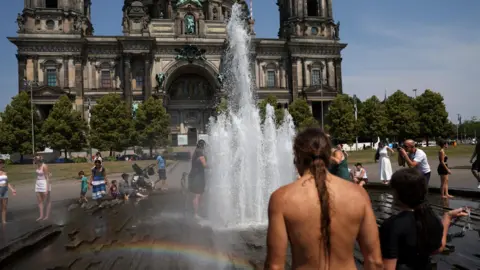 People cool off in the fountain in front of the Berlin Cathedral during the ongoing heatwave
bbc.com
People cool off in the fountain in front of the Berlin Cathedral during the ongoing heatwave
bbc.com
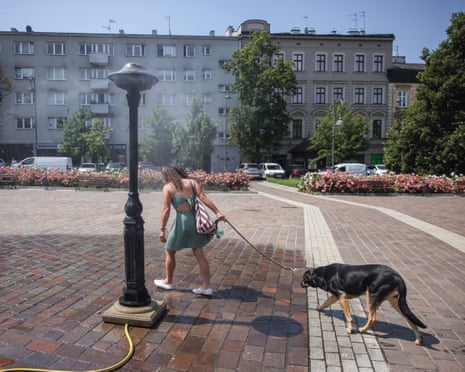 A woman and her dog walk under a water sprinkler at the Podgorski Square in Kraków, Poland. Photograph: Beata Zawrzel/NurPhoto/Shutterstock
Shutterstock
A woman and her dog walk under a water sprinkler at the Podgorski Square in Kraków, Poland. Photograph: Beata Zawrzel/NurPhoto/Shutterstock
Shutterstock
 People cool off under a water curtain in Kraków, Poland, where record temperatures have been recorded. Photograph: Klaudia Radecka/NurPhoto/Shutterstock
Shutterstock
People cool off under a water curtain in Kraków, Poland, where record temperatures have been recorded. Photograph: Klaudia Radecka/NurPhoto/Shutterstock
Shutterstock
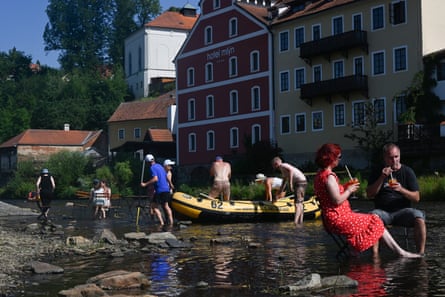 People cool off in the Vltava River in South Bohemia in Czechia. Photograph: Michal Čížek/AFP/Getty Images
theguardian.com
People cool off in the Vltava River in South Bohemia in Czechia. Photograph: Michal Čížek/AFP/Getty Images
theguardian.com
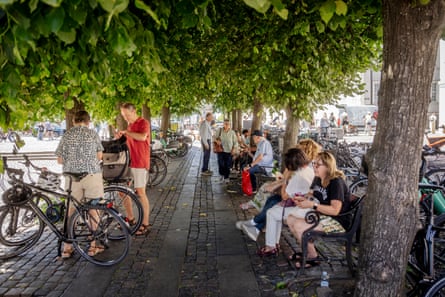 People rest in the shade in Copenhagen, Denmark. Photograph: Mads Claus Rasmussen/EPA
theguardian.com
People rest in the shade in Copenhagen, Denmark. Photograph: Mads Claus Rasmussen/EPA
theguardian.com
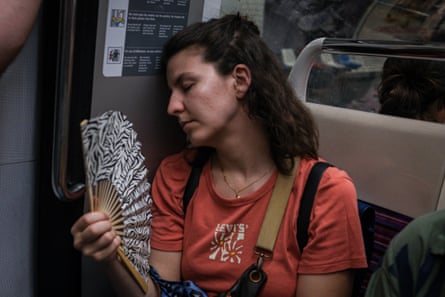 A passenger cools herself with a hand fan on the Paris Métro. Photograph: Annice Lyn/Getty Images
theguardian.com
A passenger cools herself with a hand fan on the Paris Métro. Photograph: Annice Lyn/Getty Images
theguardian.com
Poland registered an all-time national temperature record of 40.5C on Sunday as an early-summer heatwave pushed east across Europe, according to the BBC. The World Health Organization’s director-general Tedros Adhanom Ghebreyesus said more than 1,300 excess deaths had been recorded since 21 June in connection with the heat.
The numbers are arriving as governments lean on emergency messaging and ad hoc measures rather than infrastructure built for sustained high temperatures. The Guardian reports that more than 191 million people in Europe faced at least 35C, with extreme-heat warnings spreading across the region. In Poland, the government security agency sent text alerts urging people to avoid sun and strenuous activity, drink water, and wear hats, while cities erected water curtains. Germany’s rail operator Deutsche Bahn advised against nonessential travel as temperatures climbed, and in Berlin police used water cannons to cool residents and tourists.
The strain shows up in places that usually sit outside climate policy debates: rail timetables, home care, and the ability of emergency services to work. France’s health ministry reported around 1,000 more deaths than expected since midweek, with many of the fatalities among people over 65, and a sharp rise in people dying at home. That pattern matters because it is harder to see and harder to staff for: heat deaths do not arrive as a single mass-casualty incident, but as thousands of isolated medical emergencies scattered across apartments, care homes, and understaffed hospitals.
The heatwave also creates secondary hazards that consume capacity. The Guardian describes wildfires in eastern Germany where firefighting was complicated by World War II ammunition contamination, forcing pauses and evacuations and bringing bomb disposal units into what would otherwise be a routine fire response. When the same crews and logistics chains are needed for cooling centres, medical transport, and fire suppression, the cost of “just one more” extreme-weather event rises quickly.
Tedros said Europe is warming at twice the global average and warned that what was framed as a “once-in-a-generation” heatwave is now occurring nearly annually. His call for heat-health action plans points to a basic gap: much of Europe’s housing stock, workplaces, and schools were built to retain heat, not shed it, and retrofitting is slow and expensive even before energy prices, permitting, and labour shortages enter the picture.
On Sunday afternoon, Germany logged a new preliminary national high of 41.7C in eastern Brandenburg near the Polish border, after setting a record the day before, according to the BBC and the Guardian. In France, officials were still counting deaths, and many of the people most at risk were dying at home, out of sight of the public cooling measures in the streets.