
Venezuela earthquake death toll rises to 1430
La Guaira buildings collapse and main airport closes, civilians dig by hand as permits and patrols shape access
Images
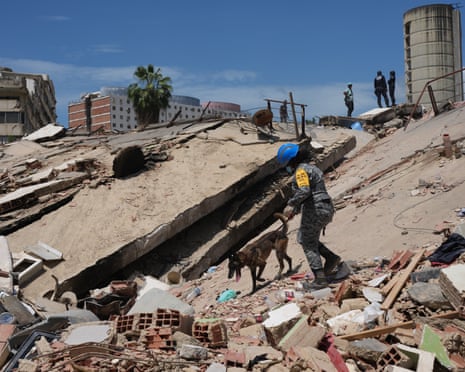 A rescue worker from Mexico and a sniffer dog search through the rubble of a collapsed building in La Guaira on Saturday. Photograph: Matias Delacroix/AP
theguardian.com
A rescue worker from Mexico and a sniffer dog search through the rubble of a collapsed building in La Guaira on Saturday. Photograph: Matias Delacroix/AP
theguardian.com
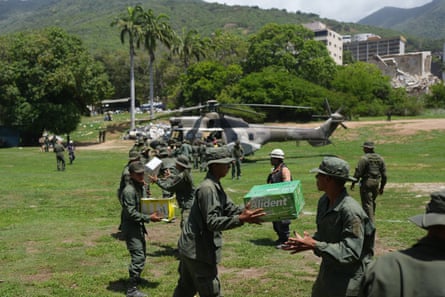 Venezuelan soldiers unload aid from a helicopter in La Guaira, one of the worst-affected areas. Photograph: Matias Delacroix/AP
theguardian.com
Venezuelan soldiers unload aid from a helicopter in La Guaira, one of the worst-affected areas. Photograph: Matias Delacroix/AP
theguardian.com
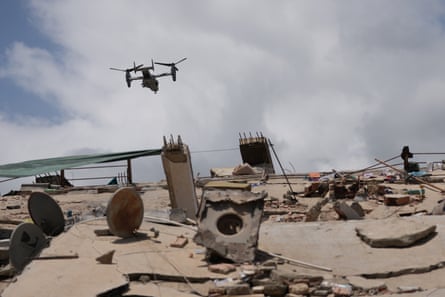 A US military drone flies over debris in La Guaira on Saturday. Photograph: Matias Delacroix/AP
theguardian.com
A US military drone flies over debris in La Guaira on Saturday. Photograph: Matias Delacroix/AP
theguardian.com
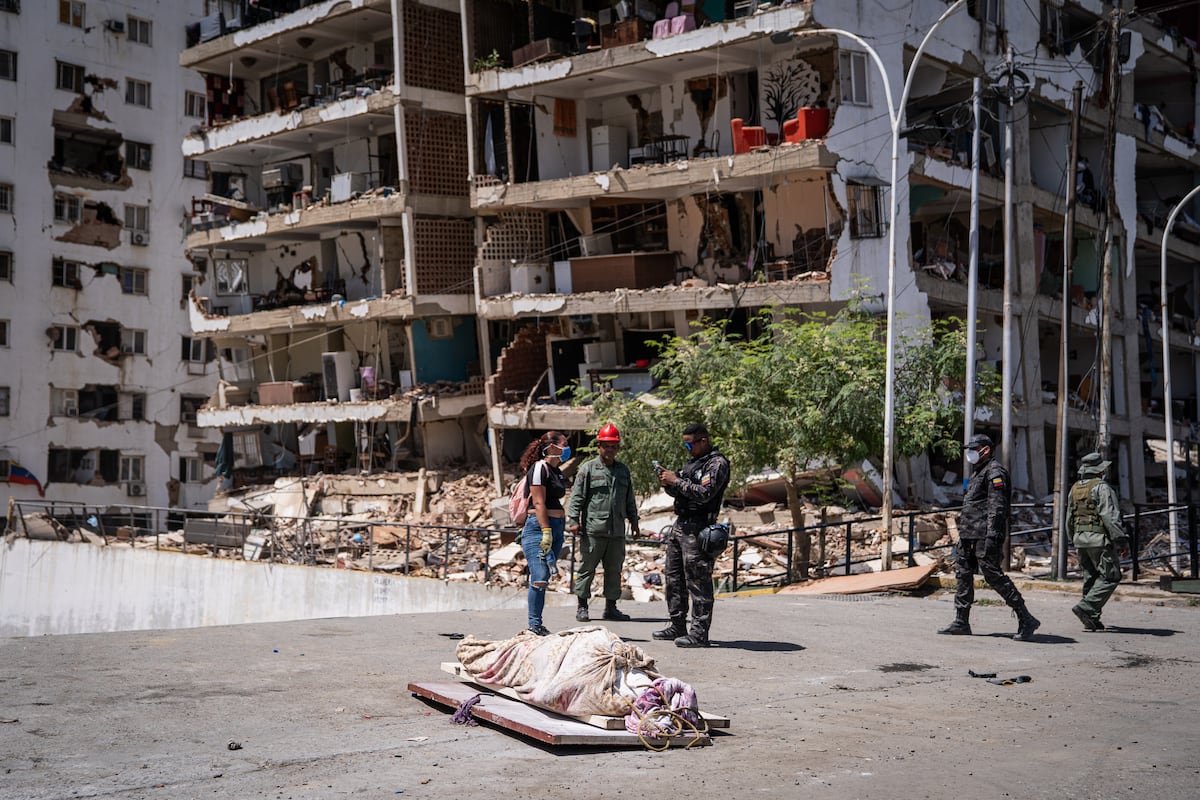 Venezuela Faces Catastrophe with an Overwhelmed State
english.elpais.com
Venezuela Faces Catastrophe with an Overwhelmed State
english.elpais.com
Venezuela’s twin earthquakes have pushed the official death toll to 1,430, with about 3,200 injured and roughly 3,100 left homeless, according to Venezuelan officials cited by The Guardian. The tremors—reported at magnitudes of 7.2 and 7.5—hit within under a minute of each other on Wednesday evening, striking as a national holiday left coastal areas crowded, El País reports. In La Guaira state, more than 100 buildings were reduced to rubble, and authorities have said tens of thousands have been reported unaccounted for by relatives.
The physical damage has rapidly become a test of state capacity. El País describes crushed high-rise towers and beachfront residential complexes that collapsed almost entirely, leaving only entrance gates standing—an image of how quickly concrete becomes debris when rules are optional. The Guardian reports that Venezuela’s only international airport was badly damaged, and El País says the main airport suffered severe structural damage and closed, complicating the arrival of heavy equipment and specialist teams. A British volunteer rescue team told The Guardian it was delayed more than a day in Madrid by flight cancellations, while the United States said it would coordinate flights for rescue workers, mobile hospitals and supplies.
On the ground, civilians have been digging with shovels and bare hands, The Guardian reports, as access to some areas is blocked and special permits are required. More than 14,000 military and police are patrolling affected zones, according to The Guardian, while international teams from several countries arrived to assist. The UN has estimated damage at $6.7bn—about 6% of Venezuela’s GDP—though its preliminary assessment focuses on losses to assets such as housing and does not include wider economic disruption.
El País’s reporting from La Guaira captures the mechanics of survival in a collapse: rescuers calling for silence to listen for voices under rubble, residents hauling mattresses and appliances onto sidewalks, and the smell of death settling over streets where the coastal highway has been torn apart. Officials have highlighted individual rescues, including an 11-year-old boy pulled alive from rubble, but the same reporting describes a widening gap between what is needed—reinforcements, search dogs, sustained logistics—and what can be reliably delivered when transport links and basic administration are themselves damaged.
The earthquakes did not only break buildings; they broke the systems that decide whether buildings stand. By Saturday, the country’s main airport was still closed, and residents in the hardest-hit coastal neighborhoods were still searching by hand.