
Hezbollah rejects Israel Lebanon framework
US-backed deal links Israeli withdrawal to Hezbollah disarmament, pilot zones named but not mapped and annex kept private
Images
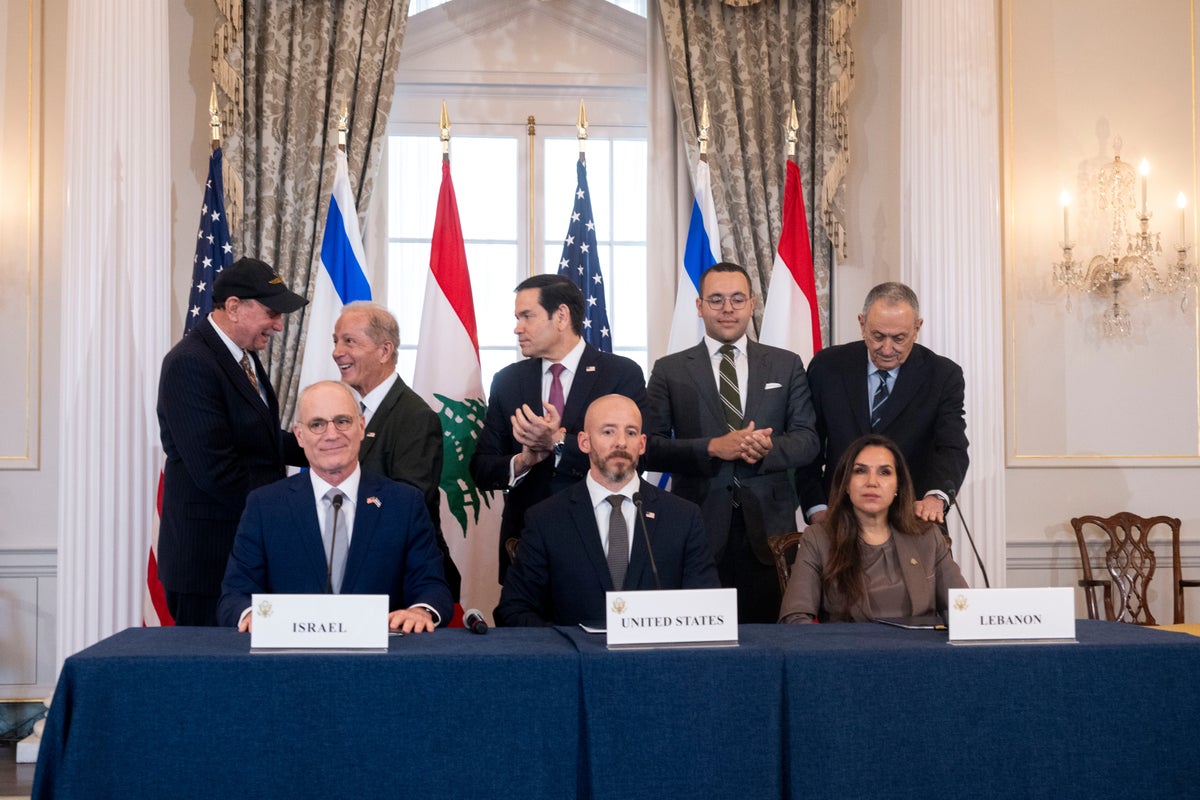 Lebanon's deal with Israel requires Hezbollah to disarm. That might be difficult
independent.co.uk
Lebanon's deal with Israel requires Hezbollah to disarm. That might be difficult
independent.co.uk
Hezbollah has rejected a US-backed framework signed by Israel and Lebanon in Washington that is meant to end months of fighting across the border, according to The Independent. The text ties Israel’s withdrawal from parts of southern Lebanon to Hezbollah’s disarmament—an explicit condition the group says it will not accept. Lebanon’s state news agency reported an Israeli drone strike near Nabatiyeh even after the agreement was announced, underscoring how little on the ground changes when the parties with guns are not party to the paperwork.
The deal’s structure puts the Lebanese state in the position of guarantor without giving it the tools of enforcement. Lebanon’s army is tasked with gradually taking “full security responsibility” in initial “pilot zones”, but the agreement does not specify where those zones are, and a security annex detailing deployments and redeployments was not made public, The Independent reports. Israel’s logic is straightforward: disarmament and “additional agreed security measures” would remove the need for Israeli forces to remain. Hezbollah’s logic is equally plain: it frames the linkage as a “humiliation” and a “very dangerous suggestion”, with its leader Naim Kassem saying the group will continue fighting until Israel leaves Lebanon.
That sequencing matters because it turns withdrawal into leverage over a domestic rival rather than a bilateral step that can be verified and banked. If Israel’s pullback is conditional on Hezbollah disarming, Hezbollah can block Israel’s exit simply by refusing to comply—while Israel can argue it is still entitled to stay. Lebanese officials are then left to choose between confronting an armed movement that is widely seen as stronger than the state, or accepting continued Israeli presence and the political cost that comes with it. Hezbollah official Hassan Fadlallah warned the arrangement could lead to civil war because the group will resist disarmament and any measures by the Lebanese army, while Lebanon’s top public prosecutor instructed security agencies to prevent riots, according to The Independent.
Public reaction inside Lebanon is already split. The Independent describes protests by Hezbollah supporters in Beirut, while also quoting Lebanese voices who want the authorities to pursue a lasting peace and others who say the deal “legitimized” occupation. On the Israeli side, a citizen quoted in the report doubts the Lebanese military “can stand a chance” against Hezbollah—an assessment that, if widely shared, makes future verification arguments as politically important as troop movements.
The agreement aims, eventually, to end the state of war dating to 1948. For now it begins with unnamed pilot zones and an unpublished annex, while drones still fly over Nabatiyeh.