
Small plane crashes into Beijing CITIC Tower
Evacuations and street cordons lock down Guomao financial district, authorities give no immediate public account
Images
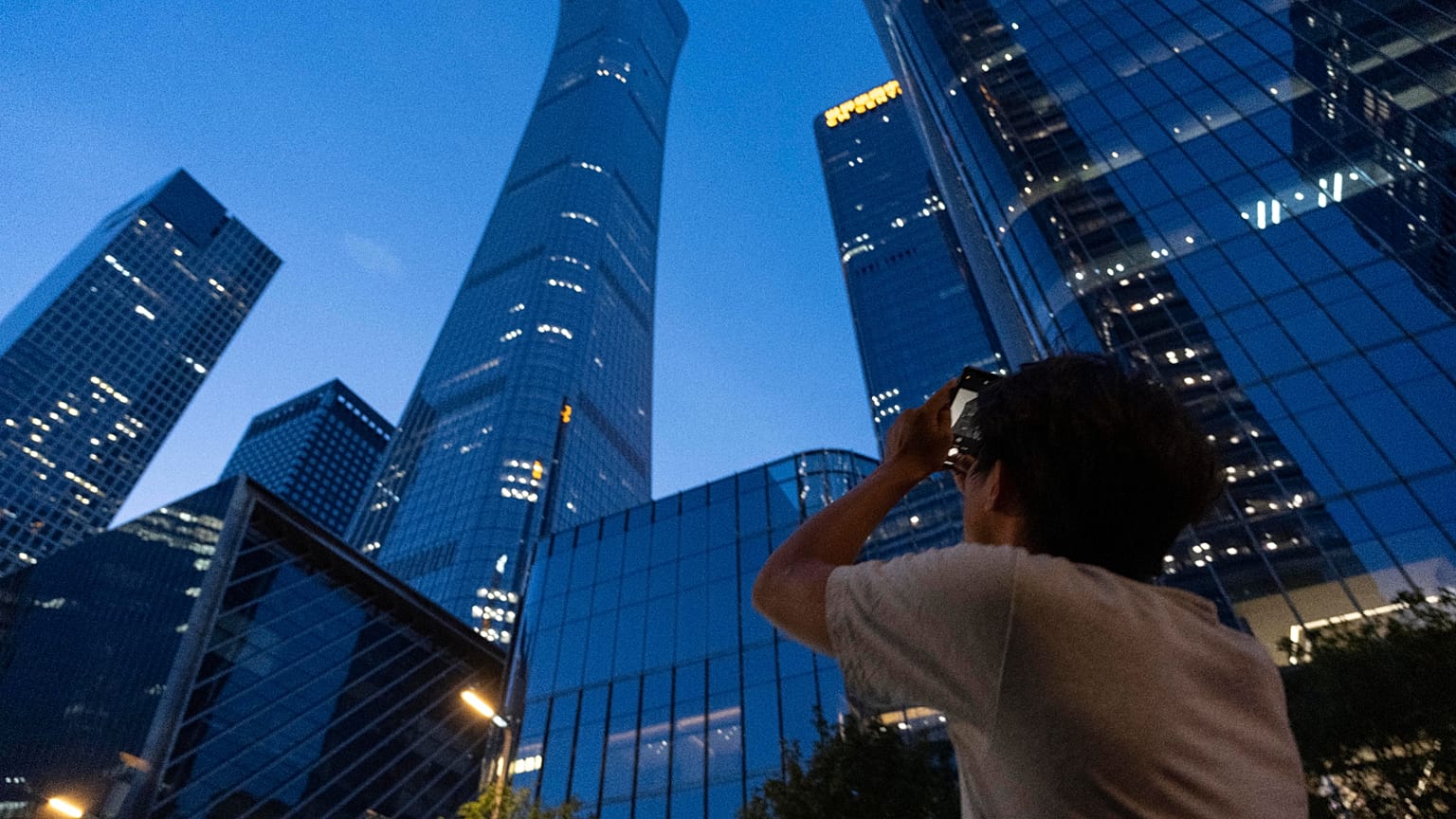 A passerby tries to take photo of the damage on the Citic Tower also known as Zun Tower in Beijing,
euronews.com
A passerby tries to take photo of the damage on the Citic Tower also known as Zun Tower in Beijing,
euronews.com
A small aircraft crashed into Beijing’s tallest skyscraper on 26 June, prompting evacuations and a heavy emergency response in the capital’s central business district. Euronews reported that police and emergency crews sealed off streets around the CITIC Tower, a 528-metre landmark, after images showed a hole high in the building’s facade and smoke rising from the upper floors.
According to Euronews, authorities urged people not to stop near the scene or film, while fire engines and ambulances gathered below. The outlet said the cause remained unclear and that Chinese authorities had not issued an official statement by the time of publication. That information gap has become part of the story: in dense megacity cores, where a single incident can force mass evacuations and traffic closures, the first public record is often a mix of official cordons and unverified clips.
A crash into a high-rise is also a reminder that “general aviation” is not just a rural activity once cities fill with towers and financial districts. Even when casualties are uncertain, the secondary costs arrive immediately: building shutdowns, disrupted commutes, and an ad-hoc perimeter that turns a business district into a controlled zone. The episode lands amid China’s broader push to expand low-altitude aviation and drone activity, a policy direction that depends on public tolerance for occasional failures. What is manageable when an aircraft goes down in open terrain looks different when debris can fall onto sidewalks and vehicles in a crowded commercial center.
Euronews noted that some social-media footage could not be independently verified, underscoring how quickly narratives form before investigators speak. In this case, the visible damage — a puncture in the glass skin of a signature tower — does not require much interpretation, but the unanswered questions do: how the aircraft was operating, what safety buffers existed, and how emergency services coordinate when the incident site is dozens of floors above street level.
By the end of the day, the most concrete facts were on the ground: cordoned streets, evacuated occupants, and a hole in the upper floors of the CITIC Tower.