
Kentucky flash floods kill at least three people
Governor declares emergency as water rescues continue, dam failure warning forces evacuations in Bullitt County
Images
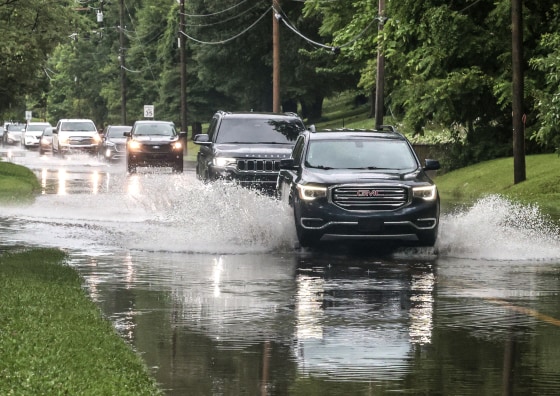 A line of vehicles driving through floodwater.
nbcnews.com
A line of vehicles driving through floodwater.
nbcnews.com
 nbcnews.com
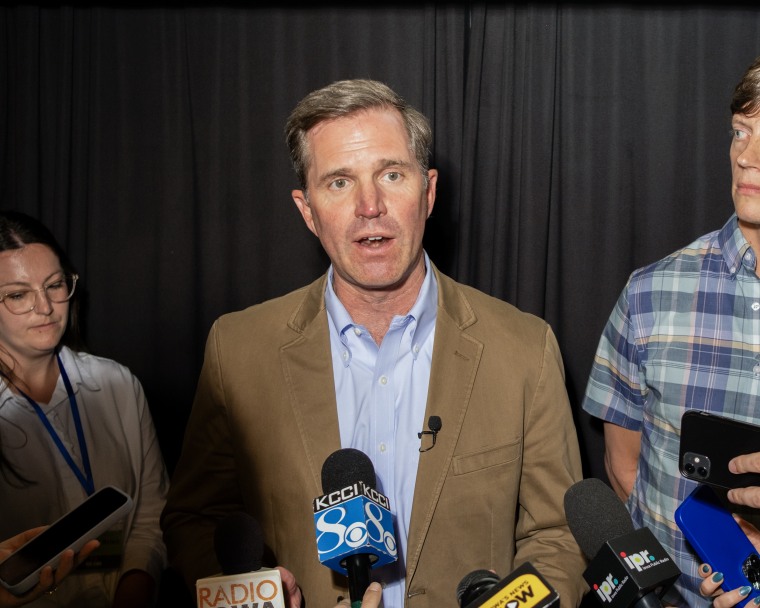 Gov. Andy Beshear warned Kentucky residents in a video message not to drive after dark, adding that a motorist was swept away and killed by the floods. KC McGinnis / Bloomberg via Getty Images
nbcnews.com
Gov. Andy Beshear warned Kentucky residents in a video message not to drive after dark, adding that a motorist was swept away and killed by the floods. KC McGinnis / Bloomberg via Getty Images
nbcnews.com
At least three people died in flash floods across Kentucky after heavy rain and multiple thunderstorms sent water through roads, homes and vehicles, according to NBC News. Governor Andy Beshear declared a state of emergency on Saturday, urging residents not to drive after dark as rescue crews carried out water rescues. Local officials in Madison County reported three adult deaths, while another fatality was suspected elsewhere in the state.
The immediate pattern was familiar: intense rainfall overwhelms drainage and turns ordinary routes into moving water, leaving responders to improvise with high-axle vehicles and search-and-rescue teams. NBC News reported six to seven inches of rain in some areas, a volume that can turn small creeks into fast currents within minutes. Counties issued local emergency declarations and opened a shelter for displaced residents, while officials also warned of infrastructure failures, including what Bullitt County described as a “moderate dam failure” and an evacuation notice for some residents.
These events are increasingly managed as recurring operations rather than rare disasters. The National Weather Service kept multiple counties under flood watch through Saturday night, and authorities leaned heavily on public messaging—stay off roads, move to higher ground—because enforcement is limited once water spreads across a wide area. The costs also arrive in layers: first the rescues, then the damage to homes and roads, then the longer tail of insurance disputes, temporary housing and repairs.
NBC News pointed to recent precedent in the US, including catastrophic flooding in Texas in 2025, as officials and residents weigh whether local preparedness matches the speed at which water now rises. Even in a single state, response capacity can hinge on practical constraints: how quickly teams can be moved, what vehicles can operate in deep water, and whether people can be reached before nightfall.
In Kentucky, the state’s most concrete instruction remained the simplest one. Beshear’s warning was not to drive after dark.