
Serbia president Aleksandar Vučić says he will resign, early election called amid protests and EU accession scrutiny
A leadership exit still leaves room for continuity
Images
 El mandatario agradeció a sus aliados de coalición y afirmó que esa sería su última aparición pública como presidente ante una multitud (Reuters)
infobae.com
El mandatario agradeció a sus aliados de coalición y afirmó que esa sería su última aparición pública como presidente ante una multitud (Reuters)
infobae.com
 Las protestas estudiantiles estuvieron marcadas por episodios de violencia y enfrentamientos con las fuerzas de seguridad en distintas ciudades del país (Reuters)
infobae.com
Las protestas estudiantiles estuvieron marcadas por episodios de violencia y enfrentamientos con las fuerzas de seguridad en distintas ciudades del país (Reuters)
infobae.com
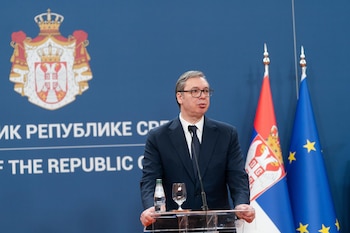 Vucic adelantó que no buscará la reelección, pero dejó abierta la posibilidad de continuar en la política, incluso como primer ministro (Europa Press)
infobae.com
Vucic adelantó que no buscará la reelección, pero dejó abierta la posibilidad de continuar en la política, incluso como primer ministro (Europa Press)
infobae.com
Serbia’s President Aleksandar Vučić says he will resign “within a few weeks” and has called for early elections, according to Euronews. The announcement was made in Belgrade against a backdrop of sustained protests and growing pressure on the government. Serbia is an EU candidate country, and the sudden promise of a near-term exit by the dominant political figure since 2012 immediately raises questions about what, if anything, will change.
The protest movement that has dogged Vučić’s administration was reignited after a deadly canopy collapse at the Novi Sad train station in late 2024, a disaster that became a shorthand for allegations of shoddy public works, weak oversight and political patronage. Infobae reports that demonstrators, opposition groups and human-rights organisations have linked the tragedy to broader claims of corruption, repression and constraints on media freedom, while the government has faced recurring street mobilisation and clashes with security forces. Vučić, for his part, framed his tenure as a turnaround story, pointing to improvements he says Serbia has made since the early years of his rule.
Early elections can function as a release valve, but they also allow incumbents to reset the clock on their own terms: choosing the moment, the narrative and the administrative machinery that shapes turnout, campaign access and the media environment. In a country where EU accession is formally tied to rule-of-law benchmarks and credible elections, Brussels will be watching whether the contest expands political competition or simply re-legitimises the same governing network under a new configuration. The resignation language also leaves room for continuity: Infobae notes Vučić hinted he may remain politically active and even floated the idea of seeking another senior role.
For Serbia’s neighbours and for EU officials, the immediate issue is not just who replaces Vučić, but whether the next government can credibly address the grievances that made a local infrastructure failure into a national political crisis. For voters, the near-term test will be whether an election called amid protests produces a clear change in power—or a familiar result with a different headline.
Vučić told supporters he expects to leave the presidency within weeks. The country will then discover how much of Serbia’s politics was tied to the office, and how much was tied to the man.