
Utah wildfires expand under rare red-flag warning
Cottonwood Fire burns more than 92000 acres with zero containment, statewide fireworks limits substitute for firefighting slack
Images
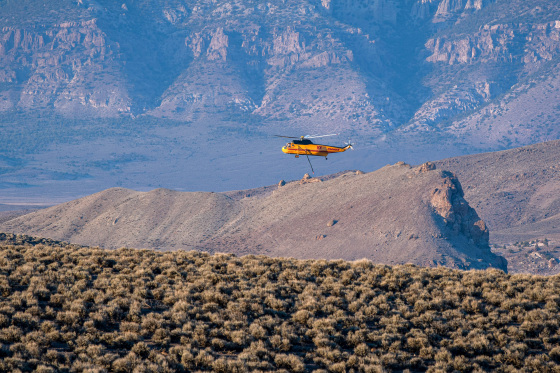 A firefighting helicopter flies over the mountain landscape near Piute Reservoir.
nbcnews.com
A firefighting helicopter flies over the mountain landscape near Piute Reservoir.
nbcnews.com
 nbcnews.com
A red-flag warning reserved for “particularly dangerous situations” went out over Utah this week as the Cottonwood Fire burned across more than 92,000 acres with no containment, according to NBC News. In nearby parts of the Southwest, smaller fires triggered evacuations, road closures and power shutoffs, while officials warned that gusty winds, low humidity and dry thunderstorms could turn new lightning strikes into fresh ignitions. Utah’s governor restricted fireworks statewide through early July, limiting public displays to select areas.
The immediate driver is weather, but the operational story is capacity and timing. The National Weather Service described an “extremely critical risk” across the Great Basin and Four Corners, with wind gusts forecast as high as 50 miles per hour. Fire managers told NBC there was no estimate for when Cottonwood would be contained, and their stated plan was to “engage the fire where and when possible,” prioritising firefighter and public safety—language that reflects how often crews are forced into triage rather than suppression. In the Cottonwood footprint, vegetation had been drying since March after record temperatures and low snowpack, a slow-burn setup that turns a few hours of wind into five days of expansion.
The economic effects arrive in uneven layers. A ski resort inside the burn area reported damage and said it would be closed for a considerable time to recover, an early indication of how wildfire losses extend beyond homes to seasonal businesses and local tax bases. Air quality forecasts for communities such as Marysvale moved into “unhealthy” territory, with public-health advice aimed at children, pregnant women, the elderly and people with heart or lung disease—groups that also tend to have the least flexibility to relocate or stop working outdoors. Each closure order, evacuation route and precautionary power shutoff shifts costs onto households and small firms that cannot bill anyone for lost days.
The longer pattern is that the system is built around short, predictable peaks, while the calendar for extreme fire behaviour is stretching. Dry thunderstorms add a peculiar asymmetry: they can deliver lightning without the rain that would normally limit spread, creating ignitions at the same moment that wind and humidity make them hardest to attack. When conditions are this volatile, officials reach for blunt tools—statewide fireworks limits, forest closures, and warnings that implicitly ask residents to self-police risk—because enforcement and suppression resources are finite.
On Saturday, NBC reported the Cottonwood Fire still had zero containment after five days. The state’s most visible response was to tell people not to light fireworks.