
Venezuela earthquakes leave La Guaira in ruins
Chile’s building-code model highlights what enforcement buys, residents dig with bare hands before rescuers arrive
Images
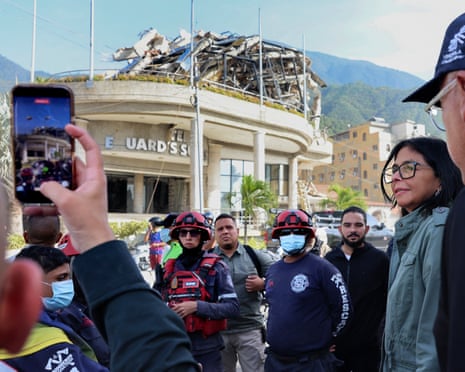 Delcy Rodríguez (right) tours the damage to the Caribbean coastal city of La Guaira, where the most damage was inflicted by twin earthquakes that struck Venezuela on 24 June. Photograph: Venezuelan presidency/AFP/Getty
theguardian.com
Delcy Rodríguez (right) tours the damage to the Caribbean coastal city of La Guaira, where the most damage was inflicted by twin earthquakes that struck Venezuela on 24 June. Photograph: Venezuelan presidency/AFP/Getty
theguardian.com
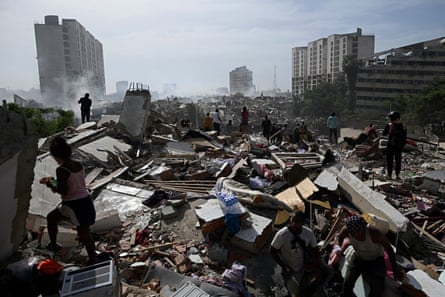 Rubble in the city of Caraballeda, six miles east of La Guaira along Venezuela’s Caribbean coast. Photograph: Federico Parra/AFP/Getty
theguardian.com
Rubble in the city of Caraballeda, six miles east of La Guaira along Venezuela’s Caribbean coast. Photograph: Federico Parra/AFP/Getty
theguardian.com
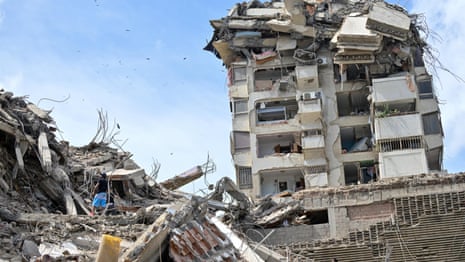 Aerial footage shows scale of destruction after deadly earthquakes in Venezuela – video
theguardian.com
Aerial footage shows scale of destruction after deadly earthquakes in Venezuela – video
theguardian.com
 Desperate search for survivors after deadly earthquakes hit Venezuela - The Latest
theguardian.com
Desperate search for survivors after deadly earthquakes hit Venezuela - The Latest
theguardian.com
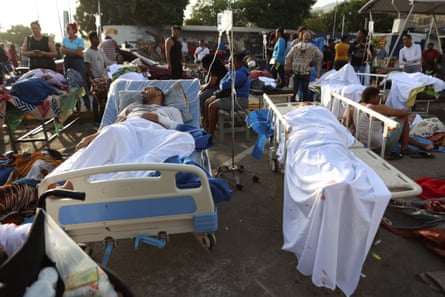 Patients evacuated from a damaged hospital in Catia La Mar. Photograph: Pedro Mattey/AP
theguardian.com
Patients evacuated from a damaged hospital in Catia La Mar. Photograph: Pedro Mattey/AP
theguardian.com
 Why did so many buildings collapse in the Venezuela earthquake? The hard lessons learned in Chile
english.elpais.com
Why did so many buildings collapse in the Venezuela earthquake? The hard lessons learned in Chile
english.elpais.com
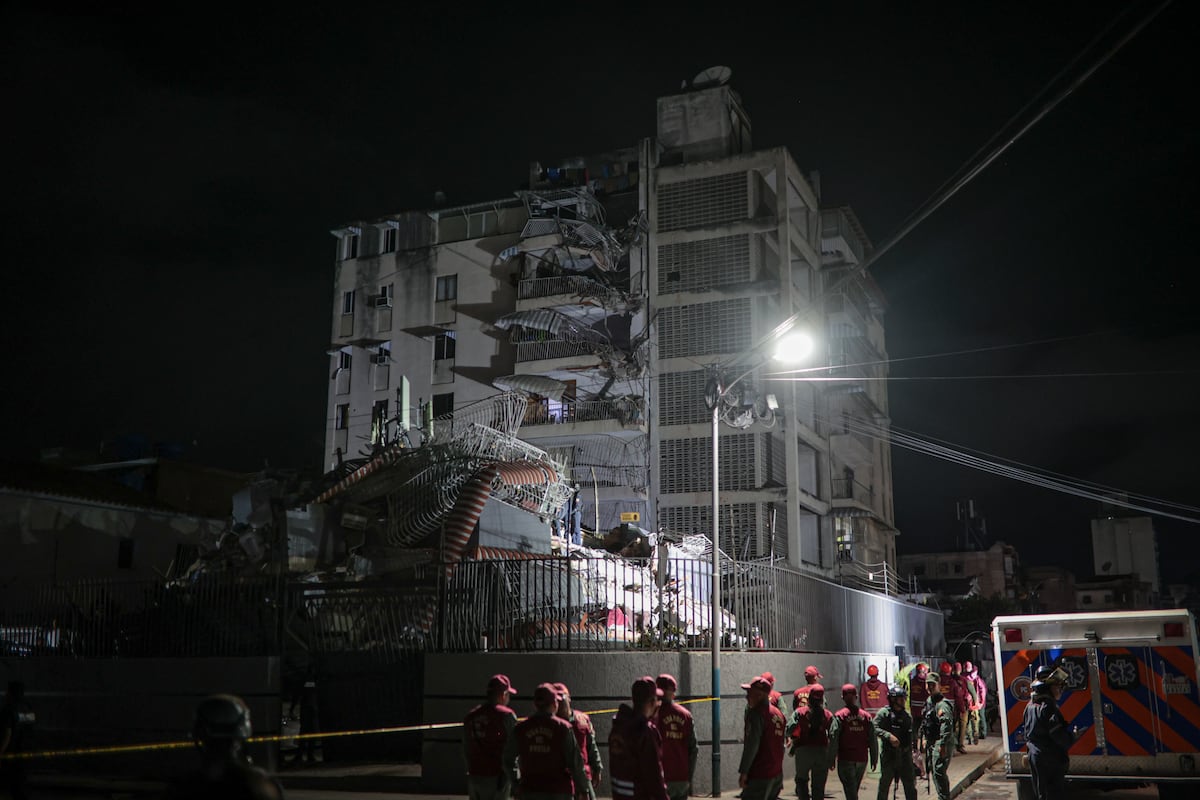
Twin earthquakes measuring 7.2 and 7.5 hit northern Venezuela this week, flattening buildings and leaving La Guaira declared a disaster zone, according to The Guardian and El País. The Guardian put the official death toll at 920 as of Friday, with nearly 3,000 injured and the UN aid chief saying more than 50,000 people were missing. In La Guaira and nearby coastal towns, residents described pulling survivors from collapsed towers with bare hands before state emergency workers arrived.
El País frames the scale of collapse as a man-made multiplier rather than a purely geological surprise. In Chile, where earthquakes of similar or greater magnitude are routine, the destruction has often been limited not by luck but by rules that are written to be obeyed and institutions that are paid to enforce them. Experts cited by El País attribute Chile’s relative resilience to strict building codes, consistent inspection, and construction systems designed to dissipate seismic energy. Rubén Boroschek of the University of Chile points to early adoption of earthquake-resistant techniques in the early 20th century, while other specialists highlight the widespread use of structural walls that keep buildings standing even when facades crack and interiors suffer damage.
Venezuela’s building stock, by contrast, leans heavily on beam-and-column frames that engineers say are more prone to catastrophic failure when loads shift. The epicenter lay between Yumare and Montalbán in Yaracuy and Carabobo states, but the worst damage concentrated in La Guaira, roughly 30 kilometers from Caracas, where El País reports hundreds of buildings with serious structural damage and multiple apartment towers collapsed. The city’s history makes the pattern harder to dismiss as unforeseeable: La Guaira was devastated by mudslides in 1999, and in 2019 a geographer at the Central University of Venezuela warned that construction on ravines, hillsides, and unstable land had left the area as vulnerable as it was two decades earlier.
The response described by The Guardian shows what weak capacity looks like in the first hours of mass casualty rescue. Volunteers and relatives improvised at sites such as a collapsed tower block in La Guaira, while a paramedic searching for his mother said no government emergency workers appeared initially. Another resident described spending hours extracting a trapped cousin from debris with friends, with basic tools becoming the difference between rescue and recovery. Foreign teams began arriving, including a British deployment of fire brigade personnel with search dogs, and the UK announced humanitarian funding.
The disaster is now being measured not only in deaths and missing persons but in the credibility of the state’s promises to rebuild. In La Guaira, the same slopes that were built on after 1999 are again being searched for survivors under concrete slabs.