
World Cup 2026 shifts costs to host states
El País details FIFA revenue model and North American security spending, counter-drone budgets become the quiet line item
Images
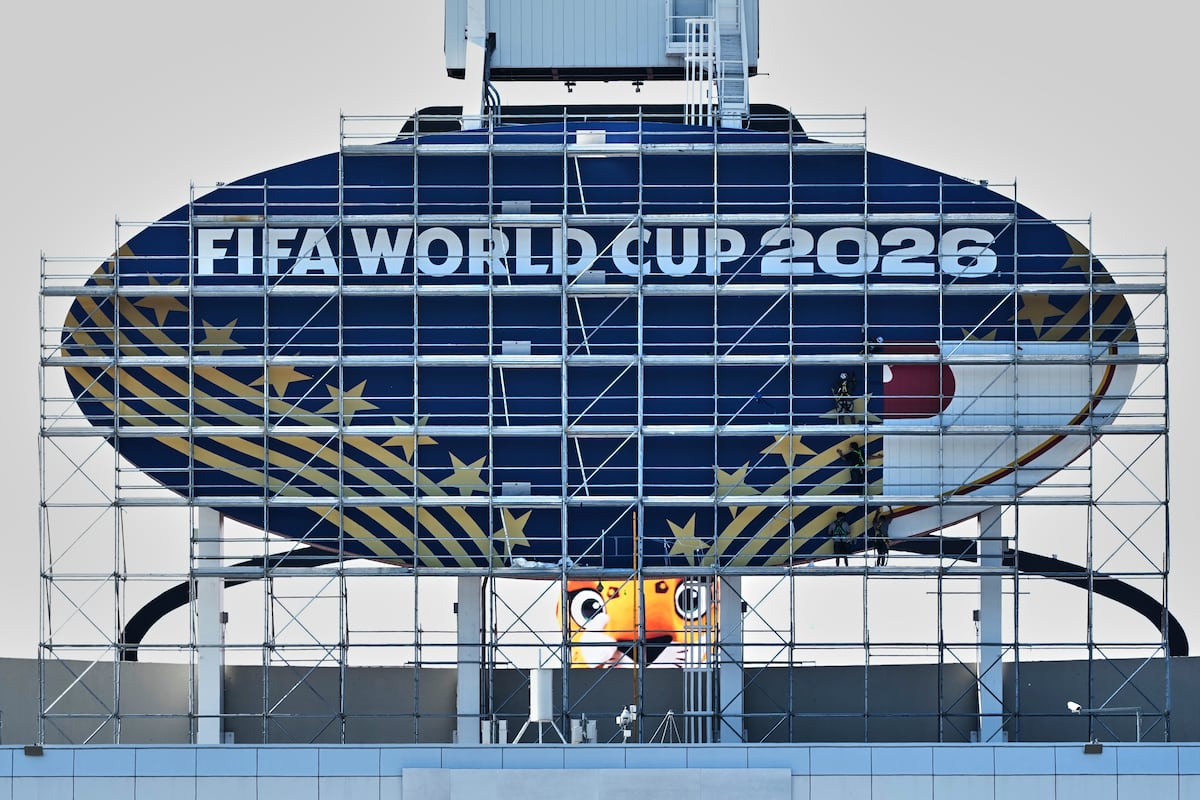 The lucrative business of the World Cup: How FIFA secures millions in profits, while host nations take all the risks
english.elpais.com
The lucrative business of the World Cup: How FIFA secures millions in profits, while host nations take all the risks
english.elpais.com
The 2026 men’s World Cup spans 39 days across the United States, Mexico and Canada, with 48 teams playing 104 matches in 16 venues. According to El País, FIFA expects an audience in the billions and is promoting forecasts of large global economic spillovers from the tournament. The same reporting shows the hosts’ public sector is still paying for the unglamorous parts: security, counter-drone measures and transport fixes.
El País describes a model that has become standard for mega-events: FIFA sells the television rights and sponsorship inventory, while host governments and cities underwrite the conditions that make the spectacle possible. A Bank of America estimate cited by the paper projects that around six billion people will watch at least some of the competition via TV, streaming or social media, a scale that makes broadcasting rights unusually valuable. FIFA and the OECD, in a joint report referenced by El País, put the tournament’s global GDP impact at $41bn and forecast hundreds of thousands of jobs, along with billions in tax revenues for North America’s public coffers. Those headline numbers sit alongside more concrete line items. The US government, El País reports, spent about $1.2bn related to the tournament, with more than half devoted to security across 11 US host cities and a further $500m aimed at preventing drone attacks.
This edition is cheaper to stage than recent World Cups because the stadiums already existed and host cities have largely avoided the kind of urban rebuilding that defined Qatar 2022 and, earlier, Russia 2018 and Brazil 2014. El País notes that the US is using large American football stadiums rather than building new arenas, and that host cities have not undertaken large-scale redevelopment projects. That reduces the risk of the most visible white elephants, but it does not eliminate the underlying bargain: the organizer keeps the revenue streams that scale globally, while local authorities carry the cost of policing, emergency planning and infrastructure stress. Even the “savings” are partly an accounting choice—security and airspace control are public functions that can be expanded for a tournament and then absorbed into baseline budgets.
The politics follows the money. El País points to a White House task force led by Andrew Giuliani, who argues that the US has hosted more efficiently than prior countries because it can lean on existing infrastructure. The argument is easier to make when the capital costs are sunk and the marginal costs can be spread across taxpayers who did not sign the contracts.
On June 19, El País reports, a Haiti–Brazil match was played in Philadelphia. The tickets, broadcast slots and sponsorships traveled globally; the counter-drone systems and police overtime stayed local.