
AI-equipped drone finds lost hikers in Kosciuszko national park
Fire and Rescue NSW says thermal imaging cut search from days to hours, spotlight and loudspeaker turn aircraft into guide
Images
 A screengrab from video of the drone and AI assisted search and rescue at Dead Horse Gap in Kosciuszko national park. Composite: Fire and Rescue NSW
theguardian.com
A screengrab from video of the drone and AI assisted search and rescue at Dead Horse Gap in Kosciuszko national park. Composite: Fire and Rescue NSW
theguardian.com
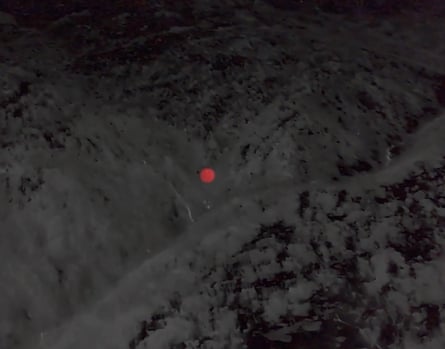 A screengrab from video of the search and rescue operation in Kosciuszko national park. Composite: Fire and Rescue NSW
theguardian.com
A screengrab from video of the search and rescue operation in Kosciuszko national park. Composite: Fire and Rescue NSW
theguardian.com
Two hikers in their 20s were rescued in Australia’s Kosciuszko national park within five hours after Fire and Rescue NSW deployed an AI-assisted drone to locate them, The Guardian reports. The pair were reported missing at 7pm on Tuesday after failing to return to a rendezvous point, having veered off the Dead Horse Gap walking track south-west of Jindabyne. A remote piloted drone using thermal imaging found them in the dark, and the hikers signalled back with a red light on a mobile phone.
Search-and-rescue in remote terrain usually scales the wrong way: every hour that passes expands the possible search area, adds exposure risk for the missing, and increases the number of personnel needed on the ground. The Guardian quotes Fire and Rescue inspector Phillip Eberle saying the technology potentially reduced the search time by “several days,” turning what could have become a long-term incident into a short-term one. That matters because the second-order costs of a prolonged search are carried by everyone involved—rescuers operating at night in cold conditions, agencies diverting staff and aircraft, and families waiting while probabilities worsen.
The drone did more than spot heat signatures. Its built-in speaker was used to contact the hikers, and its spotlight was used to guide ground teams to their location, about half a kilometre off the track, according to the report. The hikers suffered mild effects of exposure but did not require medical treatment.
This was the first time Fire and Rescue NSW’s AI detection system had been used to rescue missing people, The Guardian writes, and officials are already describing the next steps. Eberle said he hoped drones could eventually drop emergency supplies and care packages to stranded people, a shift that would turn aerial search from a pure information tool into a temporary logistics link. Another commander, John Marzol, used the incident to urge hikers in the snowfields to notify the National Parks and Wildlife Service before setting out and to register for free Personal Locator Beacons.
The immediate lesson of the operation was practical: the hikers were located by a thermal camera, and then guided out by a moving spotlight. They were found because they had a phone battery left to flash a red light back.