
Cape Verde reach World Cup last 32
Goalless draw with Saudi Arabia seals Group H runner-up spot, big-league investment fails to move the national-team needle
Images
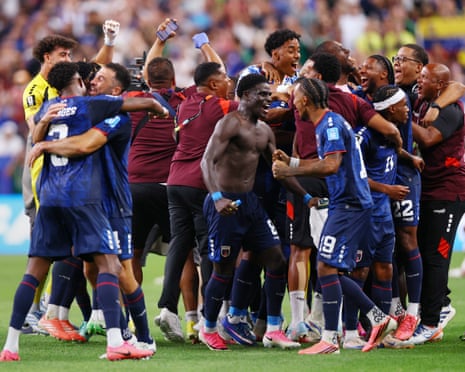 Cape Verde players celebrate after the match as they qualify for the knockout stages of the World Cup. Photograph: Pedro Nunes/Reuters
theguardian.com
Cape Verde players celebrate after the match as they qualify for the knockout stages of the World Cup. Photograph: Pedro Nunes/Reuters
theguardian.com
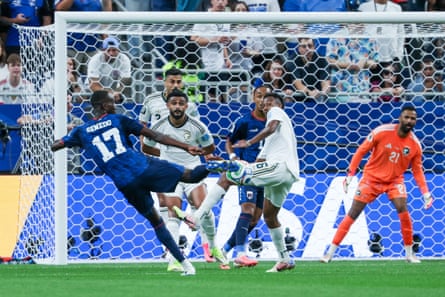 Cape Verde’s Willy Semedo shoots for goal. Photograph: Leo Barrilari/SPP/Shutterstock
theguardian.com
Cape Verde’s Willy Semedo shoots for goal. Photograph: Leo Barrilari/SPP/Shutterstock
theguardian.com
Cape Verde reached the World Cup’s round of 32 on Saturday after a 0–0 draw with Saudi Arabia in Houston, a result that secured second place in Group H. According to The Guardian’s match report, players and coach Bubista ended the evening watching Spain’s defeat of Uruguay on a mobile phone as the wider group picture settled. The reward is a last-32 tie against Argentina in Miami.
On paper, this was the kind of group-stage meeting designed to showcase football’s new money: Saudi Arabia’s domestic league has attracted major investment, and the country is now embedded in FIFA’s commercial ecosystem, including through Aramco’s role as a top-tier sponsor. On the pitch, the match instead underlined how little of that spending automatically turns into a coherent national-team product. The Guardian describes Saudi Arabia as needing a win to progress but making minimal impact, with their best first-half chance arriving only in stoppage time when Mohamed Kanno forced a save from Cape Verde goalkeeper Vozinha.
Cape Verde’s route looked more like a tournament built on small margins and repeated competence: earlier draws against Spain and Uruguay meant they arrived in Houston able to treat another stalemate as success. That changes the incentives inside the game itself. When one side can qualify by not losing, the other is pushed into riskier play—yet risk is hard to price when the opponent is comfortable defending deep and countering into space. The report notes Cape Verde had numerous second-half counter-attacks, while Saudi Arabia’s pressure produced little beyond moments, including a high tackle by Saud Abdulhamid and a “nasty injury” to Hassan al-Tambakti that forced a substitution.
The crowd’s response singled out one figure. Vozinha, greeted with loud roars when the teams were announced and when his face appeared on the stadium screens, has become a cult hero of the tournament, The Guardian writes—an emblem of how World Cups still elevate goalkeepers from small nations into global storylines. For Saudi Arabia, the contrast was sharper: a heavily financed league can buy attention and imported talent, but it cannot buy the defensive reads and decision-making that decide knockout qualification.
Cape Verde left Houston without scoring, without conceding, and with a flight booked to Miami. Saudi Arabia left needing one win, and getting none.