
US strikes Iranian sites after cargo ship attack in Strait of Hormuz
Centcom says ceasefire still stands as toll rules and nuclear disputes resurface, shipping corridor policed by press releases and drones
Images
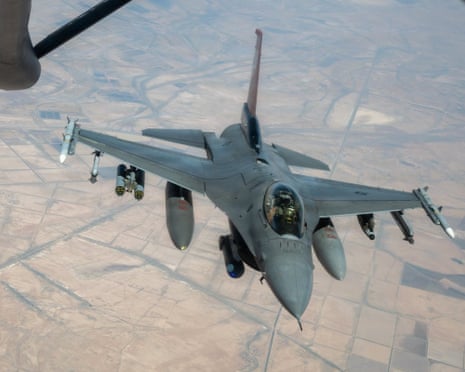 F-16 fighter jets on patrol in the Middle East. US Central Command said it had struck a ‘powerful response’ to Iran’s attack on the Singapore-flagged M/V Ever Lovely a day earlier. Photograph: Centcom
theguardian.com
F-16 fighter jets on patrol in the Middle East. US Central Command said it had struck a ‘powerful response’ to Iran’s attack on the Singapore-flagged M/V Ever Lovely a day earlier. Photograph: Centcom
theguardian.com
US Central Command said it struck Iranian missile and drone storage locations after an attack on the Singapore-flagged cargo ship M/V Ever Lovely in the Strait of Hormuz, a fresh military action presented as enforcement of a ceasefire rather than its collapse. According to The Guardian, the strikes hit multiple facilities in Iran near the strait and on Qeshm Island on Friday. The UK Maritime Trade Operations centre reported no injuries and said the vessel’s bridge was damaged.
The episode shows how quickly a ceasefire in the Gulf can turn into a dispute over who gets to define “normal” shipping. Iran’s Persian Gulf Strait Authority said on Thursday that passages outside its designated framework would not be covered by safe-passage guarantees, insurance coverage or related liabilities, a bureaucratic lever aimed at routing traffic through channels it controls. After the attack, the UN’s International Maritime Organization paused efforts to evacuate hundreds of ships stranded in the Persian Gulf, a reminder that even limited damage to a single vessel can freeze movement when insurers, port authorities and international bodies wait for clarity on responsibility.
Washington’s messaging tried to keep the conflict in a narrow box: Centcom called the strikes a “powerful response” while also saying the US would continue to enforce the ceasefire agreement with Iran despite “emerging disagreements” over Iran’s nuclear programme, tolls in the strait and Iran’s ballistic missile programme. JD Vance wrote on social media that Iran had signed a ceasefire and that violence would be met with violence. Donald Trump, speaking as former president, said Iran’s drone attack violated the ceasefire and described it as a “foolish violation,” adding that Iran took “four shots” the day before the US strikes.
Tehran’s public line, by contrast, sought to downgrade the incident into process management. Iran’s Revolutionary Guards said they targeted US military positions in the region in response to the US strike but provided no details. Ebrahim Azizi, described by The Guardian as a senior Iranian security official, said Iran was not seeking escalation and called the situation “ceasefire management” rather than a violation. That framing matters because it leaves room for further tit-for-tat actions while insisting the agreement still exists.
The immediate facts are mundane and costly: a bridge damaged, no casualties, and an international evacuation effort put on hold. In the Strait of Hormuz, even a ceasefire can be administered one drone strike and one insurance clause at a time.