
Switzerland votes on population cap
SVP initiative ties migration limits to a 10 million ceiling by 2050, EU single-market access becomes collateral if threshold is breached
Images
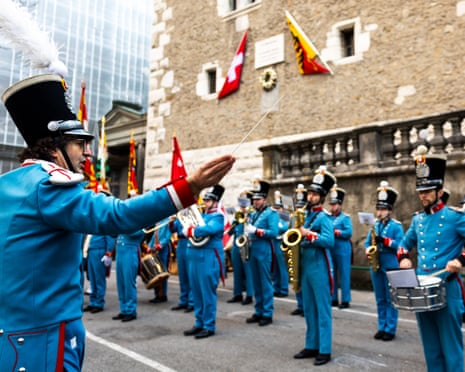 The Landwehr brass band plays the Swiss anthem at the 211th ceremony of the Restoration of Geneva, marking the departure of Napoleon's troops in 1813. Photograph: Salvatore Di Nolfi/EPA
theguardian.com
The Landwehr brass band plays the Swiss anthem at the 211th ceremony of the Restoration of Geneva, marking the departure of Napoleon's troops in 1813. Photograph: Salvatore Di Nolfi/EPA
theguardian.com
Swiss voters are waiting for results from a national referendum that would force the government to cap the country’s population at 10 million by 2050. The proposal, launched by the Swiss People’s Party (SVP), would trigger new restrictions on residency permits, family reunification and asylum once the population hits 9.5 million, according to The Guardian. If Switzerland exceeds the cap before 2050, the government would be required to withdraw from its free-movement agreement with the European Union — a step that would also end Switzerland’s access to the EU single market.
The ballot sits at the intersection of two numbers that have moved in tandem since Switzerland opened its labour market to EU citizens in 2002: population and output. The Guardian reports that Switzerland’s population has risen by 23% over that period, while economic output has increased by about 24%. Supporters argue the growth is showing up not in GDP charts but in housing shortages, crowded transport, pressure on schools and a sense of cultural displacement; opponents, including the federal government and major business and labour groups, argue that cutting immigration would land first on the labour market and then on public finances.
What makes the initiative unusually sharp is its built-in enforcement mechanism. Instead of setting a target and letting the next parliament interpret it, a “yes” vote writes a timetable into constitutional obligations, with specific thresholds that escalate from administrative tightening to an international rupture. In practice, the instrument most likely to do the heavy lifting is not border fences but permits: who can work, who can bring family, and who can stay. Yle, citing supporters, notes that meeting the target would imply a large reduction in annual immigration compared with recent levels, shifting the adjustment cost onto employers and sectors that depend on imported labour.
Switzerland’s referendum system also changes the political economics of migration. Popular initiatives require signatures, not parliamentary majorities, so parties can keep returning to the same theme and force repeated national votes even when government and parliament recommend rejection. The SVP has used that route for years, and the current proposal arrives in a European environment where immigration has become a durable organising issue for parties from Britain’s Brexit coalition to France’s National Rally and Germany’s AfD, as The Guardian notes.
For Switzerland, the question is not simply whether immigration is “good” or “bad” but which constraints bind first. An ageing society with low birth rates needs workers; a small, high-income country with tight land and housing markets struggles to absorb rapid population growth without visible friction. The initiative tries to resolve that tension by putting a hard ceiling above everything else — including treaty commitments that underpin trade.
By Sunday evening, the country will have voted on a number that is easy to print on posters and hard to implement without choosing between labour supply and market access. The next step, if the initiative passes, would be a government instructed in advance which lever to pull when the population counter hits 9.5 million.