
Canada denies Thomas Partey World Cup entry
Ghana midfielder faces UK rape charges while pleading not guilty, FIFA says host states control visas
Images
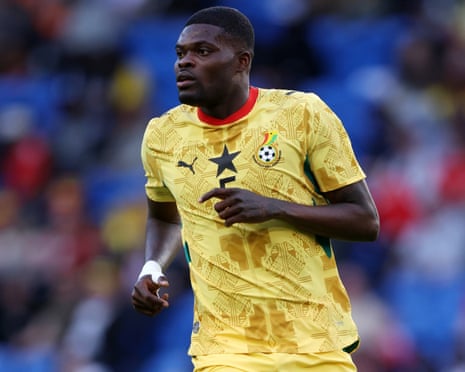 Thomas Partey’s visa application to enter Canada was rejected. Photograph: Catherine Ivill/AMA/Getty Images
theguardian.com
Thomas Partey’s visa application to enter Canada was rejected. Photograph: Catherine Ivill/AMA/Getty Images
theguardian.com
Thomas Partey will miss Ghana’s World Cup opener in Toronto after Canadian authorities refused his visa application, according to The Guardian. FIFA confirmed the rejection on Friday, while Canada’s immigration department said it cannot comment on individual cases without signed consent.
Partey’s absence lands in the middle of a tournament that is being staged across borders, where the match schedule assumes that players, staff and officials can move as freely as the fixture list requires. The Guardian reports that Partey has been charged in the UK with five counts of rape and one count of sexual assault, and later faced two additional rape charges, all of which he has pleaded not guilty to. Canada’s rules on “admissibility” are not written for sporting exceptions, and Ottawa’s public line is that officers apply immigration law “consistently and without exception,” regardless of a person’s profile or role in the tournament.
The contrast inside the same World Cup is hard to miss. Partey was allowed to enter the United States with Ghana’s squad on 4 June and has been training in Boston, but cannot cross into Canada for a match in Toronto. That leaves Ghana with a player physically inside the tournament’s footprint but administratively outside it, forcing coaches to plan around border policy rather than fitness or form.
For FIFA, the episode underscores a structural limitation that it has long tried to treat as a logistical detail. The governing body told The Guardian it is not involved in host-country immigration processes and that the host government ultimately decides who receives a visa and is admitted. That stance protects FIFA from legal responsibility, but it also means the tournament’s competitive balance can hinge on decisions made by immigration officers applying domestic law to cases that often involve allegations, ongoing proceedings, or reputational risk.
The decision also reframes a familiar question in international sport: what counts as due process when events move faster than courts. Partey’s case, as described by The Guardian, remains in the criminal justice system, yet the World Cup calendar creates its own deadlines. Host governments face the opposite pressure: if they admit someone who later becomes politically toxic, the cost is paid domestically, not by FIFA.
Ghana’s first match is scheduled for Wednesday in Toronto. Partey, who has been training in Boston, will be watching from the other side of the border.