
Maternal blood test detects thousands of foetal genetic conditions
Non-invasive sequencing matches invasive results in 565-pregnancy validation study, a blood draw could replace a needle for many diagnoses
Images
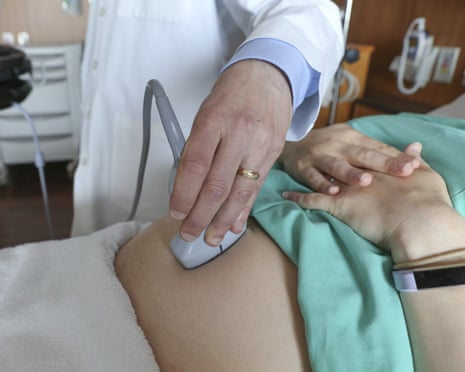 The test was envisioned for use when an anomaly had been seen in an ultrasound screening. Photograph: Teresa Crawford/AP
theguardian.com
The test was envisioned for use when an anomaly had been seen in an ultrasound screening. Photograph: Teresa Crawford/AP
theguardian.com
A maternal blood test analysed in 565 pregnancies detected 95–99% of the genetic variants found by invasive prenatal sequencing, according to research reported by the Guardian ahead of a presentation at the European Society for Human Genetics meeting in Gothenburg. The approach, called non-invasive foetal sequencing (NIFS), reads tiny fragments of foetal DNA circulating in the mother’s bloodstream and uses high-throughput sequencing plus computation to search across nearly 23,000 genes. Researchers say it can detect thousands of serious genetic conditions that today are typically confirmed only through procedures such as amniocentesis or chorionic villus sampling.
If the result holds up outside a validation setting, NIFS would expand prenatal screening from a handful of chromosomal conditions to something closer to the menu used in newborn sequencing and foetal anomaly panels. The Guardian reports the test covers more than 2,500 genes included in the Genomics England foetal anomalies panel, and in the study it flagged conditions including Noonan syndrome, Charge syndrome, Stickler syndrome and achondroplasia, among many rarer disorders. That breadth matters because the clinical value of an early diagnosis is often logistical rather than curative: it can change monitoring during pregnancy, determine where delivery happens, and shape immediate newborn care, even when no treatment exists in utero.
The technology also shifts the practical trade-offs that currently ration prenatal genetics. Amniocentesis, typically performed between weeks 15 and 20, is highly accurate but invasive; the Guardian cites a miscarriage risk of about 1 in 200. Many women decline invasive testing because of that risk, the stress of the procedure, and access or cost barriers. A blood draw is easier to scale, which is why earlier non-invasive prenatal tests spread quickly—while remaining largely limited to a small number of conditions such as Down’s syndrome.
The new method is still positioned as a frontline tool when something looks wrong on ultrasound or other screening, rather than a universal replacement for confirmatory diagnostics. Prof Angus Clarke of Cardiff University told the Guardian it would be especially helpful when a genetic condition is suspected. Prof Alexandre Reymond of the University of Lausanne called sequencing an entire foetal genome without a direct sample a major technical achievement, while also pointing to how quickly such capability tends to become routine once it is packaged into a clinical workflow.
For now, the key number is 17 weeks: the average gestational age in the validation study, where a routine blood sample was used to approximate what invasive needles still deliver today.