
Nineteen arrested after Northern Ireland disorder
BBC reports hate-motivated arson and race-hate graffiti as unrest spreads beyond knife attack, health workers question staying amid intimidation
Images
 Incidents included an arson attack on a house in the Shore Road area of north Belfast on Thursday night
bbc.com
Incidents included an arson attack on a house in the Shore Road area of north Belfast on Thursday night
bbc.com
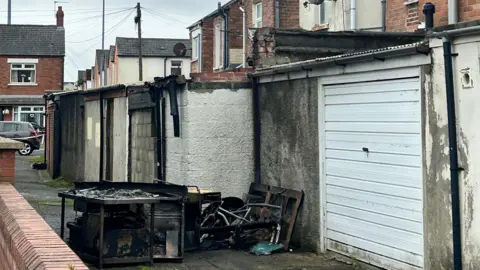 Incidents included an arson attack on a house in the Shore Road area of north Belfast on Thursday night
bbc.com
Incidents included an arson attack on a house in the Shore Road area of north Belfast on Thursday night
bbc.com
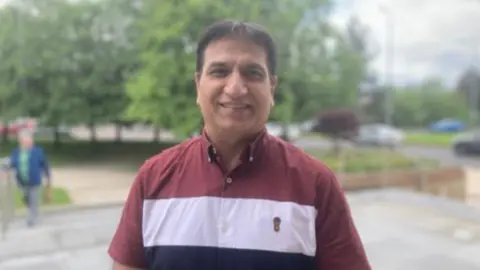 Dr Mukesh Chugh said some health care professionals from overseas have told him they are now questioning whether they should have come to Northern Ireland
bbc.com
Dr Mukesh Chugh said some health care professionals from overseas have told him they are now questioning whether they should have come to Northern Ireland
bbc.com
Nineteen people have been arrested after several nights of disorder in Northern Ireland, including an arson attack on an unoccupied house in north Belfast, according to the BBC. Police said the fire, set at the rear of a property in the Shore Road area, is being treated as hate-motivated; two neighbouring properties were damaged and no injuries were reported.
The arrests follow a week in which violence spread across multiple towns and cities, with homes, businesses and vehicles attacked and police coming under sustained assault. The Police Service of Northern Ireland said its public-order operation would continue into the weekend, while the Northern Ireland Fire and Rescue Service reported 46 emergency calls and 26 incidents on Thursday evening alone. Police were also alerted to race-hate graffiti in parts of east Belfast, and a separate car fire in Derry early on Friday is being investigated as hate-motivated arson.
The immediate trigger was a knife attack in north Belfast on Monday night, after footage circulated widely on social media. A man identified by the BBC as Hadi Alodid appeared in court charged with attempted murder; the victim, Stephen Ogilvie, suffered serious injuries. What followed, however, was not a dispute about that case—already in the courts—but a broader wave of retaliation and intimidation directed at people who had no connection to the attack.
Health services, which rely heavily on international recruitment, are now being pulled into the fallout. Dr Mukesh Chugh, a doctor in Derry for more than 20 years, told the BBC that overseas healthcare professionals were questioning whether they should have come to Northern Ireland at all, as reports spread of houses and cars damaged and families displaced overnight. Trevor Lucy, chair of Unison’s Foyle Health Branch, said staff at Altnagelvin hospital had been unusually quiet and fearful, with some staying at home and others focused on simply getting to and from work safely.
For local government, the week has exposed a familiar asymmetry: the state can promise “community cohesion” in strategy documents, but it cannot quickly replace burned-out housing, repair vandalised vehicles, or persuade skilled workers to move into an area that appears on global news feeds for street violence. The public costs accumulate in policing and emergency response, while the private costs land on households and employers—particularly in sectors like healthcare, where recruitment decisions are made by individuals weighing risk against opportunity.
By Friday morning, police were still dealing with hate graffiti, fire damage and a growing arrest tally, while hospitals were hearing from staff who no longer felt safe leaving their homes.