
Clashes erupt outside Mexico City Azteca Stadium before World Cup opener
Dozens arrested as petrol bombs and bricks hit police, kickoff and Zócalo fanfest proceed on schedule
Images
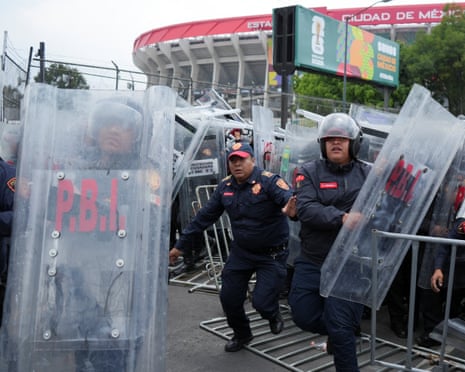 An outburst of violence outside the Azteca slightly marred the World Cup’s opening game. Photograph: Fred Ramos/Reuters
theguardian.com
An outburst of violence outside the Azteca slightly marred the World Cup’s opening game. Photograph: Fred Ramos/Reuters
theguardian.com
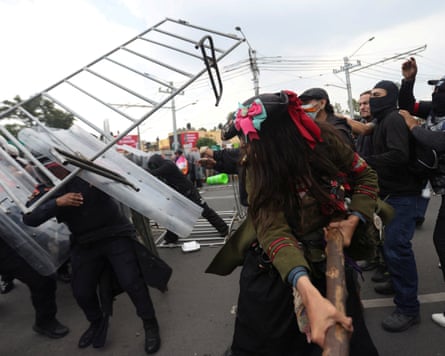 A mix of political protesters and ticketless fans clashed with police outside the stadium. Photograph: Quetzalli Nicte-Ha/Reuters
theguardian.com
A mix of political protesters and ticketless fans clashed with police outside the stadium. Photograph: Quetzalli Nicte-Ha/Reuters
theguardian.com
Petrol bombs and bricks were thrown at police outside Mexico City’s Azteca Stadium just before Mexico’s opening World Cup match, with dozens arrested and several officers injured, according to The Guardian. The paper reports that nearly 200 hooded individuals broke away from two larger groups of protesters and moved toward one of the stadium gates, as rocks, bottles and other missiles were thrown. Despite fears of disruption, the match kicked off as scheduled, and a FIFA fan event at the Zócalo went ahead.
The clashes arrived after a week in which Mexico City police were already dealing with multiple protests, including from teachers, retired judges, and families of the country’s disappeared. The Guardian notes that families of the 130,000 missing have been demonstrating in the capital, and that at least five different protest groups converged on the stadium area despite road closures around the perimeter. The disorder itself did not appear to be politically motivated, the report says, and included a mix of political protesters and ticketless fans.
That mix is part of what makes mega-events attractive to governments and risky for cities: the same security footprint meant to protect a broadcast spectacle becomes a magnet for grievances that have struggled to force a response through normal channels. A stadium gate is also one of the few places where the state’s priorities are visibly concentrated—riot police, road closures, surveillance, rapid arrests—because the costs of failure are immediate and televised. For protest groups, that concentration offers leverage; for opportunistic groups, it offers cover.
The episode also shows how quickly an “orderly tournament” narrative depends on logistics rather than politics. The Guardian reports that the unrest was brought under control by the Metropolitan police, and that kickoff was not delayed. In the background, protesters had tried to cancel the Zócalo fanfest but failed, while the city managed the optics of celebration and confrontation in the same afternoon.
Mexico’s president Claudia Sheinbaum did not attend the game, instead giving her ticket to a lottery winner, The Guardian reports. Outside gate eight, police were still collecting debris as crowds streamed in for a match that started on time.