
Mexico wins World Cup opener against South Africa
Three red cards leave visitors down to nine men, Azteca festivities outpace basic event logistics
Images
 Raúl Jiménez jumps for joy after doubling Mexico’s lead against South Africa. Photograph: Carl Recine/Getty Images
theguardian.com
Raúl Jiménez jumps for joy after doubling Mexico’s lead against South Africa. Photograph: Carl Recine/Getty Images
theguardian.com
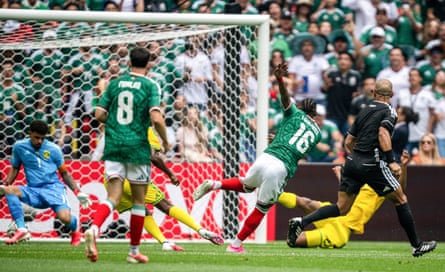 Julián Quiñones fires Mexico into a ninth-minute lead. Photograph: Sebastian Frej/Getty Images
theguardian.com
Julián Quiñones fires Mexico into a ninth-minute lead. Photograph: Sebastian Frej/Getty Images
theguardian.com
Mexico opened the 2026 FIFA World Cup with a 2–0 win over South Africa in Mexico City, a match that featured three red cards and ended with South Africa down to nine men. Raúl Jiménez scored Mexico’s second, while Julián Quiñones put the hosts ahead, according to The Guardian. Around the renovated Azteca, the day looked like a festival and a logistics stress test at the same time.
Jonathan Wilson reports that the approach to the stadium was defined by clogged roads, thin signage, and basic services that many modern mega-events treat as standard, including reliable connectivity. The tournament is being run without a local organising committee, a choice FIFA president Gianni Infantino has made before and that shifts much of the on-the-ground improvisation onto venues, contractors and city authorities. The result, at least on opening day, was a crowd that largely self-organised: people leaving coaches and minibuses to join the walking surge, queues at convenience stores stretching alongside traffic jams, and a perimeter that felt more like a street party than a managed arrival system.
Inside, the match turned quickly from ceremony to discipline. South Africa were punished for early errors and then for losing control, with Wilson describing a first nine minutes that set the tone for a chaotic contest. Mexico’s lead arrived through Quiñones, and Jiménez doubled it as the home crowd moved from nerves to celebration. The three red cards did not just punctuate the game; they altered its economics in real time—substitutions, pressing patterns, and risk tolerance all change when one side is forced to spend an hour trying to survive rather than compete.
The spectacle around the game underscored how resilient the World Cup brand can be to operational shortcomings. Wilson describes mariachi bands outside, fans in wrestling masks, and a stadium still framed by its own mythology—Pelé, Maradona, and decades of iconic goals—despite renovations. The opening ceremony’s voiceover declared “Football unites us all,” while the day’s most practical unifier was simpler: a comfortable home win that made many attendees less interested in arguing about WiFi, wayfinding, or traffic plans.
By the final whistle, Mexico had its first three points and South Africa had collected three red cards. The tournament’s first major image was not a new technology or a perfectly staged arrival corridor, but thousands of people walking toward the Azteca because the roads had stopped moving.