
Malawi hospital ward deploys IMPALA AI monitoring system
Bedside devices flag early deterioration when doctors are scarce, mortality claims hinge on alerts surviving power cuts
Images
 Hospitals in Malawi team up with artificial intelligence to reduce child mortality
english.elpais.com
Hospitals in Malawi team up with artificial intelligence to reduce child mortality
english.elpais.com
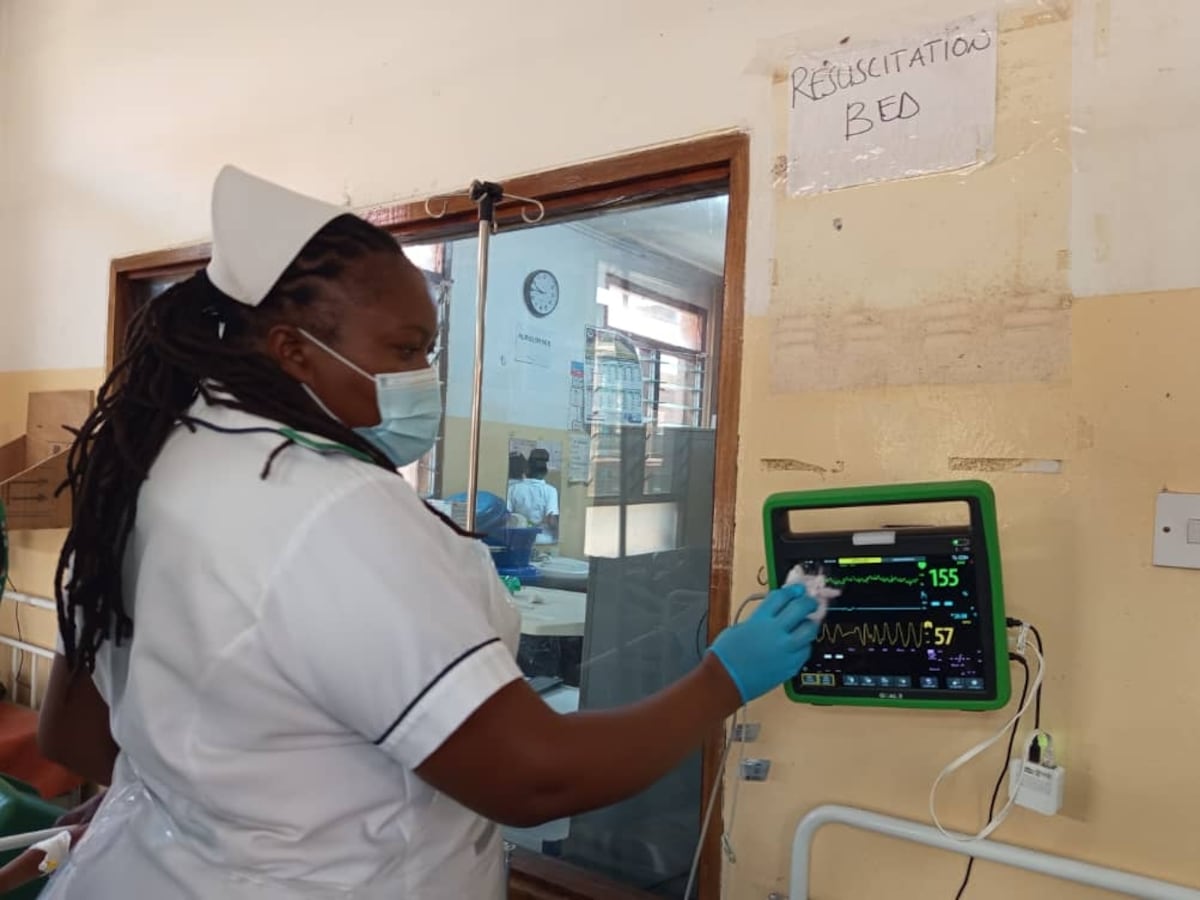
A pediatric ward at Mangochi District Hospital in southern Malawi has started using an AI-backed bedside monitoring system called IMPALA, and staff say the change is visible in the weekly death register. Before the system was introduced, the ward could see four child deaths in a week or over 15 days; after deployment, clinicians report about one death over the same period, according to El País. The project combines simple monitors at bedsides with software that flags early signs of deterioration and pushes alerts to nursing staff.
IMPALA—short for Innovative Monitoring in Pediatrics in Low-resource Settings—is built around a basic constraint: Malawi does not have enough clinicians to watch every child closely, all the time. World Bank data cited by El País puts Malawi at an estimated 0.1 doctors per 1,000 inhabitants in 2022, compared with 4.3 in Spain; the World Health Organization has estimated 2.3 skilled health professionals per 1,000 as a threshold for adequate coverage. Under those ratios, “more staff” is not a near-term plan; “more attention per staff member” is.
The system’s promise is not a miracle cure but earlier triage. A Malawian innovator behind the device, Dr. William Nkhono, says it can predict illnesses up to three hours before they occur, giving nurses time to intervene while a child is still stable. The monitors track vital signs, trigger a red signal to prioritize high-risk patients, and sound an alarm when oxygen saturation is low. Pediatric clinical assistant Chifundo Katundu told El País that comprehensive recording of vital signs across the ward was not feasible before, given scarce resources; automating the watchlist shifts effort from routine measurement to responding to exceptions.
That shift explains why AI monitoring attracts governments and NGOs: it looks like a capital purchase that substitutes for recurring payroll. It also creates a quieter second-order effect—care becomes more standardized, because the machine keeps asking the same questions of every bed. In a country where under-five mortality was 48.7 deaths per 1,000 live births in 2024 and where the United Nations Inter-agency Group for Child Mortality Estimation put under-five deaths at 32,177 that year, marginal gains in early detection compound quickly.
The project consortium spans European and Malawian institutions, including Imperial College London and Amsterdam University Medical Center, alongside Kamuzu University of Health Sciences and Malawi University of Business and Applied Sciences, among others. But the day-to-day test is local: battery-backed devices are designed to stay connected through power cuts, and the tablet interface is meant to be usable in crowded wards.
In Mangochi, the monitors do not add beds or nurses. They add a louder signal when a child’s oxygen starts to fall.