
US and Iran trade fresh strikes
49 US Tomahawks hit Iran as Tehran targets 18 US bases, ceasefire language survives mainly as negotiating cover
Images
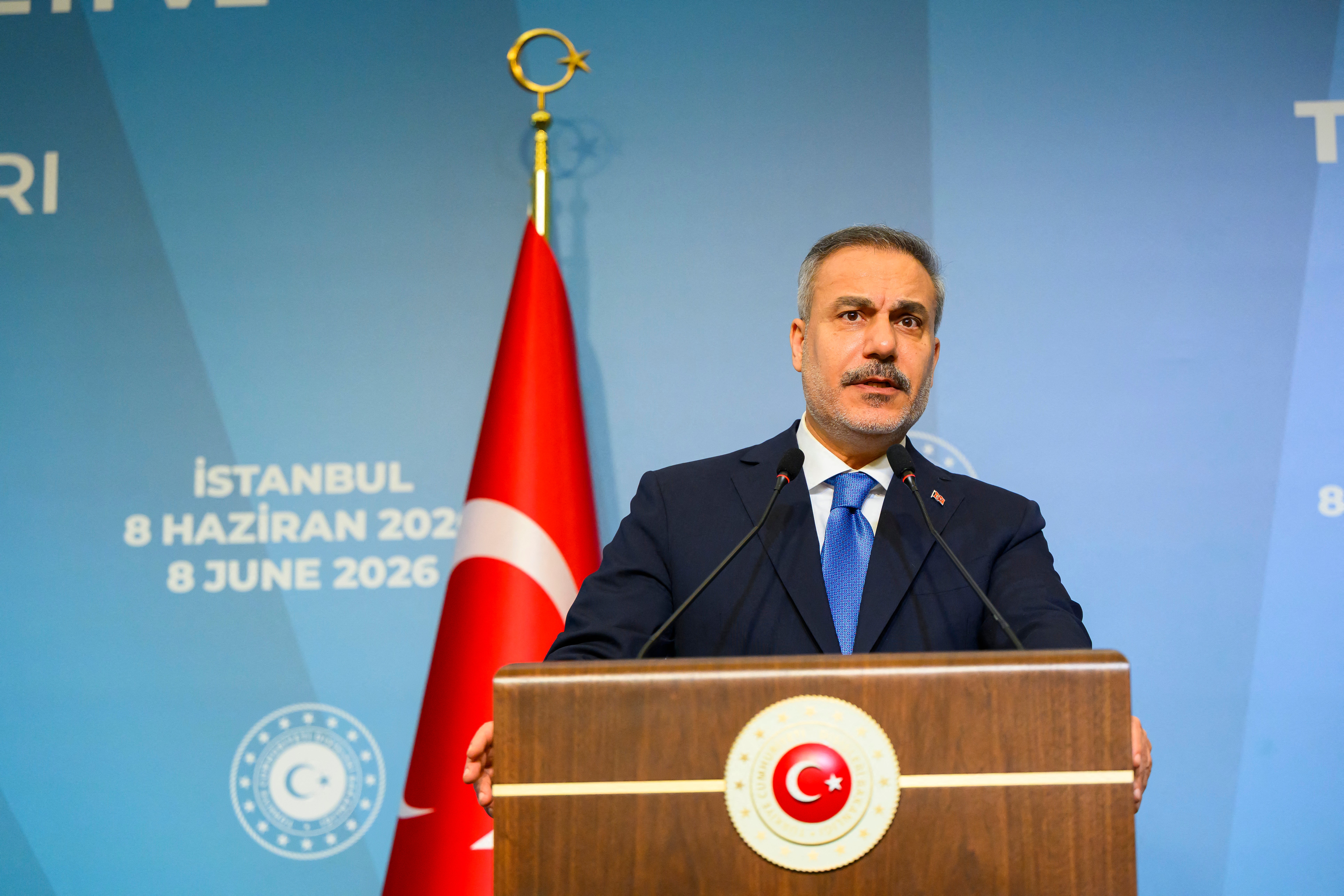 Turkey's Minister of Foreign Affairs Hakan Fidan (AFP/Getty)
AFP/Getty
Turkey's Minister of Foreign Affairs Hakan Fidan (AFP/Getty)
AFP/Getty
 Italy's Prime Minister Giorgia Meloni (Reuters)
Reuters
Italy's Prime Minister Giorgia Meloni (Reuters)
Reuters
US forces fired 49 Tomahawk missiles at targets across Iran overnight into Wednesday, a strike US Central Command described as “self-defence” against military surveillance and air-defence sites, according to The Independent. Tehran responded with attacks it said targeted 18 US airbases across the Gulf, prompting Kuwait to temporarily shut its airspace and Bahrain to sound air sirens. Iran called the earlier ceasefire with Washington “practically meaningless” after two straight days of exchanges.
The sequence shows how quickly a paper ceasefire turns into a scheduling device when neither side can credibly commit to stopping first. Washington is trying to enforce pressure while keeping the door open to a deal: Trump told reporters the US would attack Iran “very hard” unless a peace deal is finalised, while US officials offered no immediate public update on the status of indirect negotiations. Iran, meanwhile, is signalling that it can impose costs across the region without needing to win a set-piece battle, spreading risk onto Gulf states’ airspace, ports and insurance premiums even when those states are not decision-makers.
Diplomacy has not disappeared so much as moved into the background as a parallel channel. The Independent reports that three Iranian sources and a European official told Reuters that the sides have been exchanging messages on a memorandum after reaching a political understanding, but that key issues remain unresolved, including mechanisms for releasing billions of dollars in frozen Iranian funds. That detail matters because it ties battlefield tempo to a financial bottleneck: missiles can be launched overnight, but unfreezing money requires paperwork, intermediaries and political sign-off—exactly the kind of process that is easiest to stall.
Outside actors are now performing the familiar role of urging “restraint” while managing their own exposure. The Kremlin called on both sides to continue negotiations, and Turkey’s foreign minister Hakan Fidan said in Sofia that Iran and the US must stop renewed attacks and return to talks, adding that Ankara is in close contact with Washington, Tehran and mediators including Pakistan. The broader pattern is a conflict whose operational theatre sits in and around the Strait of Hormuz, but whose bargaining chips include airspace closures, basing rights and the price of moving oil and goods through the Gulf.
The week’s escalation was triggered by the downing of a US Apache helicopter near the Strait of Hormuz, The Independent reports. Since then, the region’s most concrete “ceasefire” measure has been Kuwait’s decision to close its skies.