
Hong Kong files manslaughter charges after deadly public housing fire
Hearings describe deactivated alarms and missing fire-retardant netting during renovation, 168 victims named in court as cases adjourn to September
Images
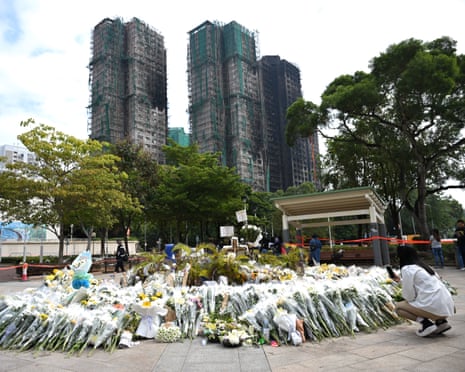 A woman looks at flowers laid for the victims of a deadly fire at the Wang Fuk Court residential estate in Tai Po district of Hong Kong. Photograph: Peter Parks/AFP/Getty Images
theguardian.com
A woman looks at flowers laid for the victims of a deadly fire at the Wang Fuk Court residential estate in Tai Po district of Hong Kong. Photograph: Peter Parks/AFP/Getty Images
theguardian.com
168 names were read into the record in a Hong Kong courtroom on Wednesday as seven people and two companies faced manslaughter charges over a public-housing fire that killed residents and a firefighter. According to Agence France-Presse, the blaze at Wang Fuk Court in Tai Po last November engulfed seven of the estate’s eight high-rise blocks, leaving thousands displaced and pushing one of Asia’s densest cities into a months-long investigation.
The charging decisions follow public hearings that described a cascade of failed safeguards rather than a single point of collapse. Investigators said almost all life-saving fire safety measures malfunctioned on the day, and police tied the rapid spread to renovation practices: fire alarm systems in seven blocks had been deactivated, required fire-retardant netting was missing in many places, and windows were covered with foam boards that may have helped flames move into flats. The Fire Investigation Task Force concluded the initial ignition came from a cigarette setting combustible material alight, a mundane trigger that became lethal inside a building wrapped in temporary materials.
The case also shows how accountability tends to settle on the firms and individuals whose names appear on paperwork, even when the work itself is fragmented across contractors, consultants and inspectors. AFP reports that directors of the construction contractor and a consultant firm working on the estate’s renovation were charged with manslaughter, along with an inspector. Separate allegations broaden the picture from negligence to money: seven people involved in the renovation were also charged with offences including fraud, money laundering and tax evasion.
Hong Kong’s anti-graft watchdog, the Independent Commission Against Corruption, worked with police and said some suspects conspired to defraud authorities by filing false reports about the projects. Police described the contractor and consulting firms as suspected of a serious breach of duty of care amounting to gross negligence. In a city where public housing estates are routinely refurbished while occupied, the hearings’ details point to a familiar trade: keeping projects on schedule and on budget by switching off systems, substituting materials, and letting temporary fixes become the operating condition.
The defendants indicated in court that they understood the charges, and the cases were adjourned until September, AFP reports. The list of victims’ names has now been read aloud once; the building’s safety systems, according to the hearings, were not in a state to do their job when it mattered.