
US inflation hits three-year high in May
Energy shock from Iran war drives CPI to 4.2% as Trump says he loves the inflation, Fed rate decision now lands on households
Images
 bbc.com
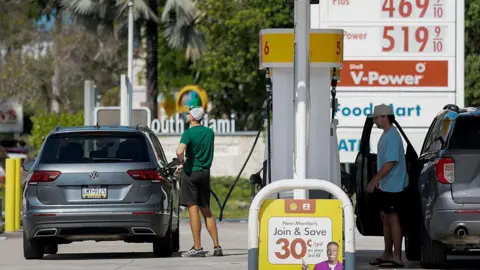 Getty Images Two drivers wearing shorts and t shirts fill up their cars with petrol.
bbc.com
Getty Images Two drivers wearing shorts and t shirts fill up their cars with petrol.
bbc.com
US consumer inflation accelerated in May to 4.2% year-on-year, the fastest pace in three years, as energy costs rose after the US and Israel’s war in Iran, according to the BBC’s reporting of Bureau of Labor Statistics data. President Donald Trump responded by saying he “loves the inflation,” while also insisting the price spike is temporary and will fall quickly once the conflict ends.
The numbers put the White House’s war messaging and its cost-of-living promises on the same collision course households have been living with at the petrol pump. The BBC reports average US regular petrol at $4.15 a gallon, up from $2.98 on February 28, 2024, when Trump launched strikes on Iran. Iran’s effective closure of the Strait of Hormuz — a chokepoint that ships about a fifth of the world’s oil and gas — has pushed oil and gas prices higher, with Brent crude still well above pre-war levels even after a slight pullback that Trump attributed to US operations removing Iranian oil.
Inflation’s composition matters because it determines who can avoid it and who cannot. Energy and transport costs propagate through everything from airline tickets to food logistics, and the BLS also flagged higher prices in personal and medical care, recreation, and communication. May was the third consecutive month the consumer price index rose, the BBC says, suggesting a pattern rather than a one-off shock.
The political incentives point in two directions at once. Trump has argued he is prioritising preventing Iran from obtaining a nuclear weapon, and told reporters he does not think about the cost of living for Americans “even a little bit” in that context. At the same time, Republicans are heading toward midterm elections with inflation back above the Federal Reserve’s 2% target and with households receiving the bill for a foreign-policy decision that was sold as decisive and containable.
The central bank, meanwhile, is paid to be boring. The BBC notes that when inflation runs significantly above target, the Fed typically raises interest rates to curb spending — a tool that cools demand by making mortgages, credit cards, and business loans more expensive. That is now the first major test for Kevin Warsh, whom the BBC describes as the new Fed governor, with his first interest-rate decision due next week.
Economists cited by the BBC warn that even if the war ends swiftly, normal flows through Hormuz may not return until 2027. For consumers, that translates into an energy shock with a timetable that does not match an election calendar.
At the pump, the difference between $2.98 and $4.15 is already visible on the receipt, long before the Fed votes on rates.