
Venezuela frees 54 military political prisoners
Releases follow promise of 300 humanitarian cases while Maduro’s image is scrubbed from public space, detainee counts still disputed and conditions still lethal
Images
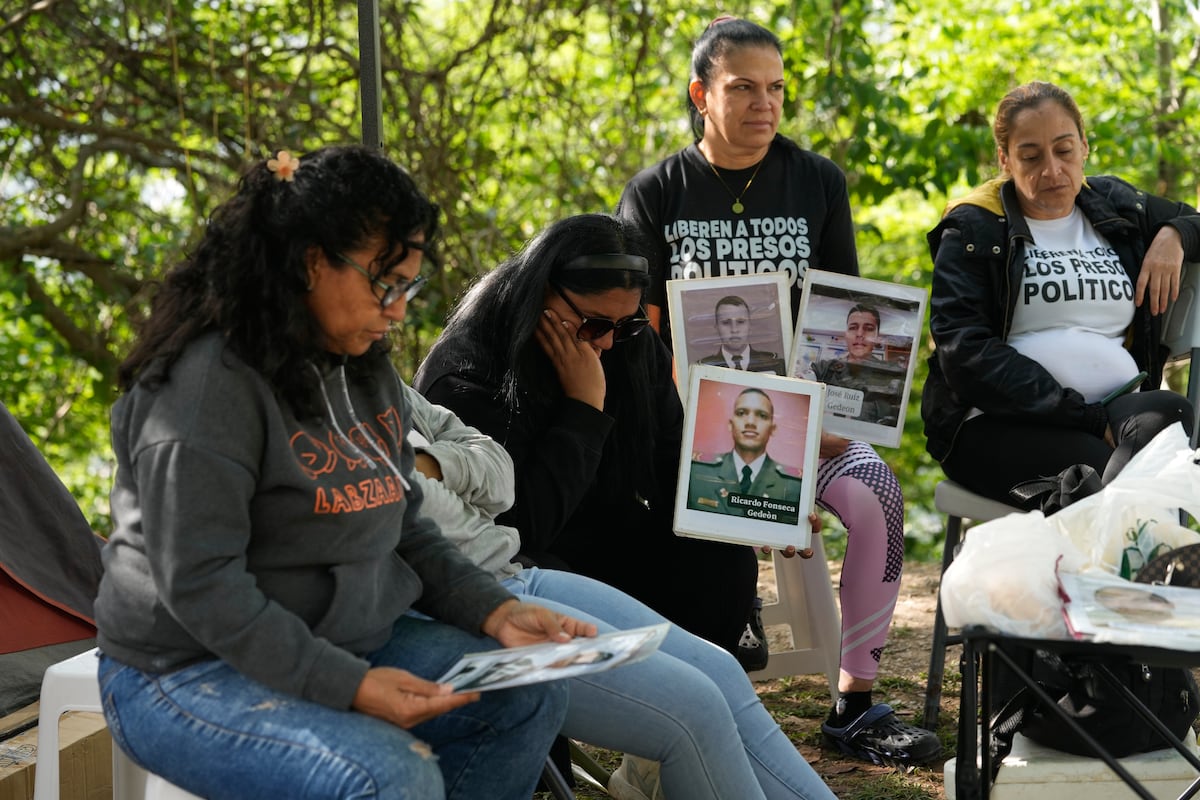 Venezuela releases 54 political prisoners, all members of the military
english.elpais.com
Venezuela releases 54 political prisoners, all members of the military
english.elpais.com
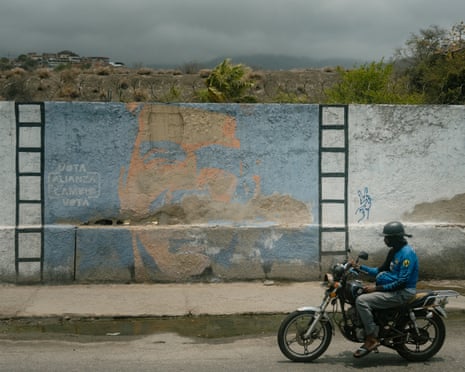 A faded mural of Nicolás Maduro in La Guaira, Venezuela, on 3 May 2026. Photograph: Andrea Hernández Briceño/The Guardian
theguardian.com
A faded mural of Nicolás Maduro in La Guaira, Venezuela, on 3 May 2026. Photograph: Andrea Hernández Briceño/The Guardian
theguardian.com
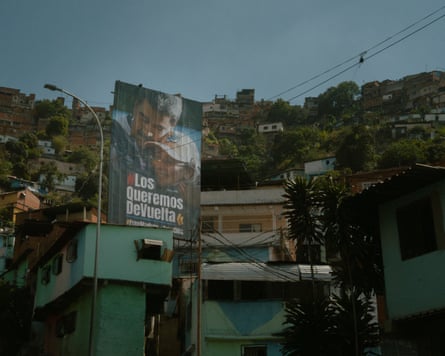 A billboard with Nicolas Maduro and Cilia Flores’s faces saying ‘We want them back’ near the Caracas-La Guaira highway in Caracas, Venezuela, on 30 April. Photograph: Andrea Hernández Briceño/The Guardian
theguardian.com
A billboard with Nicolas Maduro and Cilia Flores’s faces saying ‘We want them back’ near the Caracas-La Guaira highway in Caracas, Venezuela, on 30 April. Photograph: Andrea Hernández Briceño/The Guardian
theguardian.com
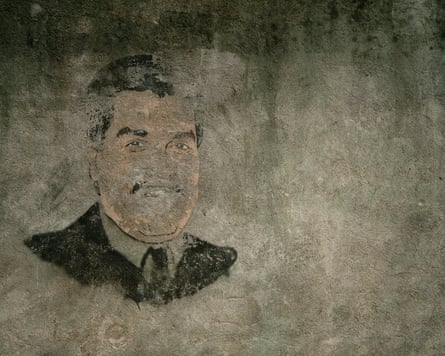 A damaged mural of Nicolás Maduro in Caucagua, Venezuela, on 7 May. Photograph: Andrea Hernández Briceño/The Guardian
theguardian.com
A damaged mural of Nicolás Maduro in Caucagua, Venezuela, on 7 May. Photograph: Andrea Hernández Briceño/The Guardian
theguardian.com
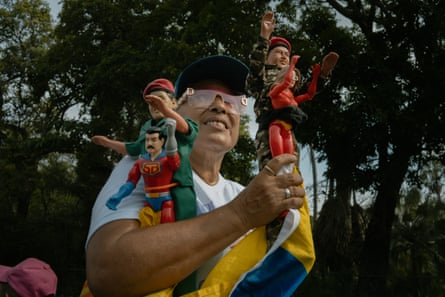 A woman holds Hugo Chavez, Nicolas Maduro and Cilia Flores figurines in Caracas, Venezuela, on 30 April. Photograph: Andrea Hernández Briceño/The Guardian
theguardian.com
A woman holds Hugo Chavez, Nicolas Maduro and Cilia Flores figurines in Caracas, Venezuela, on 30 April. Photograph: Andrea Hernández Briceño/The Guardian
theguardian.com
Venezuela’s government authorized the release of 54 political prisoners on Tuesday, all of them members of the armed forces, according to El País. Relatives and support groups confirmed the releases, which included three women and detainees held at Ramo Verde prison and the National Institute for Female Rehabilitation. The move follows an earlier promise by National Assembly speaker Jorge Rodríguez that 300 prisoners would be freed for “humanitarian” reasons, a pledge that had so far produced only a small number of releases.
The names and cases underscore what Caracas is choosing to unwind—and what it is not. El País reports that many of those freed were linked by authorities to “Operation White Armband,” an alleged military conspiracy denounced by Venezuelan intelligence agencies four years ago. Among those released was Major Reinaldo Finol, detained in 2020 on accusations of espionage at major refineries in a case that also involved a U.S. citizen later freed; another freed detainee, Sergeant José Sánchez Chacón, had been jailed after sending a WhatsApp audio complaining about the deterioration of military units. A lieutenant accused of links to sabotage of the power service was also released. El País says it remains unclear whether those freed face precautionary measures or have full freedom.
The releases land amid a wider reshuffling of the regime’s public face since Nicolás Maduro’s abduction earlier this year. The Guardian describes billboards and murals of Maduro being dismantled, painted over, or left to decay, while interim leader Delcy Rodríguez sharply reduced public mentions of his name over the following months. That visual erasure is paired with a more practical problem: prisons and security agencies that hold political detainees have become part of the regime’s bargaining toolkit, and the human cost is now harder to ignore. El País cites the Venezuelan Prison Observatory as reporting dozens of deaths in state custody since March and high numbers of deaths in recent years, while transfers of detainees from Caracas’s El Helicoide have prompted relatives to camp out and plead for outside intervention.
Freeing uniformed prisoners also draws a boundary around who the state most wants to placate. Soldiers and officers are not just another constituency in Venezuela; they are the institution that can enforce orders, refuse them, or fracture. Releasing military detainees signals to serving personnel that complaints, conspiracies, and internal dissent can be punished—and later selectively forgiven—without changing the underlying system that produced the arrests. Civilian prisoners, and the broader counts cited by NGOs, remain a separate ledger.
El País reports that before the latest announcement, Foro Penal counted about 400 political prisoners, while another civil association put the figure higher. On Tuesday, 54 of them walked out of military-run detention centers, and the government did not say how many more will follow.