
Two migrants jailed under UK small boats law
BBC says first convictions target pilots of crowded Channel crossings, organisers remain outside the dock
Images
 Mohammad Tajik (L) and Alnour Mohamed Ali (R) were jailed for piloting small boats across the Channel
bbc.com
Mohammad Tajik (L) and Alnour Mohamed Ali (R) were jailed for piloting small boats across the Channel
bbc.com
 Mohammad Tajik (L) and Alnour Mohamed Ali (R) were jailed for piloting small boats across the Channel
bbc.com
Mohammad Tajik (L) and Alnour Mohamed Ali (R) were jailed for piloting small boats across the Channel
bbc.com
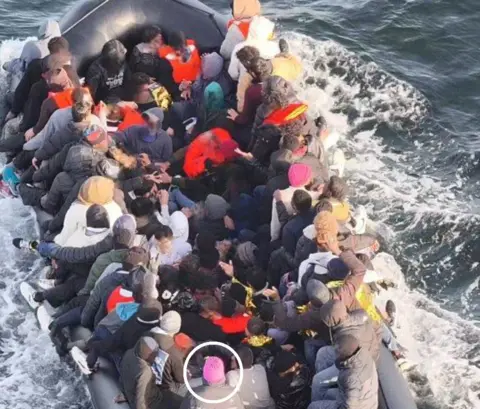 Ali, circled in the image above, on board a small boat on 9 April
bbc.com
Ali, circled in the image above, on board a small boat on 9 April
bbc.com
Two men have become the first to be jailed under a UK law aimed at people who pilot small boats across the English Channel, according to the BBC. Both pleaded guilty at Canterbury Crown Court to endangering lives at sea under the Border, Security, Asylum and Immigration Act, after being filmed steering crowded vessels in separate crossings.
The BBC reports that Alnour Mohamed Ali, a Sudanese national, was sentenced to 27 months after admitting he steered a dinghy carrying 74 people in April, while Tajik Mohammed, an Afghan national, received a two-year sentence after pleading guilty to piloting a boat in poor weather in January. Drone footage of both crossings was shown in court, with prosecutors describing dangerous conditions including passengers without life jackets.
The cases illustrate how the state is trying to attach criminal liability to the most visible hand on the tiller, even when the person steering is not the organiser. The BBC says neither man was accused of organising crossings or profiting from piloting, and that Ali told the court he was ordered to steer by armed smugglers in France. That leaves a gap between the political promise—deterring crossings by “going after the pilots”—and the operational reality in which the person who takes the helm may be the easiest to identify, not the one who set the price, arranged the boat, or controlled the route.
The BBC places the sentences in the context of a much larger flow: more than 200,000 people have been illegally carried to the UK by small boats since 2018. That number has created demand for visible enforcement, and the new offence gives prosecutors a straightforward charge when video, surveillance, or witness evidence can place someone at the controls.
The court record also shows how quickly narratives harden around tragedies at sea, and how hard they are to unwind. French officials had reported that four people drowned off northern France while trying to board Ali’s boat, but the BBC says British prosecutors now accept Ali was not responsible for those deaths, and that the judge agreed suggestions to the contrary were misinformation.
The law’s first jail terms were handed down after footage of overcrowded boats was played in a courtroom, while the organisers who sell the crossings remained off-screen.