
Nature study links pollinator loss to human diets in rural Nepal
Researchers track crops incomes and pollen counts across Jumla villages, bee decline translates into missing vitamins and cash
Images
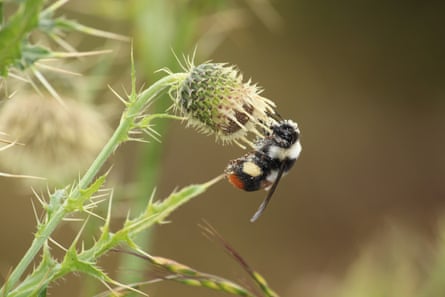
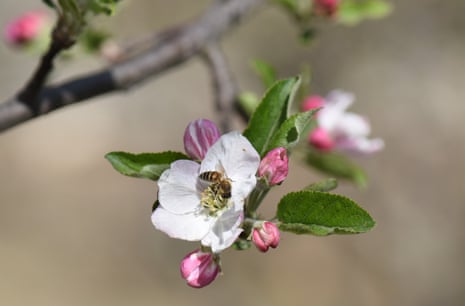 A bee busy pollinating a flower. About three-quarters of all agricultural crops rely on pollinator services. Photograph: Daya Ram Bhusal
theguardian.com
A bee busy pollinating a flower. About three-quarters of all agricultural crops rely on pollinator services. Photograph: Daya Ram Bhusal
theguardian.com
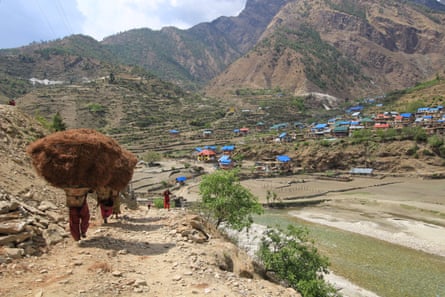 Nepal’s isolated Jumla district is particularly vulnerable to pollinator loss, as it already suffers from food insecurity. Photograph: Tom Timberlake
theguardian.com
Nepal’s isolated Jumla district is particularly vulnerable to pollinator loss, as it already suffers from food insecurity. Photograph: Tom Timberlake
theguardian.com
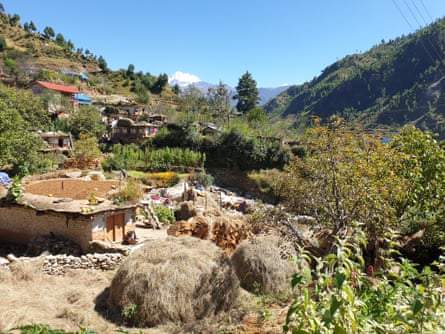 If crop, fruit and vegetable yields in places like Jumla decline, people will simply lose access to the nutrients in those foods, warns Timberlake. Photograph: Naomi Saville
theguardian.com
If crop, fruit and vegetable yields in places like Jumla decline, people will simply lose access to the nutrients in those foods, warns Timberlake. Photograph: Naomi Saville
theguardian.com
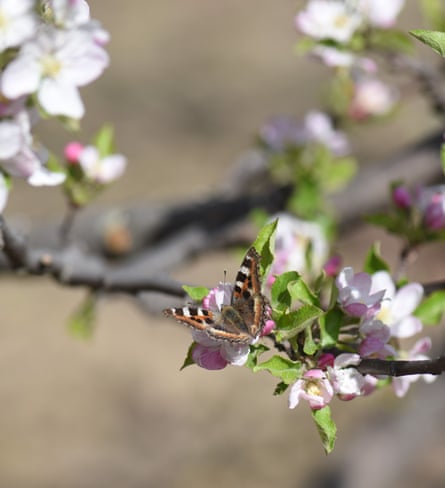 Butterflies and bats are also pollinators, but not on the same scale as bees. Photograph: Daya Ram Bhusal
theguardian.com
Butterflies and bats are also pollinators, but not on the same scale as bees. Photograph: Daya Ram Bhusal
theguardian.com
 Timberlake’s research included the painstaking process of counting pollen granules on individual bees. Photograph: Tom Timberlake
theguardian.com
Timberlake’s research included the painstaking process of counting pollen granules on individual bees. Photograph: Tom Timberlake
theguardian.com
Half the bees kept by beekeepers in Nepal’s remote Jumla district have vanished over the past decade, according to reporting by The Guardian, and researchers have now put numbers on what that loss means for human diets. A study published in Nature tracked diets, crop yields, farming income and pollinator interactions across 10 villages over a year, including counts of pollen granules carried on bees’ bodies. In those villages, pollinators were directly responsible for more than 20% of residents’ intake of vitamin A, vitamin E and folate, and for 44% of farming income, the paper found.
The result turns a familiar environmental worry into a measurable health and household-economy problem. Jumla’s isolation matters: the district has limited access in and out, and The Guardian describes the Karnali highway as the only land link. In places where trade links are thin and cash is scarce, a drop in local fruit and vegetable yields cannot easily be patched with imports; the constraint shows up as fewer micronutrients on plates rather than as a price spike in a supermarket aisle. The research design—watching what people actually eat and what farms actually produce, then tying it to observed pollination—also avoids the common gap between global models and local realities.
Ecologists have long argued that pollinators underpin human wellbeing, but the evidence has often been indirect: crop biology, yield studies, and extrapolations to diet. The Guardian notes that a 2015 modelling study in the Lancet estimated a complete global pollinator collapse could add 1.4 million deaths a year from malnutrition-related diseases. That kind of scenario is easy to dismiss as apocalyptic and far away; the Jumla findings instead describe a smaller, more ordinary failure mode, where the losses accumulate in communities that cannot buy their way out. Sam Myers of the Johns Hopkins Institute for Planetary Health, a co-author of the 2015 work, told The Guardian he is interested in measuring real-world impacts of insufficient pollinators rather than hypothetical total collapse.
The study also highlights how “pollinator decline” is not a single lever. Bees share the job with birds, bats and butterflies, but few species contribute as much as bees, and the practical consequences are uneven because diets and crops vary by place. Globally, about three-quarters of agricultural crops rely on pollinator services, The Guardian reports, but reliance is not the same as vulnerability: a region that can import food and supplements can mask the damage, while a region that mostly eats what it grows has nowhere to hide it.
In Jumla, the missing bees show up as fewer vitamins, thinner farm incomes and less slack in a food system that already runs tight.