
Taliban police fire on rare Herat protest
BBC cites medics saying two dead while authorities deny fatalities, dress-code enforcement turns market streets into a security zone
Images
 A woman on the streets of Herat on Monday - a day before the protest
bbc.com
A woman on the streets of Herat on Monday - a day before the protest
bbc.com
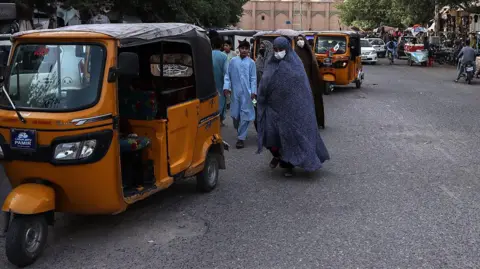 A woman on the streets of Herat on Monday - a day before the protest
bbc.com
A woman on the streets of Herat on Monday - a day before the protest
bbc.com
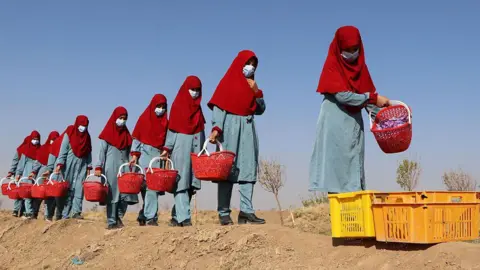 Wearing a hijab has been compulsory for women since May 2022
bbc.com
Wearing a hijab has been compulsory for women since May 2022
bbc.com
Taliban police fired live rounds to disperse a rare protest in Herat after women were detained for allegedly violating the country’s dress rules, according to the BBC. Medics told the broadcaster that two people died and that others were injured, while local police denied any deaths and did not confirm the use of firearms.
The protest itself was notable because public dissent has become difficult to stage since the Taliban returned to power in 2021. The BBC reports that both men and women took part, chanting “education, work, freedom” — a slogan that has persisted even as the authorities narrowed daily life through decrees on schooling, employment and public behaviour. Witnesses and an AFP photographer described security forces using sticks and whips and firing shots, with videos circulating online in which gunfire can be heard and women scream for security forces to stop beating people. The BBC said it could not independently verify the witness accounts, a limitation that has become routine as foreign media access shrinks and domestic reporting carries high personal risk.
The immediate trigger was enforcement. Wearing a hijab has been compulsory for women since May 2022, and the BBC says local officials in Herat had recently begun arresting women they considered improperly covered, including checks of cars and rickshaws by officers from the Ministry for the Propagation of Virtue and Prevention of Vice. One woman told BBC Afghan that markets had become deserted, suggesting the crackdown was not only punitive but economically disruptive: when shoppers stay home, small traders lose income, and the state’s moral policing becomes a tax on ordinary commerce.
The response also shows how the regime manages legitimacy. Herat police framed the protest as a disturbance of public order, a formulation that turns a dispute over women’s public presence into a security problem to be solved with force. Richard Bennett, the UN special rapporteur on human rights in Afghanistan, said he was alarmed by what he called excessive force against seemingly peaceful protesters and called for accountability — a demand that depends on institutions the Taliban have little incentive to empower.
In Herat, the authorities denied the deaths even as videos of gunfire spread online.