
Global banks raise fossil fuel financing in 2025
Report counts 906 billion dollars in lending and underwriting, climate pledges coexist with a growing deal pipeline
Images
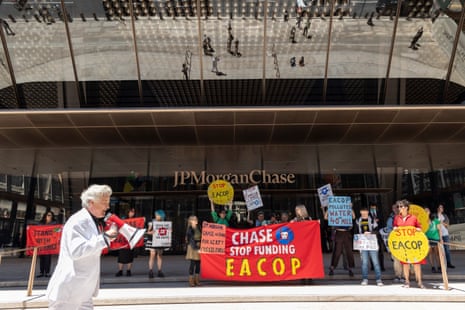 Climate activists protesting against Chase bank's support of Total Energies' East African Crude Oil Pipeline (EACOP) rally at JPMorgan Chase headquarters in Manhattan on 29 May 2026. Photograph: Gina M Randazzo/ZUMA Press Wire/Shutterstock
theguardian.com
Climate activists protesting against Chase bank's support of Total Energies' East African Crude Oil Pipeline (EACOP) rally at JPMorgan Chase headquarters in Manhattan on 29 May 2026. Photograph: Gina M Randazzo/ZUMA Press Wire/Shutterstock
theguardian.com
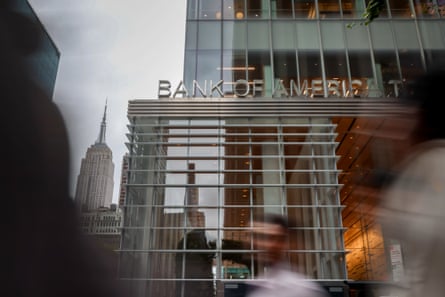 The Bank of America Tower in New York on 11 October 2025. Photograph: Bloomberg/Getty Images
theguardian.com
The Bank of America Tower in New York on 11 October 2025. Photograph: Bloomberg/Getty Images
theguardian.com
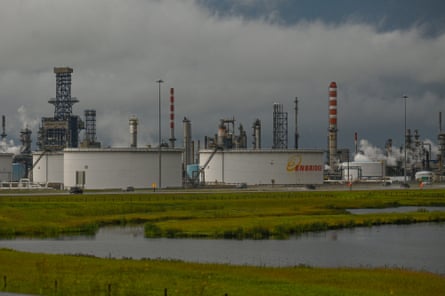 The Enbridge terminal and pipelines next to the Suncor energy refinery on 23 August 2023 in Alberta, Canada. Photograph: NurPhoto/Getty Images
Getty Images
The Enbridge terminal and pipelines next to the Suncor energy refinery on 23 August 2023 in Alberta, Canada. Photograph: NurPhoto/Getty Images
Getty Images
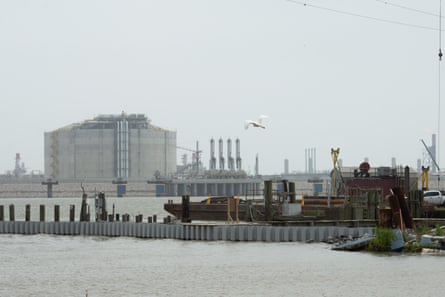 Seabirds fly around the Venture Global LNG facility at Cameron Pass near Cameron, Louisiana, on 13 April 2022. Photograph: The Washington Post/Getty Images
theguardian.com
Seabirds fly around the Venture Global LNG facility at Cameron Pass near Cameron, Louisiana, on 13 April 2022. Photograph: The Washington Post/Getty Images
theguardian.com
906 billion dollars is the number climate groups put on global bank financing for fossil-fuel companies in 2025, according to a report covered by The Guardian. The tally spans 65 large lenders and marks an increase from the year before, even as many of the same institutions market climate targets to customers and investors. The report’s authors say the money supports new coal, oil and gas supply that locks in future emissions.
The league table is familiar: JPMorgan Chase is cited as the single largest financier in 2025, followed by Bank of America, with Japan’s MUFG and Mizuho also near the top, according to the report. Barclays is named as the highest-ranked British bank. The Guardian notes the report’s claim that fossil-fuel lending is becoming more concentrated, with a “dirty dozen” banks responsible for a large share of total financing.
The mechanics are less ideological than contractual. Banks earn fees and interest for underwriting debt, extending credit lines and arranging project finance; the climate costs sit elsewhere, often outside the lender’s balance sheet and outside the political term in which loans are booked. When energy prices jump—as they did amid the latest Middle East escalation cited by The Guardian—fossil-fuel producers can look like safer credits, not riskier ones, and the pipeline of deals thickens. The same volatility that alarms households and policymakers improves the economics of drilling and the collateral value of reserves.
Activists have tried to make the financing itself reputationally expensive. The Guardian describes a protest at JPMorgan Chase’s Manhattan headquarters over support for TotalEnergies’ East African Crude Oil Pipeline. But lenders can answer with a portfolio argument: a JPMorgan spokesperson told the newspaper the bank supports “a full range of energy solutions” and questioned third-party estimates of its activity. In practice, disclosure disputes rarely change the coupon on a bond.
Since the Paris climate agreement, the report estimates banks have provided trillions in financing to fossil-fuel extraction. The near-term reality is that the global economy still runs on hydrocarbons, and the institutions that arrange the capital keep getting paid to meet that demand.
The Guardian’s story begins with a protest outside a bank. The report it cites ends with a larger figure: hundreds of billions in new fossil-fuel financing booked in a single year.