
ICC suspends chief prosecutor Karim Khan
Sexual misconduct inquiry sent to special session of member states, court that relies on legitimacy now litigates its own leadership
Images
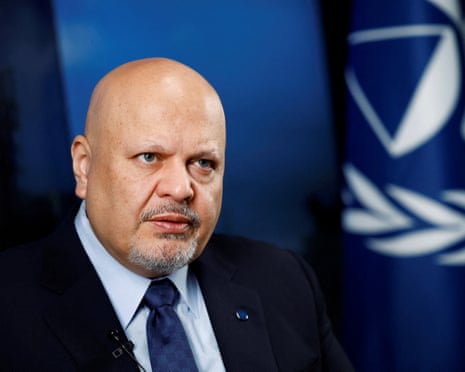 In a statement, the international criminal court said its decision to suspend Karim Khan was ‘not an indication of the final outcome’. Photograph: Piroschka Van De Wouw/Reuters
theguardian.com
In a statement, the international criminal court said its decision to suspend Karim Khan was ‘not an indication of the final outcome’. Photograph: Piroschka Van De Wouw/Reuters
theguardian.com
A committee of ICC member states has voted to suspend chief prosecutor Karim Khan while a disciplinary process over sexual misconduct allegations moves to a special session of the court’s full membership. The Guardian reports the decision was announced by the ICC’s governing body after a qualified-majority vote found Khan committed “serious misconduct” related to claims first aired in 2024. The allegations, made by a woman who worked for Khan at the ICC’s headquarters in The Hague, describe coercive and nonconsensual sexual behaviour over an extended period.
The case lands in an institution that asks states to arrest sitting leaders and hand over battlefield suspects, yet depends on those same states for money, cooperation and political cover. The governing body said the suspension is not a final finding, but it is already an operational intervention: Khan had previously stepped aside from running the ICC division that investigates and prosecutes atrocity cases, and the court is now forced to manage continuity while its top prosecutor’s authority is formally in question.
According to the Guardian, the alleged incidents are said to have taken place between 2023 and 2024, including in hotel rooms during work trips, in Khan’s office, and at his home. Khan has repeatedly denied the allegations; his lawyers say he “categorically denies” harassing or mistreating anyone or misusing his position. The executive committee’s decision drew on a UN watchdog report, advice from a panel of judicial experts, and written submissions from both Khan and the alleged victim.
The referral to a special session of the ICC’s 125 member states is described as unprecedented for the court, and it turns an internal discipline matter into a political calendar item for governments. That matters because the ICC’s legitimacy is built less on police power than on the perception that its procedures are strict, predictable and insulated from personal patronage. When the prosecutor’s office becomes the subject of a years-long internal process, every active case inherits an extra line of attack: defence teams can argue bias, compromised judgment, or simple managerial distraction; states that already dislike ICC scrutiny can cite governance turmoil when declining cooperation.
The episode also shows the court’s narrow room for error on workplace power dynamics. The allegations are explicitly about authority used in private settings—work trips, offices, and a superior’s home—exactly the environments where formal HR safeguards tend to thin out. In organisations that operate across borders and crises, the practical question is whether staff believe complaints will be handled without career cost, and whether member states will accept the price of enforcing those standards even when it destabilises senior leadership.
For now, the ICC is left with a suspended chief prosecutor, a pending special session of member states, and a disciplinary record that has taken almost two years to reach this stage. The court that asks others to detain suspects is now extending its own detention of a decision about its most powerful official.