
OpenAI files confidentially for IPO
Expected valuation tops $850bn as AI firms race to public markets, prospectus stays private while compute bills stay real
Images
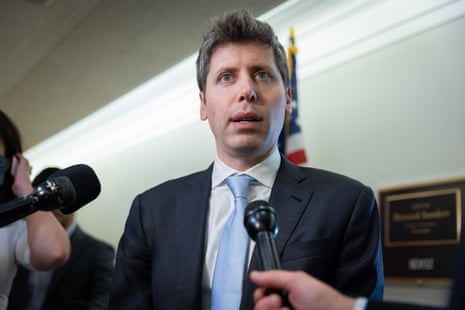 Sam Altman, the CEO of OpenAI. Photograph: Anadolu/Getty Images
theguardian.com
Sam Altman, the CEO of OpenAI. Photograph: Anadolu/Getty Images
theguardian.com
OpenAI files confidentially for IPO, Wall Street review begins before disclosures go public, a research lab built for safety now markets itself on scale
OpenAI said in a company blog post on Monday that it has submitted a confidential S‑1 to the US Securities and Exchange Commission, beginning the formal process toward a stock-market listing, according to The Guardian. The company did not give a timetable for when it would go public, but the move positions one of the most influential AI developers for a shift from private funding rounds to public-market scrutiny.
According to The Guardian, OpenAI’s expected valuation at listing is more than $850bn, a scale that would place it among the largest IPOs in history if it materialises. The confidential filing route lets regulators review the prospectus and send comments before the document is published, which can delay the moment when outsiders see the company’s revenue mix, cost base, and risk disclosures. That missing detail matters in AI: the biggest line item is often not staff but compute, power, and long-term contracts that behave more like industrial inputs than software expenses.
The timing also highlights how quickly the sector is converging on the same funding playbook. Anthropic, described by The Guardian as OpenAI’s chief rival, announced last week that it too had filed confidentially. Both companies operate in a market where the product improves with scale—more training, more inference, more distribution—while the bills arrive on fixed schedules set by data-centre buildouts and supplier contracts. Public investors typically reward predictable cashflows and punish open-ended spending, a tension that becomes sharper when a company is still “showing difficulty turning a profit” and has missed revenue and user targets, as The Guardian reports of OpenAI.
OpenAI’s corporate arc is unusually exposed to that pressure. Founded in 2015 as a non-profit research lab and later converted into a for-profit structure after ChatGPT’s 2022 release, the company has had to justify why a mission framed around broad benefit now requires ever-larger capital raises. The Guardian notes that OpenAI has pursued follow-on successes beyond ChatGPT, including a push into devices through the acquisition of a startup founded by former Apple designer Jony Ive, and a video-generation app called Sora that launched in late 2024 but was shuttered in April 2026.
The company arrives at the IPO window after a high-profile lawsuit brought by Elon Musk, whom The Guardian says recently lost at trial when jurors found the case time-barred and OpenAI not liable. Trials produce a different kind of disclosure: testimony and exhibits can reveal internal disputes and governance history in a way marketing materials do not. For a company asking public markets to fund its next phase, the order of operations is telling—first the courtroom, then the prospectus.
OpenAI says it has not decided when to list. For now, the only public document is a blog post announcing that the S‑1 exists and may leak before the company wants it to.