
Israel strikes Beirut suburb
US-brokered truce frays as Dahieh returns to target list, Iran signals response via parliament spokesperson
Images
 Emergency services at the scene of the Israeli strikes on Sunday
bbc.com
Emergency services at the scene of the Israeli strikes on Sunday
bbc.com
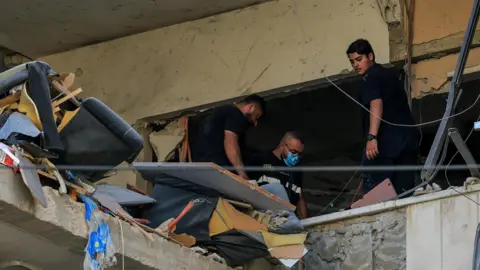 Emergency services at the scene of the Israeli strikes on Sunday
bbc.com
Emergency services at the scene of the Israeli strikes on Sunday
bbc.com
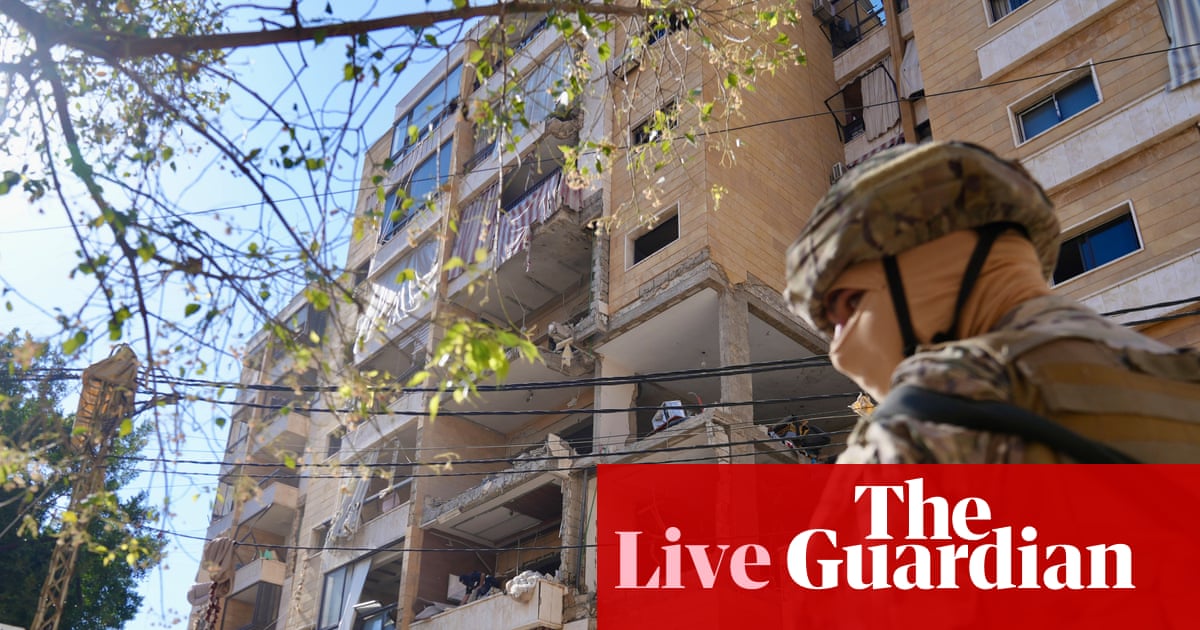 Middle East crisis live: Iran threatens Israel and US after strikes on Lebanon
theguardian.com
Middle East crisis live: Iran threatens Israel and US after strikes on Lebanon
theguardian.com
Israeli air strikes hit two apartment buildings in Beirut’s southern Dahieh district on Sunday, killing two people and injuring at least 17, according to Lebanon’s state news agency as cited by the BBC. The attack was the first on the Lebanese capital since a US-brokered truce last week, and came after the Israeli military said it intercepted two projectiles crossing into Israeli territory from Lebanon.
The episode underlines how the “ceasefire” has functioned less as a stop to hostilities than as a set of boundaries policed by outside patrons. The BBC reports that Israel had previously limited attacks on Beirut under US pressure, with Washington worried that strikes in the capital could complicate efforts to reach a wider peace deal with Iran. That linkage turns a local security question—who controls force in Lebanon—into a bargaining chip in a separate negotiation track, and makes compliance depend on what happens in Washington and Tehran as much as in Beirut.
Inside Lebanon, the truce also exposes the gap between formal talks and the actors who can actually halt fire. Lebanon’s parliament speaker Nabih Berri, who leads the Amal movement and is aligned with Hezbollah, rejected the US-brokered deal as “a trap” because it did not mention an Israeli withdrawal from occupied southern Lebanese territory, the BBC reports. Hezbollah itself has no seat at the talks between Israeli and Lebanese governments, yet Israel frames its strike as a response to Hezbollah fire and says it targeted “terrorist headquarters” and “Hezbollah terrorist infrastructure” in Dahieh. In a written statement last week, Hezbollah leader Naim Qassem said disarming the group would fulfil “the enemy’s objectives,” a reminder that the organisation sees its weapons as a guarantee rather than a negotiable detail.
Iran, for its part, is already using the strike to signal that Lebanon is not a sealed-off arena. The Guardian reports that Iranian lawmaker Ebrahim Rezaei said Tehran would deliver a “decisive and painful response” to Israel’s attack on Dahieh, adding: “Look at the sky over the occupied lands tonight.” The BBC similarly identifies Rezaei as a spokesperson for the Iranian parliament’s foreign policy and national security committee, promising a “painful response.” Even when such statements are rhetorical, they keep the risk premium alive: each strike in Beirut invites counter-pressure elsewhere, and each counter-pressure increases the value of US leverage over Israel’s target selection.
On Sunday, the BBC described the lower floors of a residential building blown open, apartments exposed to the street as crowds rushed to help the wounded. An Israeli army spokesman posted “To be continued.”