
Peru heads to presidential runoff
Keiko Fujimori faces Roberto Sánchez after first-round fragmentation, mandatory voting delivers turnout while legitimacy stays thin
Images
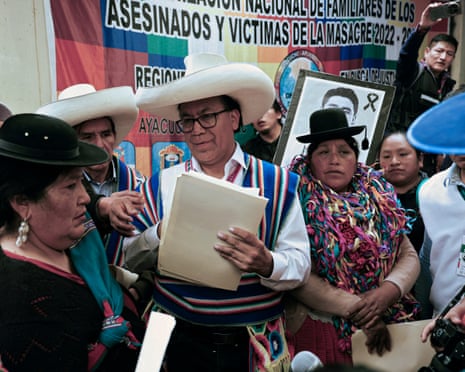 Roberto Sánchez, a leftwing congressman, on the campaign trail in Juliaca near Lake Titicaca in Peru. Polls give him a tiny lead in the race to be president. Photograph: Juan Carlos Cisneros/AFP/Getty Images
theguardian.com
Roberto Sánchez, a leftwing congressman, on the campaign trail in Juliaca near Lake Titicaca in Peru. Polls give him a tiny lead in the race to be president. Photograph: Juan Carlos Cisneros/AFP/Getty Images
theguardian.com
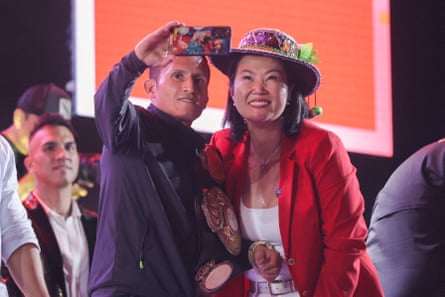 Keiko Fujimori is making her fourth bid to be president of Peru, a post held in the 1990s by her father, Alberto Fujimori. Photograph: Anthony Nino de Guzman/AFP/Getty Images
theguardian.com
Keiko Fujimori is making her fourth bid to be president of Peru, a post held in the 1990s by her father, Alberto Fujimori. Photograph: Anthony Nino de Guzman/AFP/Getty Images
theguardian.com
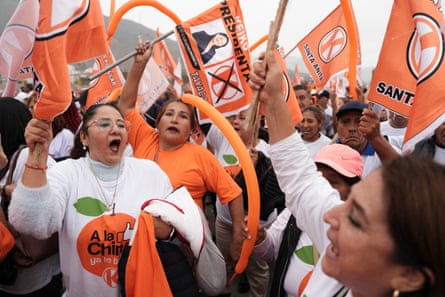 Supporters of Keiko Fujimori attend an election rally in the capital, Lima. The rightwinger got into the runoff with 17% of the first-round vote. Photograph: Angela Ponce/Reuters
theguardian.com
Supporters of Keiko Fujimori attend an election rally in the capital, Lima. The rightwinger got into the runoff with 17% of the first-round vote. Photograph: Angela Ponce/Reuters
theguardian.com
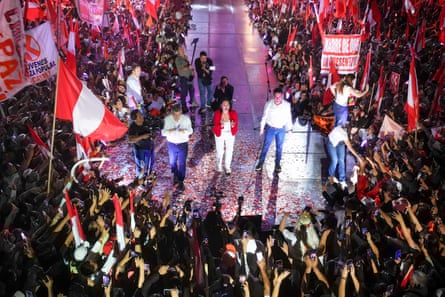 Roberto Sánchez addresses his closing campaign rally in Lima. He secured just 12% of the vote in the first round but had strong backing in rural areas. Photograph: Anthony Nino de Guzman/AFP/Getty Images
theguardian.com
Roberto Sánchez addresses his closing campaign rally in Lima. He secured just 12% of the vote in the first round but had strong backing in rural areas. Photograph: Anthony Nino de Guzman/AFP/Getty Images
theguardian.com
More than six million Peruvians are expected to vote in Sunday’s presidential runoff after an April first round in which the two finalists together won well under a third of ballots. According to The Guardian, the choice has narrowed to Keiko Fujimori, in her fourth bid for the presidency, and Roberto Sánchez, a leftist congressman and former trade and tourism minister. An Ipsos poll cited by the paper put the race within a single point.
The runoff arrives after a campaign that began with a record field of candidates and ends with two politicians who struggled to build broad first-round coalitions. Fujimori’s durability comes with baggage: she entered national politics as a teenager when she was named first lady during her father Alberto Fujimori’s presidency in the 1990s, and her surname remains a shorthand for both order and abuse depending on the voter. Sánchez, by contrast, is presented as the heir to the rural anger that powered Pedro Castillo, the former president ousted after trying to dissolve Congress and rule by decree, later sentenced to prison for rebellion.
Peru’s electoral calendar now sits on top of a deeper institutional churn. The Guardian notes the country is about to pick its ninth president in a decade, with only a minority of recent leaders having been elected rather than elevated through congressional manoeuvres. Mandatory voting keeps turnout high on paper, but it also masks the depth of public withdrawal: a system that needs fines to pull people to the polls is one where legitimacy is already being rationed.
That legitimacy gap shapes how voters interpret everyday risks. The campaign has played out against economic and security strains that make “stability” a commodity candidates can sell without specifying how it will be delivered. When presidents can be removed quickly and replacements can arrive via parliamentary arithmetic, policy becomes harder to price: long-term reforms look like promises from officials who may not last the year, while short-term spending and patronage become the safer bet for politicians trying to survive the next vote in Congress.
Sunday’s result will not end that cycle. A close outcome, contested mandate, or rapid return to congressional brinkmanship would still leave Peru governed by leaders who begin with narrow first-round support and inherit a state apparatus trained on removing presidents as much as administering policy.
The Guardian’s polling snapshot captures the mood: two candidates separated by fractions of a point, competing to govern a country that has already burned through eight presidents since 2016.