
Israeli strike kills Lebanese soldiers in south Lebanon
US-brokered border framework faces first major stress test, Beirut warns outside powers bargain while villages evacuate
Images
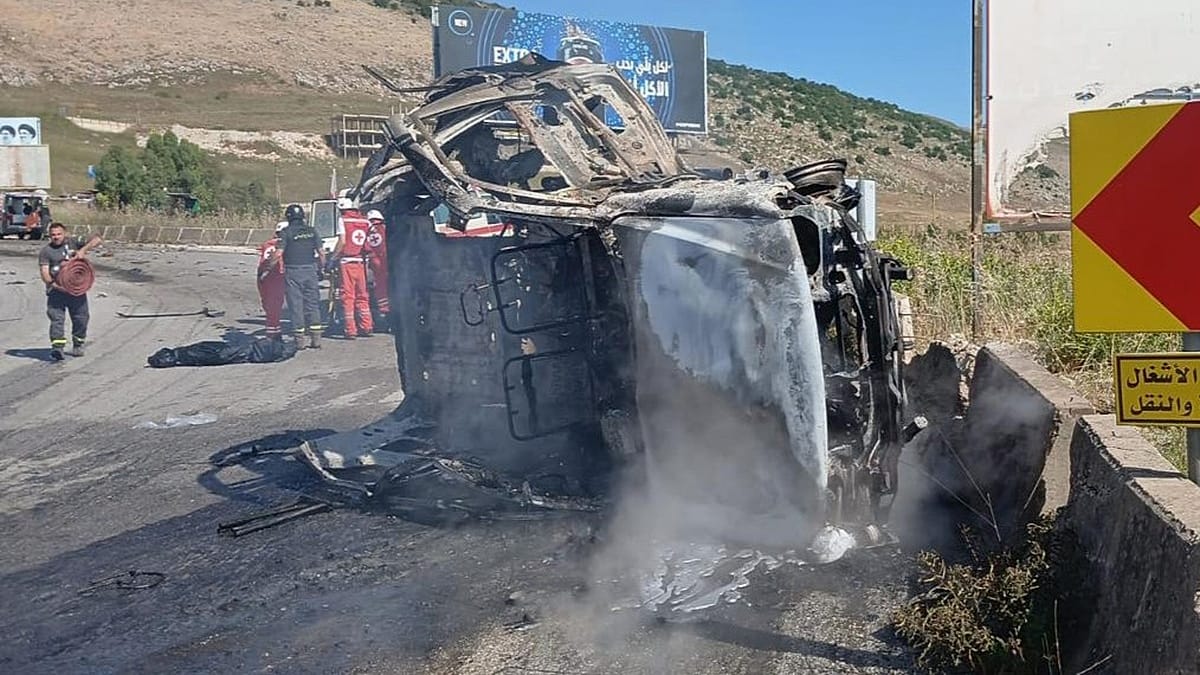 Israeli strike kills nine including three Lebanese soldiers
euronews.com
Israeli strike kills nine including three Lebanese soldiers
euronews.com
Nine people including three Lebanese soldiers were killed on Saturday when an Israeli airstrike hit a military vehicle in southern Lebanon, according to the Lebanese army. The strike took place on a road between Khardali and Nabatieh, days after Lebanese and Israeli officials agreed to a new US-brokered framework meant to reduce border hostilities, Euronews reports.
Israel’s military said the vehicle was moving “suspiciously” in an active combat zone and said it operates against Hezbollah rather than the Lebanese army, adding it was reviewing the incident. Lebanon’s army called the strike deliberate and said it was undermining efforts to secure a lasting ceasefire. The ceasefire that came into effect in April has repeatedly been tested by clashes and competing accusations of violations, with Israeli evacuation orders for villages in southern and eastern Lebanon updated again on Saturday as further strikes were reported.
The episode lands on top of a diplomatic design that asks the Lebanese state to do what it has historically struggled to do: impose a monopoly on force in areas where Hezbollah has long operated as a parallel military structure. Under the latest US-backed proposal, Hezbollah would halt attacks, withdraw forces from the Israeli border, and allow the Lebanese army exclusive security control in designated areas. Hezbollah has rejected the arrangement, insisting on a complete Israeli withdrawal from Lebanese territory.
That gap between paper commitments and field realities is now being priced in by civilians. Evacuation warnings and displacement reports move faster than the negotiating text, while each side frames kinetic actions as either enforcement or provocation. The Lebanese presidency, meanwhile, is trying to separate Lebanon’s interests from the regional bargaining that surrounds it: President Joseph Aoun said on Friday that Iran was exploiting Lebanon and using it as leverage in negotiations with Washington, telling Tehran, “It’s not your country, it’s our country,” according to the reporting cited by Euronews.
Aoun’s complaint points to a second problem embedded in the ceasefire architecture: the external actors who can influence Hezbollah and Israel are not the ones who absorb the direct costs of another cycle of escalation. Washington can broker frameworks and offer guarantees, but it cannot supply day-to-day control on the border. Tehran can signal restraint or defiance, but the immediate retaliation lands on Lebanese towns, roads, and army convoys.
The Lebanese army said its vehicle was struck on the road between Khardali and Nabatieh. Israel said it was operating in an active combat zone and was reviewing what happened.