
D-Day anniversary draws only six confirmed veterans
British Normandy Memorial adds newly identified dead, remembrance turns into an archival project
Images
 Henry Rice (l) and 100-year-old Ken Hay (r) are among the veterans to have travelled to France for the commemorations
bbc.com
Henry Rice (l) and 100-year-old Ken Hay (r) are among the veterans to have travelled to France for the commemorations
bbc.com
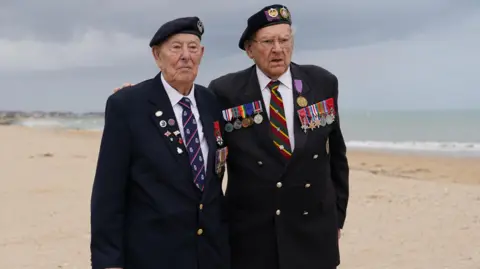 Henry Rice (l) and 100-year-old Ken Hay (r) are among the veterans to have travelled to France for the commemorations
bbc.com
Henry Rice (l) and 100-year-old Ken Hay (r) are among the veterans to have travelled to France for the commemorations
bbc.com
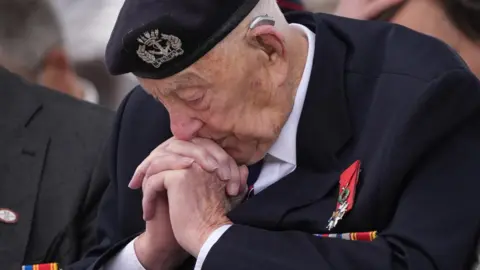 PA Media Only six Normandy veterans were confirmed to be attending this year's anniversary
bbc.com
PA Media Only six Normandy veterans were confirmed to be attending this year's anniversary
bbc.com
 standard.co.uk
 standard.co.uk
 standard.co.uk
 standard.co.uk
Only six Normandy veterans were confirmed to attend this year’s D-Day commemorations, as ceremonies in northern France marked 82 years since the Allied landings of 6 June 1944. According to the BBC, French schoolchildren walked across Juno Beach at H-Hour alongside serving personnel, pipers and the grandson of Field Marshal Bernard Montgomery. At the British Normandy Memorial above what was known as Gold Beach, the UK defence secretary laid a wreath as the memorial added new names to its roll of honour.
The new inscriptions are a reminder that even wars that generated mountains of paperwork still leave people behind. The BBC reports that 98 names were added after researchers and families produced evidence that had been missing from earlier records, including men who were mortally wounded in Normandy but later died in British hospitals. The London Evening Standard notes the memorial now carries more than 22,000 names, and that veterans were wheeled to the front of the annual ceremony while political and military representatives stood behind them.
The commemorations are also shrinking in a way that no amount of ceremony planning can reverse. With so few surviving participants, the event increasingly depends on institutions—defence ministries, memorial trusts, UNESCO delegations and local authorities—to keep the story legible to people who did not inherit it directly. That shift changes what gets emphasised: the logistics of remembrance, the curation of names, and the choreography of schoolchildren and uniformed personnel in a place where the original operation depended on weather windows and improvisation.
The Standard describes D-Day as the largest military seaborne operation ever attempted, and notes widely cited casualty estimates for the landings and the subsequent Battle of Normandy. But the day’s most concrete updates were administrative rather than strategic: a roll of honour corrected, and attendance figures that continue to fall. The memory of the operation survives through stone, archives and annual timetables, even as the people who could correct the record from experience are no longer in the crowd.
At Ver-sur-Mer, the newly added names sit alongside those already carved into the memorial. This year’s ceremony proceeded with six confirmed veterans present.