
Sweden prepares adult prisons for child inmates
Kumla refits cells and builds classrooms ahead of July change, parliament weighs lowering criminal responsibility age to 13
Images
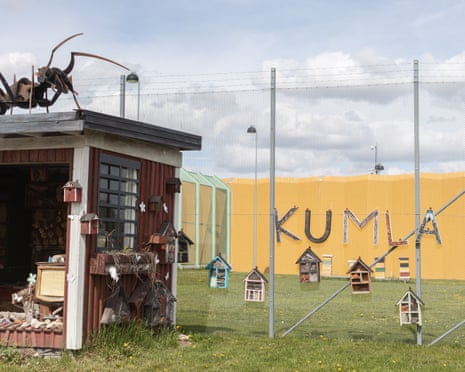 Kumla, a high-security prison, is one of those preparing to take in children after a change in the law. Photograph: Rebecka Uhlin/The Guardian
theguardian.com
Kumla, a high-security prison, is one of those preparing to take in children after a change in the law. Photograph: Rebecka Uhlin/The Guardian
theguardian.com
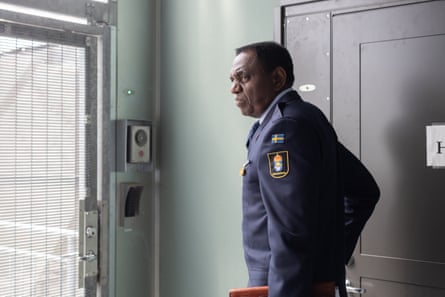 Kumla’s chief, Jacques Mwepu, is against placing children in prisons but says he wants to ‘do as much as we can’ to help them feel comfortable. Photograph: Rebecka Uhlin/The Guardian
theguardian.com
Kumla’s chief, Jacques Mwepu, is against placing children in prisons but says he wants to ‘do as much as we can’ to help them feel comfortable. Photograph: Rebecka Uhlin/The Guardian
theguardian.com
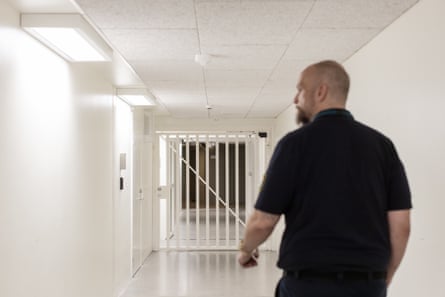 Swedish care providers currently housing under-18s convicted of crimes say children ‘have no place in a prison’. Photograph: Rebecka Uhlin/The Guardian
theguardian.com
Swedish care providers currently housing under-18s convicted of crimes say children ‘have no place in a prison’. Photograph: Rebecka Uhlin/The Guardian
theguardian.com
Kumla prison is preparing to receive child prisoners for the first time in its roughly 60-year history, after Sweden’s parliament voted to let 15- to 17-year-olds convicted of serious crimes serve sentences in prison from July. The Guardian reports that staff at the high-security facility have removed extra beds from adult cells, ordered new furniture and begun building classrooms as the system readies itself for younger inmates.
The shift is part of a broader tightening of Swedish criminal policy driven by gang violence. Justice minister Gunnar Strömmer told the paper Sweden faces an emergency after a decade of rising violence linked to criminal networks involved in drug dealing, large-scale fraud and robbery. Researchers and practitioners cited by The Guardian say gangs are grooming increasingly young and vulnerable children to carry out violent acts for money, a pipeline that has pushed the state toward harsher sanctions even as it struggles to control the institutions it already runs.
Until now, under-18s convicted of serious crimes have largely served sentences in secure care homes run by the Swedish National Board of Institutional Care (SiS). Those homes have been heavily criticised for security and management failures, and that record hangs over the current policy turn: the state is moving children out of one troubled system and into another designed for adult containment. Jacques Mwepu, the head of Kumla prison, told The Guardian he is against putting children in prison but is trying to make the environment as comfortable as possible, including repainting walls and adapting cells.
The legal direction of travel goes further. The Guardian writes that parliament is expected to vote in June on lowering the age of criminal responsibility from 15 to 13 for crimes carrying a minimum sentence of four years’ imprisonment. If passed, Sweden would be asking institutions built for adult punishment to absorb adolescents at an age when schooling, mental health care and family intervention are typically the tools used to prevent repeat offending.
The numbers behind the crackdown are not confined to youth crime. Sweden’s prison population has almost doubled over the past decade, and the country has shifted from closing prisons to building new ones, largely because sentences have increased. Plans cited by The Guardian would expand capacity from 12,000 places to 19,500 by 2035. Even as fatal shootings have “apparently fallen”, with five in the first quarter of the year, the infrastructure of long-term incarceration is being scaled up.
Opposition is broad and specific. Lawyers, researchers and NGOs including Unicef and Save the Children have condemned the decision to incarcerate children, while the prison and probation service has warned of negative consequences. Sweden has long marketed itself as a leader in children’s rights and humane criminal justice; the new preparations at Kumla show what that branding looks like when the state’s answer to recruitment of minors is to redesign adult cells.
At Kumla, the classrooms are still under construction. The first child prisoner has not yet arrived.