
Armenia holds election under Russian trade pressure
Pashinyan campaigns on EU path after Nagorno-Karabakh loss, import bans on flowers cognac and produce arrive in final stretch
Images
 For ordinary Armenians heading to the polls on 7 June, the economic costs of turning away from Russia will be front of mind
bbc.com
For ordinary Armenians heading to the polls on 7 June, the economic costs of turning away from Russia will be front of mind
bbc.com
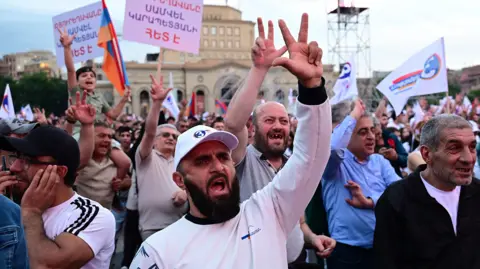 For ordinary Armenians heading to the polls on 7 June, the economic costs of turning away from Russia will be front of mind
bbc.com
For ordinary Armenians heading to the polls on 7 June, the economic costs of turning away from Russia will be front of mind
bbc.com
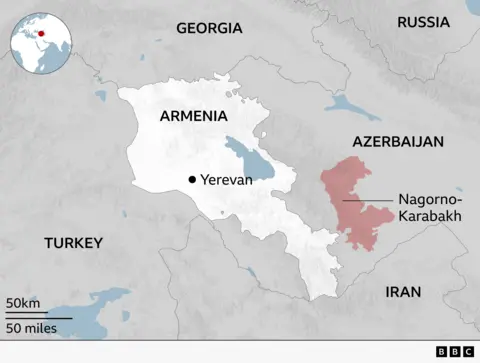 Pashinyan's critics have never forgiven him for giving up Nagorno-Karabakh
bbc.com
Pashinyan's critics have never forgiven him for giving up Nagorno-Karabakh
bbc.com
Armenia votes this weekend with its largest trading partner applying pressure in real time. According to the BBC, Prime Minister Nikol Pashinyan is seeking re-election on a platform of European integration after years of edging away from Moscow, while Russia has moved in the final stretch to restrict imports of Armenian goods.
The election is set against a sharp reversal in public confidence. Pashinyan’s support has fallen since Armenia lost Nagorno-Karabakh to Azerbaijan by force in 2023, and the BBC reports that around 40% of voters say they trust no political figure. A poll cited by the broadcaster shows his Civil Contract party leading but short of dominance, with opposition forces tied to former presidents Robert Kocharyan and Serzh Sargsyan arguing for renewed military and economic alignment with Russia. The most prominent challenger described by the BBC is billionaire Samvel Karapetyan, who made his fortune in Russia and is under house arrest on accusations of plotting to overthrow the government, leaving his campaign to be run through a relative.
Moscow’s leverage is increasingly commercial rather than military, and it is being exercised in ways that are easy to deny and hard to retaliate against. Russia accounted for 36% of Armenia’s foreign trade in 2023, according to figures in the BBC report, and President Vladimir Putin has publicly warned of economic consequences if Yerevan continues toward the West. In the two weeks before the vote, Russia banned exports of Armenian flowers, mineral water, cognac, fresh vegetables and fruit to the Russian market, a list that reads less like a security measure than a reminder of who can switch off revenue streams overnight. The BBC quotes an Armenian economist, Haykaz Fanyan, saying Russia is trying to influence the election result.
At the same time, Armenia has been trying to reduce its exposure where it can. The BBC reports that dependence on Russian military equipment has dropped sharply, with most imports now coming from India, France, China and other suppliers. But diversifying arms purchases is a slower process than stopping a truck at the border, and the election campaign is being fought under the knowledge that the country’s energy and trade links still run heavily through Russia.
Armenians will cast ballots on 7 June with a peace deal with Azerbaijan dividing opinion almost evenly, the BBC reports. In the final days of the campaign, the most visible external intervention has been a set of import bans that can be lifted as quickly as they were imposed.