
Israel’s southern Lebanon campaign kills thousands and drives mass displacement
El País tallies deaths destroyed homes and shifting evacuation lines, ceasefire language coexists with empty towns
Images
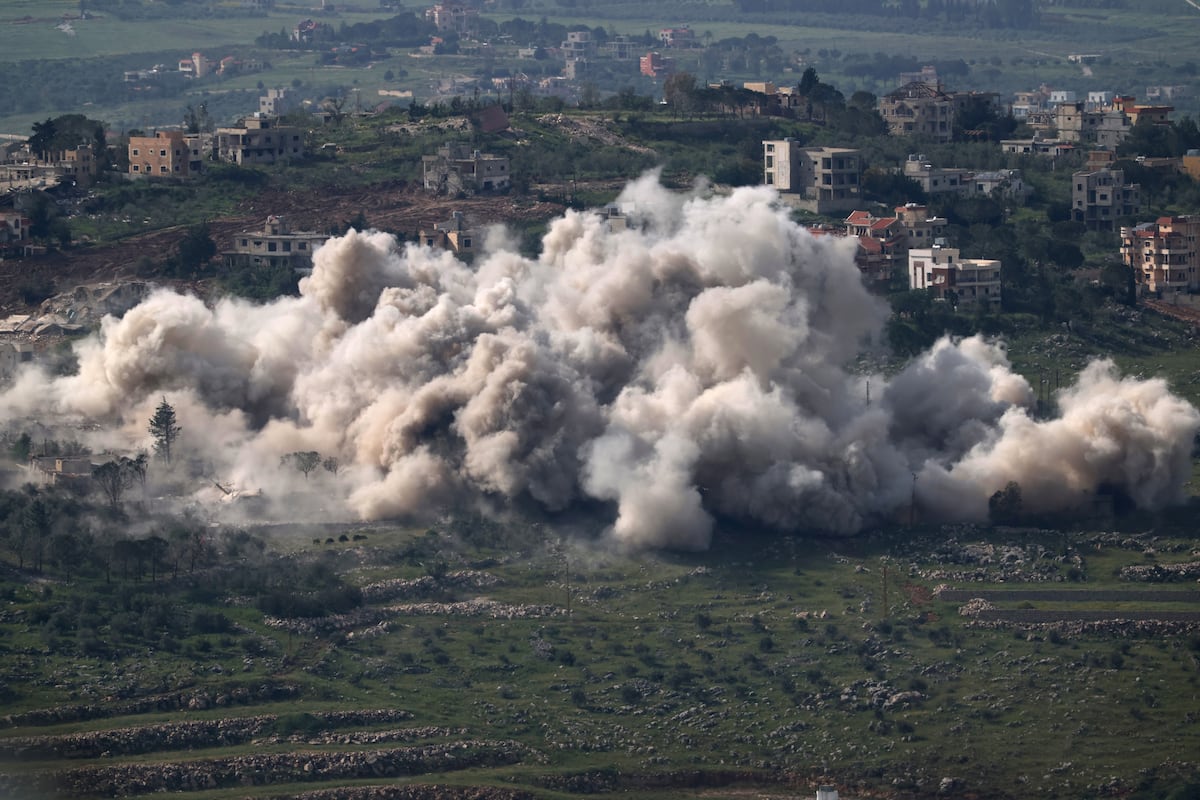 Israel’s offensive in southern Lebanon: 2,900 dead, 36,000 homes destroyed and 1.4 million displaced
english.elpais.com
Israel’s offensive in southern Lebanon: 2,900 dead, 36,000 homes destroyed and 1.4 million displaced
english.elpais.com
Jabal Amel Hospital in Tyre was destroyed by an Israeli airstrike on 2 June, according to El País, one concrete marker in a campaign that the paper says has killed 2,914 people in southern Lebanon over the past three months. The same reporting puts the number of homes destroyed in the south at 36,000 and says about 1.4 million people have been displaced—roughly a quarter of Lebanon’s population. The figures come as Israel and Lebanon cycle through ceasefire announcements that have not stopped strikes or kept residents from fleeing.
El País describes how Israel, after declaring war on Iran together with the United States on 28 February, intensified its offensive and occupation in southern Lebanon as Hezbollah took up arms in solidarity with Iran. The paper says Israel has forcibly occupied a strip inside Lebanese territory covering about 6% of the country, with 68 villages under occupation according to Prime Minister Nawaf Salam. It also reports that Israel’s evacuation line has moved: an order that once pushed civilians up to the Litani River was, this week, reimposed and extended up to the Zahrani River, with Israel warning it would use “extreme force” in the area between the two rivers.
The mechanics of displacement matter because they turn a military campaign into a long-running administrative problem. When an evacuation order is formally “nullified” by a ceasefire but bombing continues, families still do the risk calculation and stay away, leaving entire local economies dormant and municipal services hollowed out. El País reports that almost all commercial activity in the south has come to a halt, while medical teams are hit daily by what it calls the unpredictability of Israeli attacks. A moving front line also creates a moving humanitarian map: the territory between the Litani and Zahrani rivers, the paper notes, contained residents who stayed put as well as displaced people from further south.
The political bargain implied by ceasefire language is harder to see on the ground. Israel says its campaign against Hezbollah is “decisive”, but the destruction of housing stock and repeated evacuation orders lock Lebanon into a reconstruction bill and a governance test at the same time. Hezbollah draws strength from being armed and organised where the state is not; mass displacement and shattered infrastructure widen that gap, even if the stated target is the militia. El País’ accounting—83% of Lebanon’s nationwide fatalities and 72% of nationwide home destruction concentrated in the south—suggests the war is being measured less by lines on a map than by which districts remain habitable.
On 3 June, six members of the Abdallah family were killed in a strike on the village of Wardanieh south of Beirut, El País reports. Two days earlier, Tyre’s Jabal Amel Hospital had already been turned into rubble.