
Ebola survivor describes infection before outbreak declaration in eastern Congo
Bundibugyo variant lacks approved vaccines and treatments, supportive care carries the load while experimental shots remain in development
Images
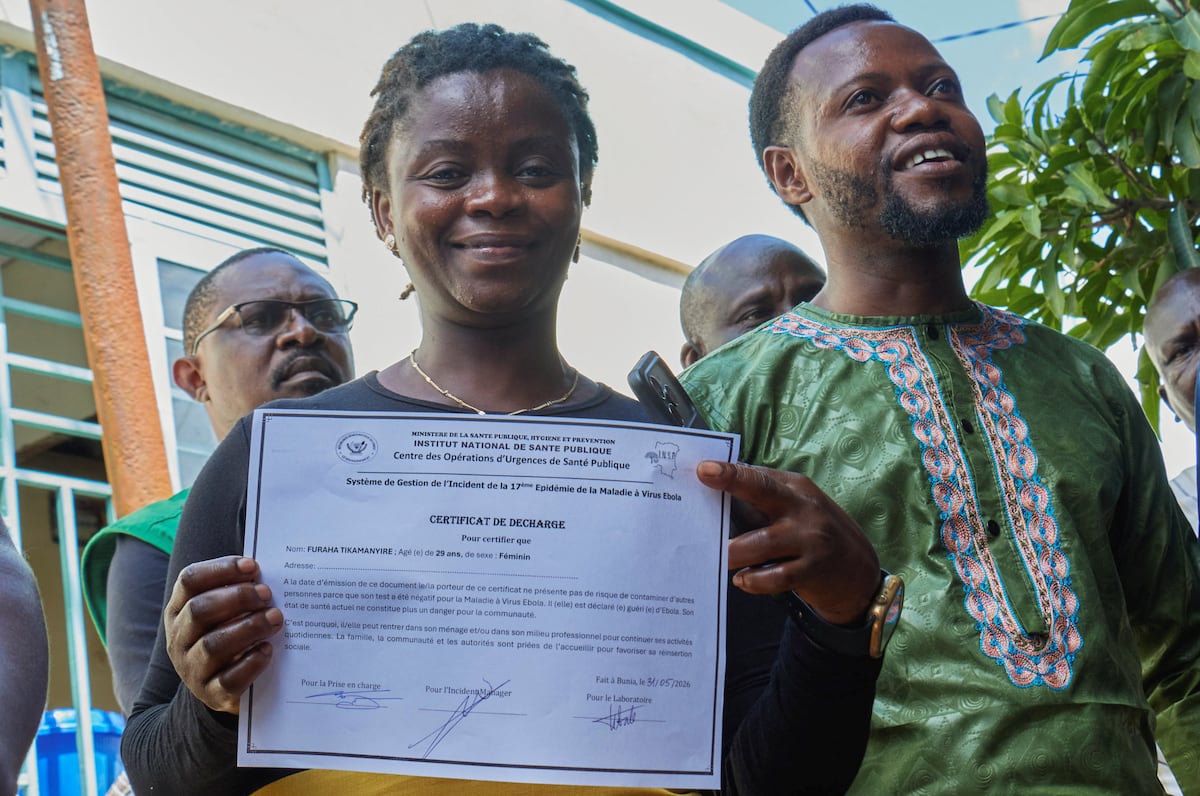 A nurse who survived the current Ebola outbreak: ‘I screamed in pain, my body ached and I felt itchy all over’
english.elpais.com
A nurse who survived the current Ebola outbreak: ‘I screamed in pain, my body ached and I felt itchy all over’
english.elpais.com
A nurse in eastern Democratic Republic of the Congo says she fell ill with Ebola before the outbreak was officially declared, after treating patients arriving from the Mongbwalu region. El País reports that Furaha Tikamanyire, who works at the Bunia Evangelical Medical Center, was discharged from an Ebola treatment centre near Bunia at the end of May along with three other health workers.
Her account is a reminder of how outbreaks start in practice: not with a declaration, but with clinicians improvising around an unknown pathogen. According to El País, Tikamanyire believes she was infected through close contact with patients, including exposure to blood, while caring for dozens of people before authorities declared the outbreak in mid-May. She describes a progression of symptoms—headaches, extreme fatigue, stomach pains, loss of appetite and conjunctivitis—followed by severe eye pain, body aches and itching that left her screaming. The piece places her recovery inside a system that still leans heavily on supportive care: intravenous hydration, symptom control and constant monitoring to prevent complications.
The medical complication in this outbreak is not only capacity, but fit between tools and virus. El País says the outbreak is caused by the Bundibugyo virus variant, far less common than the Zaire strain that has driven most of the country’s Ebola epidemics. There is an effective vaccine for the Zaire strain, but no approved vaccines or treatments for Bundibugyo, leaving clinicians to rely on early specialised care rather than a targeted pharmaceutical backstop. An international effort is working on experimental vaccine candidates, the paper reports, but patients recovering today are doing so without a variant-specific cure.
Public messaging is also doing double duty: building trust while trying to keep panic from outrunning facts. El País reports that WHO director-general Tedros Adhanom Ghebreyesus attended a discharge ceremony and urged communities to seek early care, while Congolese officials pointed to the country’s history of repeatedly containing Ebola. Those statements sit alongside the more operational reality Tikamanyire describes—health workers exposed before a diagnosis is confirmed, and before protocols harden into routine.
Tikamanyire walked out with a discharge certificate, El País writes, after weeks in an Ebola treatment centre north of Bunia. The virus variant still has no approved vaccine, and the next patient will arrive before the next ceremony is scheduled.