
Asia braces for El Niño return
WMO puts formation odds above 80% in coming months, cities and farms face shortages before any emergency is declared
Images
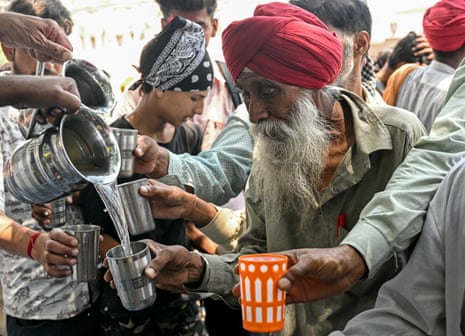 People drink sweetened water distributed by volunteers in Amritsar to cope with the heat. An El Niño could weaken a monsoon season that India sorely needs. Photograph: Narinder Nanu/AFP/Getty Images
theguardian.com
People drink sweetened water distributed by volunteers in Amritsar to cope with the heat. An El Niño could weaken a monsoon season that India sorely needs. Photograph: Narinder Nanu/AFP/Getty Images
theguardian.com
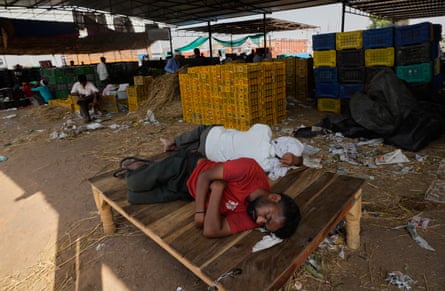 People sleep during the hottest part of the day at a wholesale fruit market on the outskirts of Hyderabad, India. Photograph: Mahesh Kumar A/AP
theguardian.com
People sleep during the hottest part of the day at a wholesale fruit market on the outskirts of Hyderabad, India. Photograph: Mahesh Kumar A/AP
theguardian.com
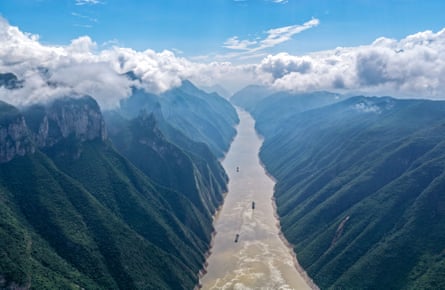 An aerial view of the Wuxia Gorge along the Yangtze River after rain in south-west China’s Chongqing Municipality. China faces 20% more rainfall this year on average. Photograph: Xinhua/Shutterstock
theguardian.com
An aerial view of the Wuxia Gorge along the Yangtze River after rain in south-west China’s Chongqing Municipality. China faces 20% more rainfall this year on average. Photograph: Xinhua/Shutterstock
theguardian.com
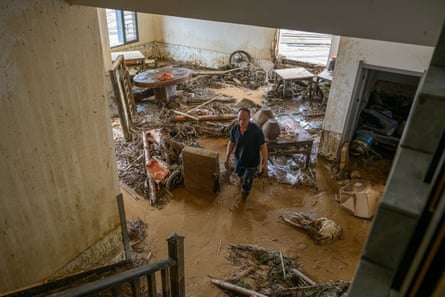 A villager inspects damage inside a house after a heavy rainstorm hit Yongchuan district in Chongqing, China, in May. Photograph: China News Service/Getty Images
theguardian.com
A villager inspects damage inside a house after a heavy rainstorm hit Yongchuan district in Chongqing, China, in May. Photograph: China News Service/Getty Images
theguardian.com
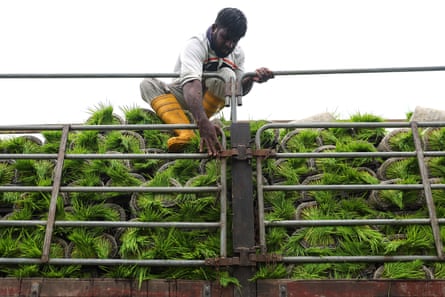 A worker transfers rice plant mats into a lorry in Selangor state, Malaysia. The country’s agriculture industry is particularly vulnerable to an El Niño. Photograph: Fazry Ismail/EPA
theguardian.com
A worker transfers rice plant mats into a lorry in Selangor state, Malaysia. The country’s agriculture industry is particularly vulnerable to an El Niño. Photograph: Fazry Ismail/EPA
theguardian.com
An El Niño watch is tightening across Asia as forecasters put the odds of the pattern forming before September at 80% and before November at 90%, according to the World Meteorological Organization. The Guardian reports communities in northern India already leaning on volunteer-distributed sweetened water as heat builds ahead of the monsoon. Officials and researchers are warning that this year’s event may arrive on top of already elevated baseline temperatures.
El Niño’s immediate risk in South Asia is not a single storm but the absence of one: a weaker or delayed monsoon would stretch heatwaves, thin water reserves, and push up the cost of food and power. The Guardian cites concerns that India’s monsoon is already expected to deliver below-average rainfall, leaving farmers who time planting to the rains exposed to a bad roll of the weather. Damage to wheat and mustard crops from May heat was already being reported, and agricultural expert Devender Sharma told the newspaper that the combination of extreme heat and El Niño could be “deadly” for Indian agriculture, with effects becoming visible in July or August.
Cities face a different constraint: storage and pipes do not negotiate with forecasts. Mumbai depends on seven rain-fed lakes for water for more than 22 million people, the Guardian reports, and those reservoirs were said to have only about 45 days of supply left at current levels. If the monsoon arrives late, rationing and emergency measures become the default policy tool, and households and businesses end up paying through tanker prices, lost workdays, and health impacts rather than through any line item in a budget.
In China, El Niño is associated with swings between flooding and drought that already strain hydropower and transmission, and the Guardian reports expectations of further challenges this summer, including heavier rainfall in parts of the country. That matters beyond China’s borders: when power grids are stressed, factories curtail output, freight schedules slip, and commodity demand shifts, turning a weather pattern into a supply-chain variable. The same dynamic runs through the region’s energy systems: peak electricity demand rises with heat, while water availability can fall where hydro is a swing source.
The WMO’s probabilities do not specify where the costs will land, but the Guardian’s reporting shows how quickly they migrate to the least protected. Day labourers, tenants in informal housing, and small farmers cannot hedge rainfall risk; they absorb it in cash flow and health. Governments, meanwhile, tend to arrive after the fact with relief payments, water tankers, and restrictions that treat symptoms while leaving underlying exposure—dense cities dependent on rain-fed storage, agriculture timed to a single seasonal pulse—largely unchanged.
In Amritsar, the Guardian’s image of volunteers handing out sweetened water is a small, practical response to a large statistical warning. Whether the monsoon comes on time will decide how long such stopgaps remain the plan.