
Kenya court blocks US Ebola quarantine camp
Satellite images show Laikipia air base construction continues after protest deaths, tent city becomes the policy document
Images
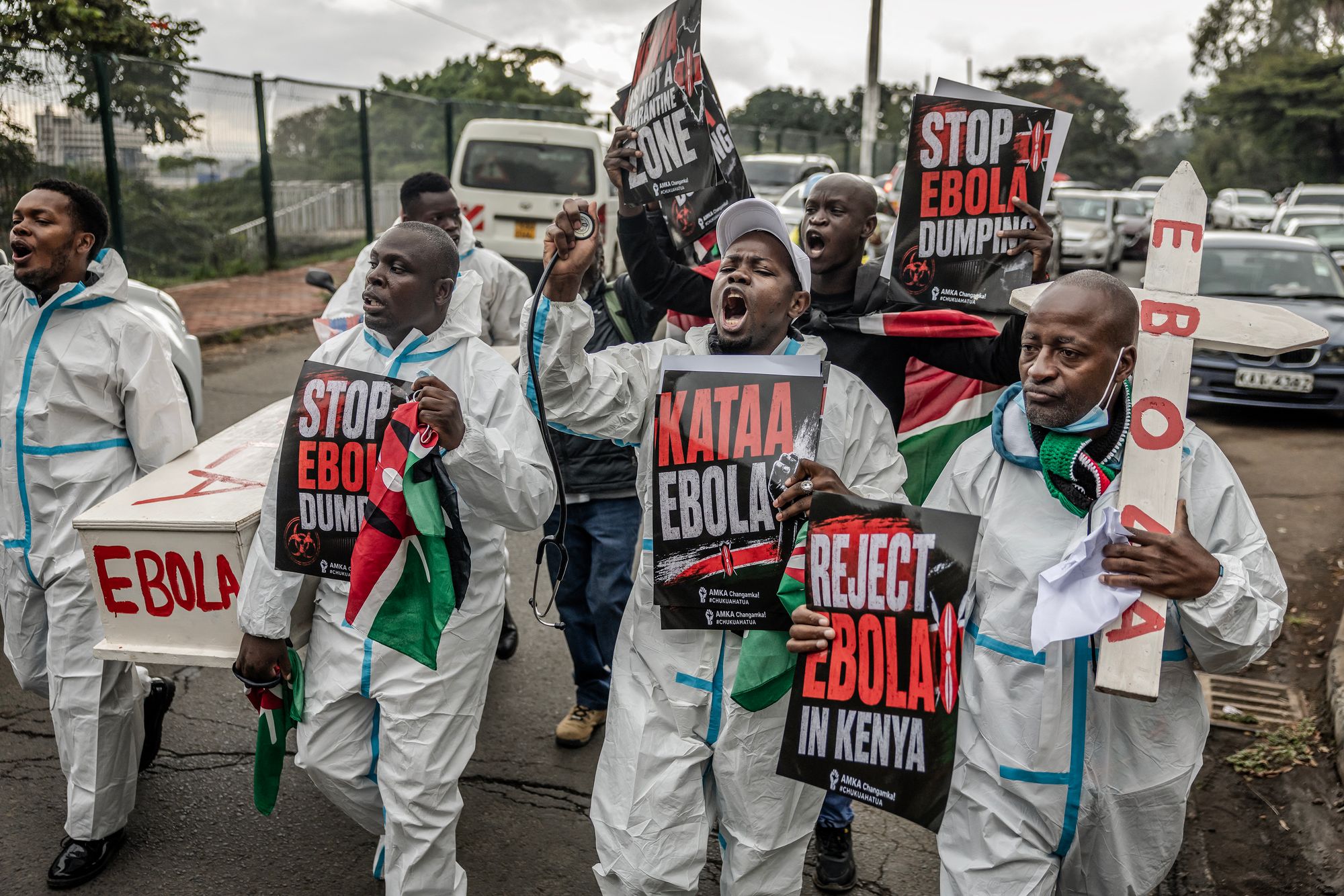 Activists chant slogans as they carry placards and a mock coffin during a protest against a US-built Ebola quarantine centre planned to begin operations at Kenya's Laikipia Air Base, in Nairobi on June 2, 2026 (AFP via Getty Images)
AFP via Getty Images
Activists chant slogans as they carry placards and a mock coffin during a protest against a US-built Ebola quarantine centre planned to begin operations at Kenya's Laikipia Air Base, in Nairobi on June 2, 2026 (AFP via Getty Images)
AFP via Getty Images
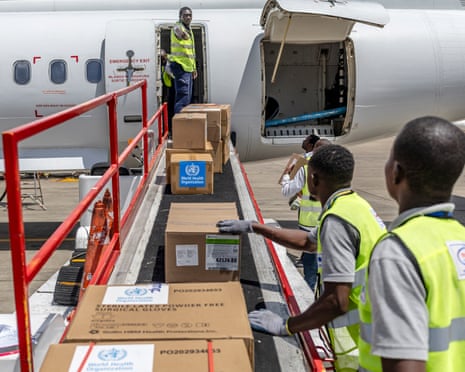 Ground crew at at Jomo Kenyatta international airport in Nairobi load medical supplies into a UN Humanitarian Air Service plane. Photograph: Tony Karumba/AFP/Getty Images
theguardian.com
Ground crew at at Jomo Kenyatta international airport in Nairobi load medical supplies into a UN Humanitarian Air Service plane. Photograph: Tony Karumba/AFP/Getty Images
theguardian.com
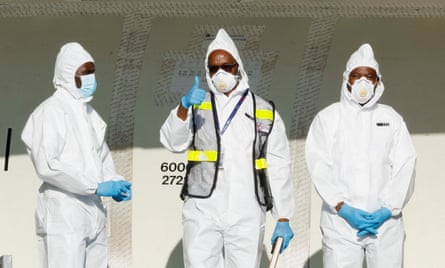 European Commission Civil Protection and Humanitarian Aid Operations (ECHO) crew after loading essential medical supplies on to a plane in Nairobi, Kenya. Photograph: Monicah Mwangi/Reuters
theguardian.com
European Commission Civil Protection and Humanitarian Aid Operations (ECHO) crew after loading essential medical supplies on to a plane in Nairobi, Kenya. Photograph: Monicah Mwangi/Reuters
theguardian.com
A tented 50-bed Ebola quarantine unit planned at Kenya’s Laikipia air base has triggered protests in Nanyuki that left at least two people dead, while a Kenyan court ordered the project suspended. According to The Independent and The Guardian, satellite imagery shows land cleared and connected white tents erected even after the high court said work should stop and demanded disclosure of the plan’s details.
The project is described as a facility primarily for Americans who may have been exposed to Ebola during the current outbreak in the Democratic Republic of the Congo, with Uganda also reporting cases, The Independent reports. The Guardian says the plan departs from earlier practice of evacuating US responders for care and has drawn criticism from former senior US health officials and a union representing US Centers for Disease Control and Prevention workers, who argue that exposed Americans should be brought home rather than routed to an overseas quarantine site. The same reporting notes that the US government has not clarified whether Kenyans or other responders would be eligible to use the facility, or which categories of exposure would trigger mandatory quarantine.
Kenya’s leadership has framed the arrangement as a long-running partnership with Washington. The Independent reports President William Ruto defended the decision during a visit to South Africa, describing it as a request from then-President Donald Trump and arguing it would be “inhuman” to refuse a US-funded facility. But the legal challenge and street protests point to a different question: who carries the risk when an emergency plan is designed around protecting foreign personnel first. In practice, the facility sits on a Kenyan military base, depends on Kenyan authorities to manage public order around it, and lands in a country whose own preparedness is being debated in court.
The operational details underline the asymmetry. The Guardian reports the unit would offer medications and some respiratory support, while patients needing higher levels of care would be flown to hospitals in Europe that have not been identified. That leaves Kenya hosting the quarantine perimeter and the political backlash, while the ultimate destination for severe cases remains outside the country. The Independent adds that the US State Department did not immediately respond to requests for comment, even as the US embassy said it was working with Kenya’s government to address objections.
The dispute is now being litigated in two arenas at once: in court filings demanding transparency and in the streets where the first deaths have already been recorded. Satellite images showing rapid progress on the site have become a kind of parallel communiqué, documenting construction that official statements are still struggling to describe.
By early June, The Independent reports, the cleared block at Laikipia air base held newly laid tarmac and a cluster of white tents east of the runway, with more equipment visible on site. The high court’s order to suspend work did not stop the build from appearing in the next set of images.