
Justice Department scraps Trump anti-weaponization fund
Acting attorney general Todd Blanche keeps IRS audit immunity deal, bipartisan objections stop the pot but not the carve-out
Images
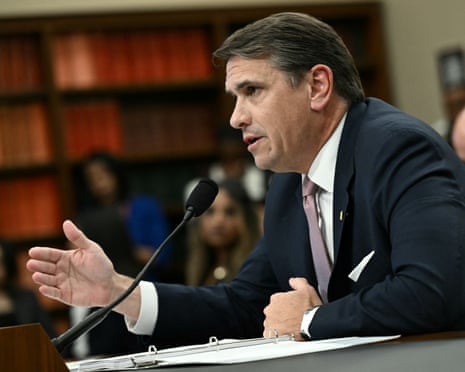 The acting attorney general, Todd Blanche, testifies at a House appropriations hearing on Capitol Hill in Washington DC on Tuesday. Photograph: Brendan Smialowski/AFP/Getty Images
theguardian.com
The acting attorney general, Todd Blanche, testifies at a House appropriations hearing on Capitol Hill in Washington DC on Tuesday. Photograph: Brendan Smialowski/AFP/Getty Images
theguardian.com
Todd Blanche told a House appropriations hearing on Capitol Hill on Tuesday that the Justice Department is abandoning a proposed $1.8bn “anti-weaponization” fund tied to Donald Trump’s claim that government had been turned against his allies. “We are not moving forward with the fund, period,” Blanche said, according to The Guardian. The department, however, is keeping a separate agreement that bars the IRS from auditing Trump, his family and related entities.
The juxtaposition is what drew bipartisan alarm in the first place. The fund was pitched as a way to compensate people who say they were wronged by the federal government, but lawmakers in both parties objected to how loosely it was structured and how little it appeared to constrain awards to the president’s political circle, The Guardian reports. Dropping the fund removes the most conspicuous line item, yet the remaining audit-immunity provision goes to something more fundamental than a one-off payout: whether the sitting president can be placed outside routine enforcement.
Blanche offered no public rationale for ending the fund while preserving the anti-audit arrangement. He described the audit-related terms as normal, but former IRS officials told The Guardian they were unaware of comparable immunity deals. The agreement was part of an effort to resolve a $10bn lawsuit Trump filed against the IRS after his tax returns were leaked. Critics have argued that insulating a president from potential tax liability could amount to a personal financial benefit connected to office, raising constitutional questions that will not be answered by simply shelving the compensation fund.
The fund also arrived already entangled in litigation. A federal judge in the Eastern District of Virginia blocked the administration from taking action while motions were pending, and a federal judge in Florida overseeing the underlying lawsuit reopened the case to examine possible wrongdoing, according to The Guardian. Even without the fund, the government still retains broad discretion to settle individual administrative claims for damages, leaving open a quieter path for would-be claimants to seek money without Congress voting on a dedicated pot.
In practice, that means the fight shifts from a single, headline-grabbing appropriation to a series of case-by-case decisions inside the executive branch. Enrique Tarrio, the former Proud Boys leader convicted of seditious conspiracy, told PBS News Hour that January 6 defendants could pursue compensation through administrative claims, The Guardian notes. The fund is gone, but the machinery for selective relief—and selective exemption—remains.
Blanche’s statement ended the $1.8bn proposal in one sentence. The IRS audit bar survived the hearing intact.