
Europe pitches AI drone swarms for undersea cable security
Fincantieri Underwater Hub touts DEEP seabed sensors and autonomous vehicles, critical infrastructure becomes a permanent monitoring contract
Images
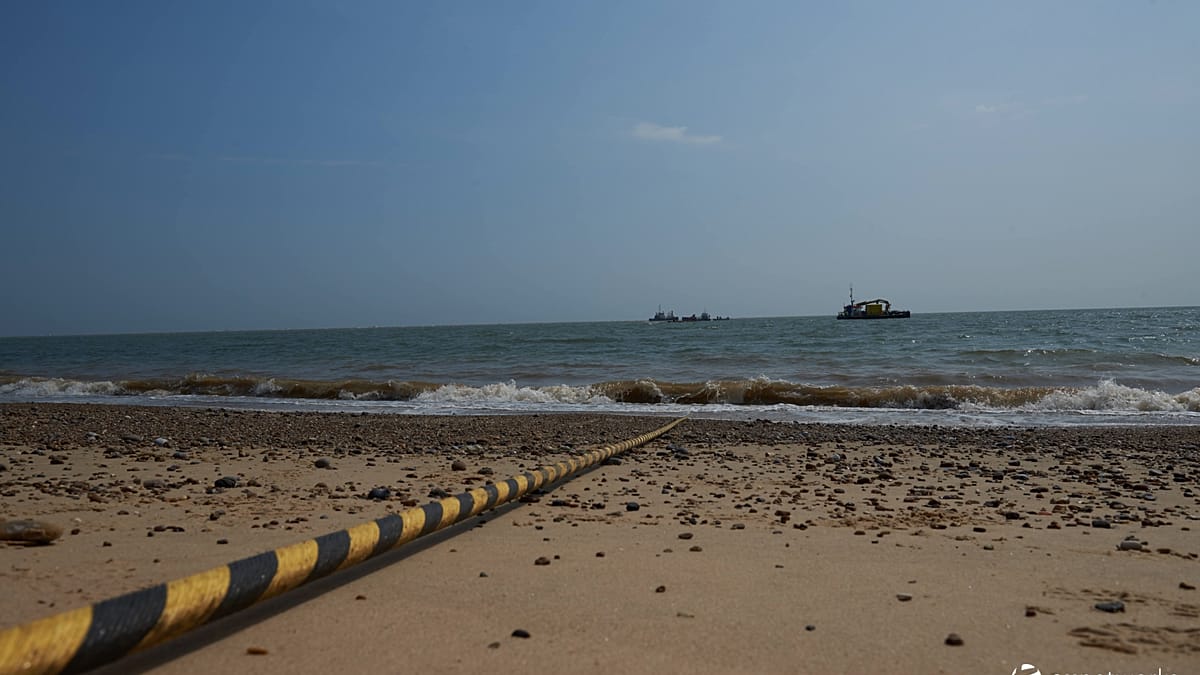 How AI drones could protect Europe's underwater networks
euronews.com
How AI drones could protect Europe's underwater networks
euronews.com
Europe’s undersea cable defence is being sold as an AI problem. In a Euronews report published on Monday, Italy’s Fincantieri Underwater Hub describes a system that would place sensors on the seabed and, when something looks wrong, launch swarms of small autonomous underwater drones to investigate in real time.
The pitch rests on a blunt statistic: more than 99% of global data travels through submarine telecommunications cables, according to Euronews. The same seabed also carries gas pipelines and power interconnectors, meaning a single cut can be both a communications outage and an energy shock. The article frames the sea as a “strategic domain” in hybrid warfare, where attribution is hard and the cost of constant patrols is high.
That combination—high consequence, low visibility—creates a market for vendors who can promise persistent monitoring. Euronews cites an estimate of roughly €50 billion a year for the underwater defence market, and notes the defence industry’s shift from traditional submarines toward “non-conventional systems” and dual-use technology. The dual-use label matters: the same tools marketed for inspecting, maintaining, or laying fibre-optic cables can be positioned as security infrastructure once governments start paying for “resilience”.
Fincantieri Underwater Hub’s flagship concept, DEEP (Dynamic Ecosystem for Enhanced Performance), is described as an integrated chain: an early warning system of seabed sensors monitoring the water column; then autonomous underwater drones with onboard AI and sensors to classify the danger and trigger mitigation. Euronews also highlights Distributed Acoustic Sensing, which turns fibre-optic cables into long listening devices by measuring microscopic tension changes—useful for detecting divers or submarines over large areas. The same logic extends to quantum magnetometers and underwater wireless networks, technologies that move from lab projects to procurement line items when “critical infrastructure” becomes a security category.
The demand signal is not purely theoretical. Euronews points to an incident involving attempted sabotage of the tanker SeaJewel off the coast of Savona, which it says is suspected to be linked to Russia’s shadow fleet. Whether or not any single incident is proven, the pattern is enough to justify new monitoring layers—often built by private contractors, but funded and legitimised by states. With the number of fibre-optic cables expected to double over the next decade, the surface area for both accidents and interference grows faster than any navy’s ability to watch it.
DEEP’s core promise is that software can replace manpower: sensors watch continuously, drones investigate automatically, and AI decides what is worth escalating. The hard part is that every false alarm consumes operator time, while every missed event becomes a political scandal after the fact. The system’s value will be measured less by glossy autonomy demos than by how often it can distinguish a trawler, a maintenance crew, and an intruder when nobody can see the seabed.
Euronews’ account ends where procurement begins: a seabed sensor network, a drone swarm, and a cable that doubles as a microphone.