
Mining explosives blast kills dozens in Myanmar Shan state
TNLA says gelignite storage site destroyed homes in Kaungtup village, rescue groups excavate while ownership and oversight stay contested
Images
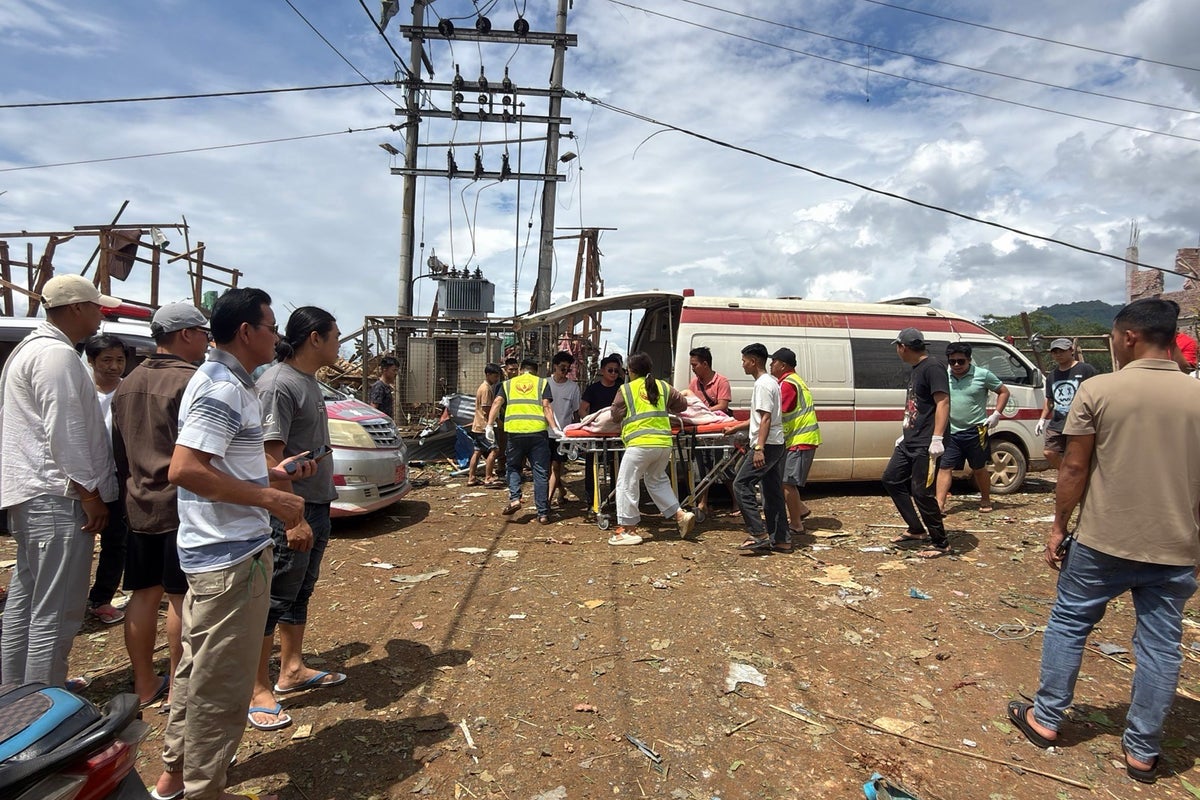 Rescuers dig for bodies after a mining explosives blast in Myanmar kills at least 43
independent.co.uk
Rescuers dig for bodies after a mining explosives blast in Myanmar kills at least 43
independent.co.uk
A blast from stored mining explosives killed at least 43 people in northeastern Myanmar, according to the Ta’ang National Liberation Army, the ethnic armed group that controls the area. The explosion hit Kaungtup village in Namhkam township in Shan state around midday on Sunday, with the TNLA saying seven children were among the dead and more than 100 people were injured. Rescue teams were still digging through wreckage as casualty figures were compiled, with bodies described as badly damaged by the force of the blast.
According to the Associated Press, the explosives were gelignite used in local mining and stone quarrying, a material that can become unstable when stored improperly or for long periods. Residents told AP they had not been informed that explosives were being kept in the village, a detail that turns a technical failure into a governance question: who is allowed to stockpile industrial explosives near homes, and who bears the cost when storage goes wrong. The TNLA said the site was used by its economic department for storage, while AP also reported — without being able to independently verify it — claims from local residents that mines in the area are operated jointly by the TNLA and Chinese businessmen.
The blast lands in a sector where the money moves faster than oversight. Myanmar’s mineral industry supplies rare earth elements, copper, tin and gemstones, and China is the dominant buyer and processor of much of what comes out of the country. Beijing’s foreign ministry offered condolences and said a Chinese national injured in the explosion was receiving treatment, while pledging assistance with the aftermath. That positions China as both customer and crisis partner in a borderland economy where control is fragmented: the TNLA seized the Namhkam area in late 2023 during a wider offensive against Myanmar’s military government, later signing a China-mediated ceasefire that has not produced stable administration.
In practice, extraction income is one of the few revenue streams available to both the central state and armed groups, which helps explain why safety standards remain negotiable. Mines and quarries can keep operating even when formal regulators are absent, because the operators, local authorities and armed controllers all have reason to keep cashflow running and limited reason to slow production for inspections. When accidents happen, the emergency response becomes the visible part of the system: AP described more than a dozen rescue and charity groups using excavation machinery to recover bodies.
The TNLA said it is investigating the cause of the explosion. In Kaungtup, the investigation begins after the village has already been turned into a debris field by the stockpile nobody says residents were told about.