
Israel captures Beaufort Castle in southern Lebanon
European leaders seek UN action as IDF expands ground push beyond Litani, evacuation lines replace ceasefire lines
Images
 Israel's military says it captured Beaufort Castle, a strategic fort in southern Lebanon
bbc.com
Israel's military says it captured Beaufort Castle, a strategic fort in southern Lebanon
bbc.com
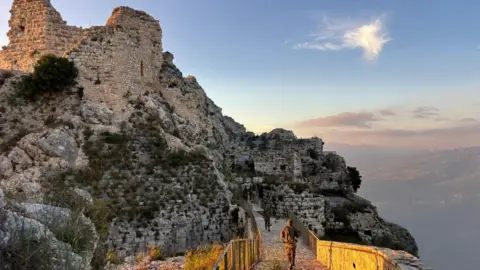 Israel's military says it captured Beaufort Castle, a strategic fort in southern Lebanon
bbc.com
Israel's military says it captured Beaufort Castle, a strategic fort in southern Lebanon
bbc.com
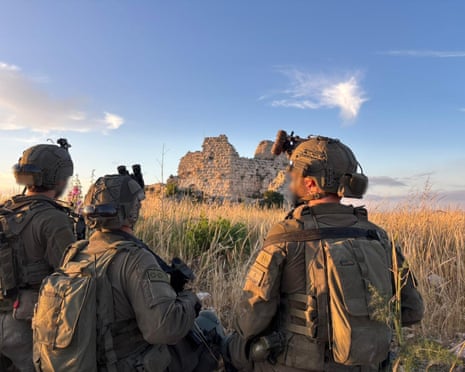 Images released by the IDF show Israeli forces at the Beaufort Castle in southern Lebanon. Photograph: Xinhua/Shutterstock
theguardian.com
Images released by the IDF show Israeli forces at the Beaufort Castle in southern Lebanon. Photograph: Xinhua/Shutterstock
theguardian.com
Israel captures Beaufort Castle in southern Lebanon, European governments demand de-escalation as IDF pushes deeper beyond Litani, ceasefire diplomacy shrinks under evacuation orders
Images released by Israel’s military show troops at Beaufort Castle, a medieval fort overlooking the Litani valley in southern Lebanon. Prime minister Benjamin Netanyahu called the seizure a “decisive shift” and said Israel would push deeper, as the UK, France and Germany publicly criticised the operation, according to the BBC and the Guardian.
The castle itself is a symbol with a long paper trail: built by Crusaders roughly nine centuries ago, later held by Saladin’s forces, the Ottomans, the French and the PLO, and used by Israeli forces during their previous occupation of southern Lebanon that ended in 2000, the Guardian reports. This time, the advance is paired with widening evacuation warnings. The BBC says the IDF has told residents to leave the entire south of Lebanon below the Zahrani river, after earlier warnings that expanded the area to be cleared. An IDF spokesman said people near Hezbollah “combat means” endanger their lives, language that effectively makes proximity a liability in a region where armed groups and civilian life are entangled.
European criticism is framed less as moral outrage than as damage control for a collapsing diplomatic timetable. France’s foreign minister requested an emergency UN Security Council meeting, while president Emmanuel Macron called for weapons to fall silent, and Germany’s foreign minister warned that further escalation would produce new displacement, the BBC reports. Britain’s Yvette Cooper said the escalation has killed and displaced civilians and destroyed infrastructure, while also stating Hezbollah must end attacks and disarm. The same ceasefire European leaders cite as the baseline has “rarely been observed” since April, according to the Guardian, leaving officials to argue over compliance in a war where the front line keeps moving.
Israel says the campaign targets Hezbollah, which has fired thousands of missiles and drones into northern Israel, while Lebanon’s prime minister Nawaf Salam accused Israel of a scorched-earth policy and “collective punishment”, according to the BBC. The Guardian adds that more than a million people have been forced from their homes and that thousands have been killed in the conflict. Against those numbers, a hilltop fort can look like theatre. Orna Mizrahi, a former deputy director in Israel’s national security council, told the Guardian the capture amounted to little more than a public relations coup and would not resolve the Hezbollah problem without a political track.
That political track exists mostly as process: talks between senior Israeli and Lebanese officials began in April in Washington, the first in decades, and are due to continue this week, the Guardian reports. Hezbollah is not at the table and has said it will not accept any outcome. Meanwhile Tehran has tied any broader understanding with Washington over reopening shipping through the Strait of Hormuz to an end to fighting in Lebanon, the Guardian reports, turning battlefield geography into a bargaining chip for maritime commerce.
Netanyahu’s video from Beaufort Castle promised deeper Israeli control over areas previously under Hezbollah. The evacuation map, not the castle flag, is what determines where civilians can still live tomorrow.