
Meta legal action silences Facebook whistleblower at Hay festival
Emergency order threatens fines for public comments about memoir, book pulled from sale while author sits onstage
Images
 Tim Wu and Sarah Wynn-Williams on stage at Hay. Wu condemned the restrictions on Wynn-Williams’ participation. Photograph: Sam Hardwick
theguardian.com
Tim Wu and Sarah Wynn-Williams on stage at Hay. Wu condemned the restrictions on Wynn-Williams’ participation. Photograph: Sam Hardwick
theguardian.com
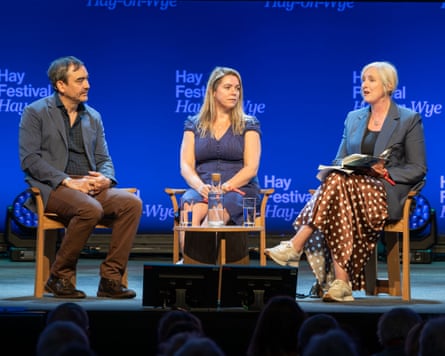 Tim Wu, Sarah Wynn-Williams and Carole Cadwalladr. Wynn-Williams received a standing ovation at the end of the event. Photograph: Sam Hardwick
theguardian.com
Tim Wu, Sarah Wynn-Williams and Carole Cadwalladr. Wynn-Williams received a standing ovation at the end of the event. Photograph: Sam Hardwick
theguardian.com
A former Facebook executive sat on stage at the Hay festival this week and did not speak. According to The Guardian, Sarah Wynn-Williams—scheduled to appear in conversation with journalist Carole Cadwalladr and academic Tim Wu—remained silent throughout the event because of legal action brought by Meta.
The episode was not a heckler’s veto or a venue dispute. It was the product of an emergency legal order Meta obtained on the eve of publication of Wynn-Williams’ memoir, Careless People, which alleges problems inside the company ranging from its internal culture and political influence to its approach to China and concerns about children’s wellbeing. Meta disputes the book’s claims, but the order restricts Wynn-Williams from publicly discussing aspects of it, and she faces fines for each breach, according to the Guardian.
That threat of escalating penalties changes the economics of speaking. A live appearance becomes a legal exposure event, not a media opportunity: the cost is not reputational blowback but a quantifiable bill that can compound with every sentence. The Guardian reports that Wynn-Williams’ lawyers say Meta has argued she violates the order merely by appearing in public where her book is sold and might draw attention—an interpretation that turns physical presence into “speech” and makes compliance depend on predicting how others will react.
Meta’s latest move, the Guardian says, includes a sanctions motion filed in March alleging that Wynn-Williams’ public appearances themselves warrant punishment. In the letter Cadwalladr read out at the festival, Meta also characterized Cadwalladr and Wu as known critics—an argument that effectively treats the identity of the interlocutors as part of the alleged breach. If the legal boundary is drawn around who is in the room and what is on a nearby table, the normal infrastructure of public debate—festivals, bookstores, interviews—becomes a minefield managed by corporate counsel.
The Hay festival’s response underscored how quickly institutions adjust when a large platform shows it is willing to litigate the perimeter. The Guardian reports that the festival withdrew Careless People from sale while Wynn-Williams was speaking at the event. The festival’s programme director, Helen Bagnall, called the moment an act of solidarity for “the silenced,” but the practical outcome was a book removed from a book festival to reduce legal risk.
Wynn-Williams received a standing ovation and was moved to tears, the Guardian reports. She still did not say a word, and Meta still got what it sought: an event about Meta where the person with first-hand knowledge could only communicate by not speaking.