
China factory activity stalls in May
Official survey shows new orders slipping below growth line, export strength masks domestic weakness as oil shock stays outside the gate
Images
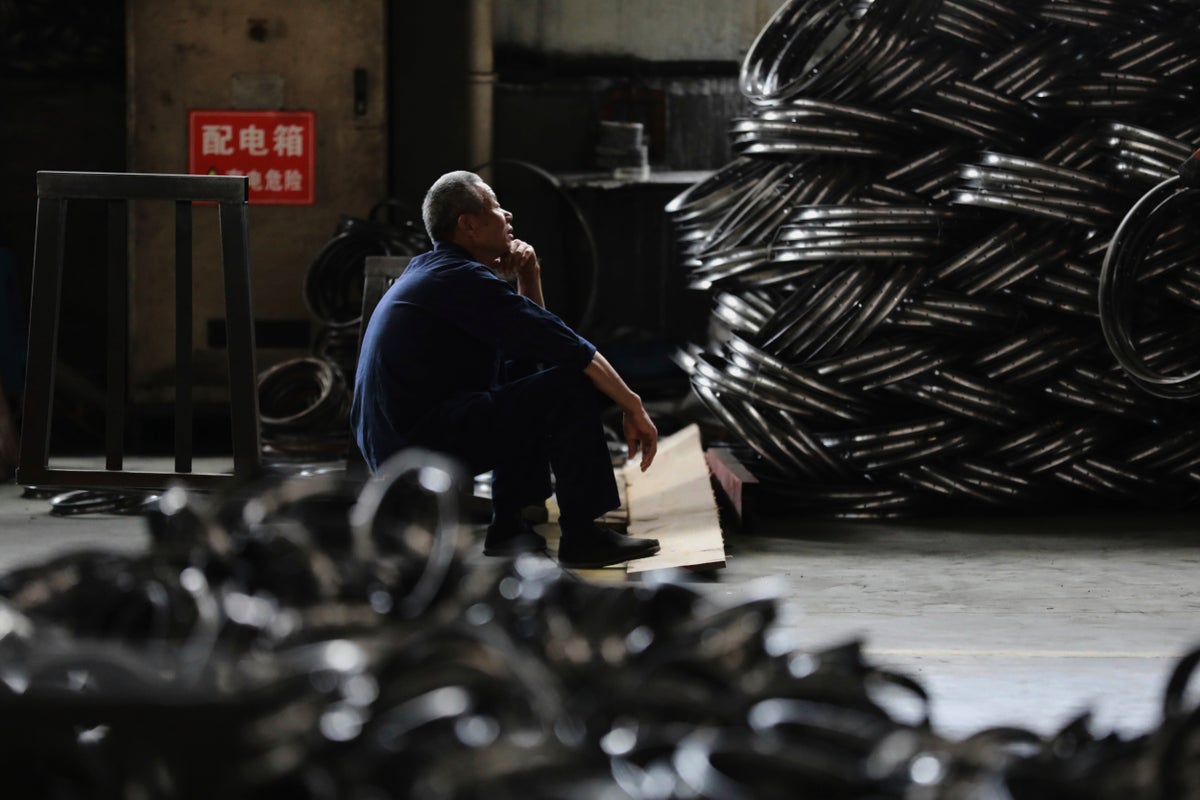 China’s factory activity slows in May, raising questions over its economy
independent.co.uk
China’s factory activity slows in May, raising questions over its economy
independent.co.uk
China’s official factory gauge slipped back to the 50-point line in May, with new orders dipping below expansion territory, according to an AP report carried by the Independent. The data come as oil prices remain elevated after disruption around the Strait of Hormuz, a shipping chokepoint that in peacetime moves a large share of the world’s seaborne crude.
The headline number—an official manufacturing purchasing managers index of 50, down from 50.3 in April—signals an economy that is no longer gaining momentum but not yet contracting. The more revealing move is in demand: the new orders sub-index fell to 49.9 from 50.6, while raw-material stockpiles also declined. HSBC’s Frederic Neumann told AP that China has been relatively insulated from the energy shock because of oil reserves and a more diversified energy mix, but that resilience does not solve the weaker problem inside the country: households and private firms have been slow to spend and invest after a prolonged property slump.
Exports continue to do the stabilising work. HSBC and Morgan Stanley both emphasised that shipments abroad remain central, with high-end manufacturing and export growth offsetting sluggish domestic demand. The same reliance makes China more sensitive to policy decisions elsewhere: AP notes that exports to the United States have fallen year-on-year in most months over the past year, even as global exports to Europe and South-east Asia have held up. Beijing and Washington agreed to create separate trade and investment boards after Donald Trump’s summit with Xi Jinping in mid-May, but the May survey suggests that any improvement in external demand has not yet translated into stronger order books.
China’s leadership has set a 4.5% to 5% growth target for 2024, described by AP as the lowest since the early 1990s. Meeting it depends on keeping factories running and ports busy while avoiding a renewed domestic credit binge that would deepen existing imbalances. For countries that have come to depend on Chinese demand—commodity exporters, shipping firms, and Asian manufacturing suppliers—the May reading is a reminder that Beijing’s “stability” can still mean flat activity, falling orders, and a recovery that arrives first in customs data rather than in pay packets.
The May PMI did not show a sudden collapse. It showed an economy leaning on exports while waiting for domestic demand to reappear.