
Mumbai dabbawala network shrinks as hybrid work cuts demand
BBC traces fall from thousands of couriers to a fraction of the workforce, fuel price rises tighten the city’s last-mile economics
Images
 The number of registered dabbawalas has fallen from around 4,500 in 2018 to roughly 1,500 today
bbc.com
The number of registered dabbawalas has fallen from around 4,500 in 2018 to roughly 1,500 today
bbc.com
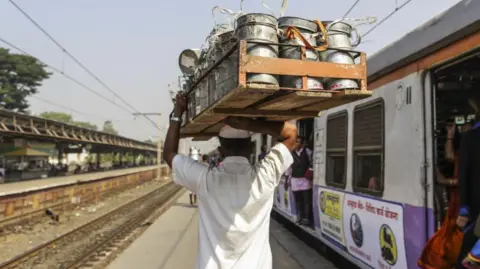 The number of registered dabbawalas has fallen from around 4,500 in 2018 to roughly 1,500 today
bbc.com
The number of registered dabbawalas has fallen from around 4,500 in 2018 to roughly 1,500 today
bbc.com
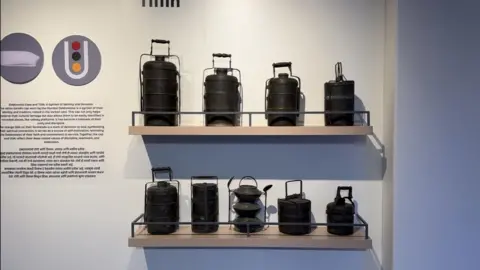 A museum in Mumbai city showcases the 130-year-old history of dabbawalas
bbc.com
A museum in Mumbai city showcases the 130-year-old history of dabbawalas
bbc.com
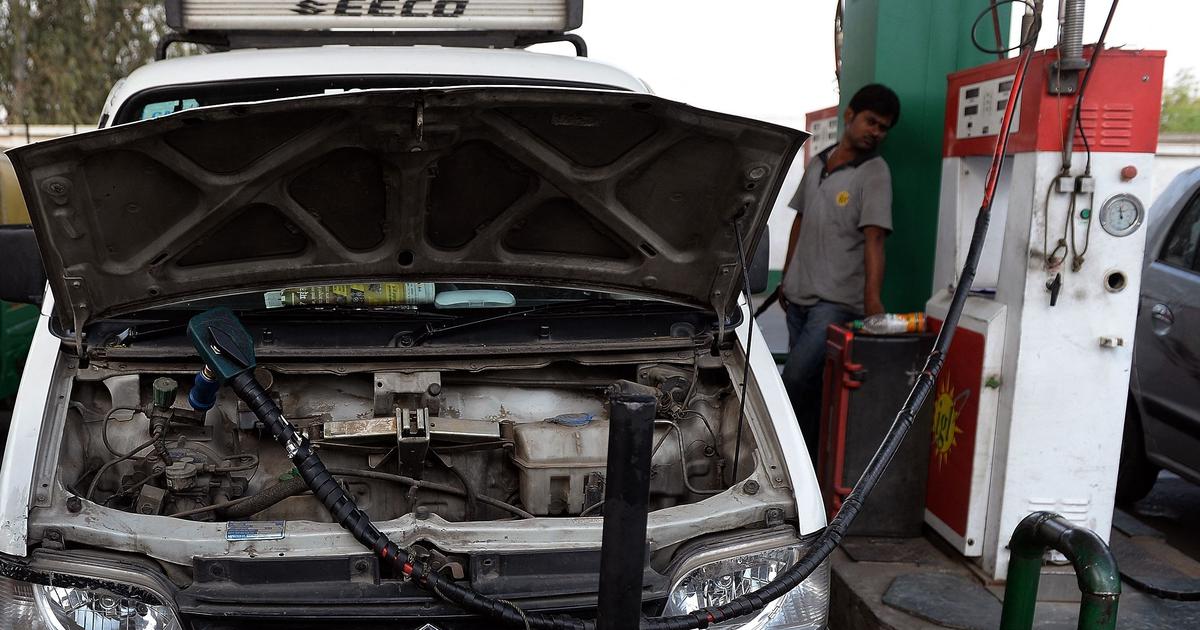 Representative image
|
Prakash Singh/AFP
scroll.in
Representative image
|
Prakash Singh/AFP
scroll.in
The workforce behind Mumbai’s century-old dabbawala lunchbox network has shrunk from around 4,500 registered couriers in 2018 to roughly 1,500 today, the BBC reports. The men in white caps still stack metal tiffins on bicycles at suburban railway stations each morning, but fewer boxes now ride the trains into the city’s office districts. After the pandemic and a lasting shift to hybrid work, many routes no longer justify a full day’s pay.
The dabbawala system was built for a dense city where offices ran on fixed hours and families cooked at home. Lunchboxes are marked with an alphanumeric code that tells couriers where a dabba began, where it must end up, and how it should return—an analogue tracking system that became famous precisely because it works without apps or GPS. At its peak, nearly 4,500 couriers delivered about 50,000 lunches a day, and the model drew attention from institutions such as Harvard Business School. But the same features that made the network efficient—tight timing, high volume, and predictable commuter flows—also make it brittle when demand drops.
The economic pressure is visible in the city’s fuel bill as well. Scroll.in reports that Mahanagar Gas Limited raised the price of compressed natural gas in Mumbai and surrounding areas by Rs 2 per kg, the second increase in two weeks, taking CNG to Rs 86 per kg. The report links the rise to elevated global oil and gas prices amid conflict in West Asia, with imports flowing largely through the Strait of Hormuz. Petrol and diesel prices have also been raised repeatedly in recent weeks, adding to transport costs for households and for informal delivery work that depends on two-wheelers.
Together, the two developments sketch the same constraint from different ends of the supply chain. White-collar workers who stay home a few days a week reduce demand for a service whose margins rely on repetition, while energy volatility pushes up the cost of moving anything across a sprawling metropolis. For dabbawalas, there is no venture capital runway and no surge pricing: fewer customers mean fewer hands, and higher running costs mean fewer attempts to rebuild old routes. The losses are not only sentimental; the network historically substituted for office canteens and restaurant meals, and it allowed families to keep dietary and religious routines intact in a city where time and distance often break them.
Mumbai still has trains, bicycles, and lunchboxes. What it has less of is the daily certainty that made a low-tech logistics miracle pay for itself by mid-afternoon.